
Quick Read
- NASA’s Crew-11 mission is being cut short by over a month due to a serious medical condition affecting one astronaut.
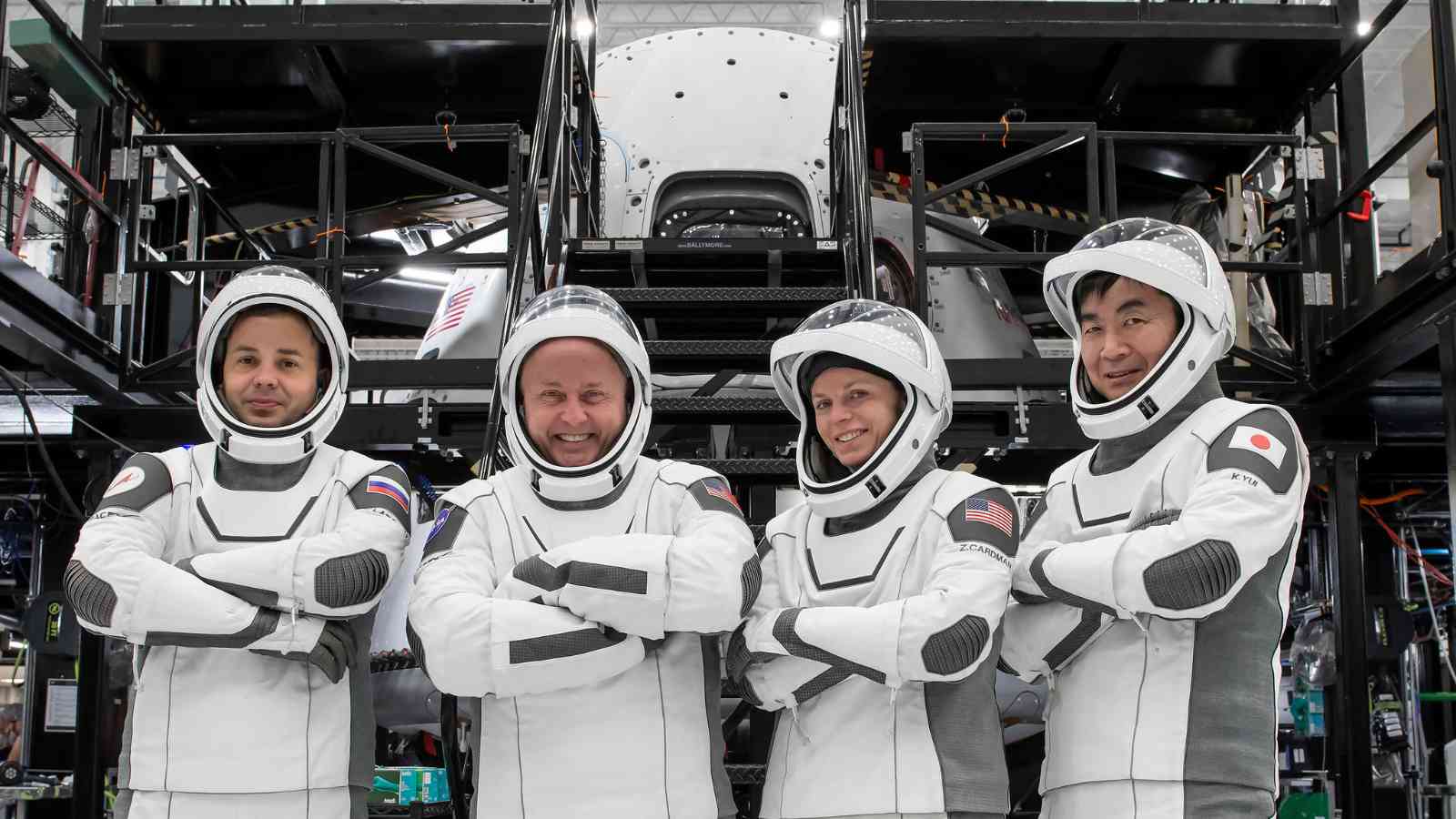
- All four crew members, including two NASA astronauts, one Japanese, and one Russian, are returning to Earth aboard their SpaceX Crew Dragon capsule.
- This marks the first time in NASA’s 65-year human spaceflight history that a mission has been curtailed for medical reasons.
- A planned spacewalk for power system upgrades was canceled, significantly impacting ongoing ISS operations and scientific endeavors.
- NASA is evaluating accelerating the launch of Crew-12, the next rotation mission, to mitigate staffing shortages on the International Space Station.
In a rare and unprecedented move, NASA has announced the early return of its Crew-11 mission from the International Space Station (ISS), more than a month ahead of schedule. The decision, driven by a serious medical condition affecting one of the four crew members, marks a significant moment in the annals of human spaceflight. While the agency has kept the identity of the astronaut and the specifics of the ailment confidential, citing health privacy, the gravity of the situation underscores the inherent risks and complexities of long-duration missions beyond Earth.
NASA Administrator Jared Isaacman confirmed the crew’s imminent return to Earth, emphasizing that the decision was made with the astronauts’ safety as the utmost priority. The Crew-11 mission, comprising NASA astronauts Mike Fincke and Zena Cardman, Japan Aerospace Exploration Agency (JAXA) astronaut Kimiya Yui, and Roscosmos cosmonaut Oleg Platonov, launched aboard a SpaceX Crew Dragon capsule on August 1, 2025, for what was intended to be a six-month stay. Their unexpected departure, anticipated in the coming days, has already led to the cancellation of a crucial spacewalk and will significantly impact ongoing operations on the orbiting laboratory.
An Unprecedented Decision in Spaceflight History
The decision to cut short a mission due to a medical situation is a stark reminder of the fragile nature of human presence in space, even with decades of experience and meticulous planning. According to Robert Pearlman, editor of the space history news website collectSpace.com, this is the first time in NASA’s 65 years of human spaceflight that a mission has been curtailed for health reasons. While astronauts have faced medical issues in orbit before, none have necessitated an early return until now. Dr. James Polk, Chief Health and Medical Officer at NASA Headquarters, further clarified that this marks the first medical evacuation in the 25-year continuous occupation history of the International Space Station.
The medical concern first surfaced on Wednesday, January 7, 2026, prompting the immediate cancellation of a planned spacewalk scheduled for the following day. NASA astronauts Fincke and Cardman were slated to venture outside the ISS to perform critical power system upgrades, installing equipment and routing cables for new solar arrays designed to enhance the station’s power capabilities and aid in its eventual deorbiting in 2030. The postponement of such a vital task highlights the severity of the undisclosed medical condition, which, while serious, has been described as stable and not requiring an emergency deorbit. Instead, Isaacman characterized it as a carefully managed medical evacuation.
The collective return of all four Crew-11 members is not merely a logistical necessity but a reflection of the integrated nature of space missions. As their SpaceX Crew Dragon capsule serves as their sole means of transport back to Earth, the medical evacuation of one astronaut necessitates the return of the entire quartet. This intricate dance of safety protocols and operational realities underscores the precision and interdependence required for successful space exploration, where the well-being of a single individual can cascade into a mission-altering event for the entire crew.
The Gravity of the Situation: Impact on ISS Operations
The early departure of Crew-11 will inevitably create a temporary staffing deficit on the International Space Station. Once the four astronauts undock, only three individuals will remain aboard the orbiting outpost: NASA astronaut Chris Williams and Roscosmos cosmonauts Sergey Mikaev and Sergey Kud-Sverchkov, who arrived on an earlier Soyuz mission. This reduced crew complement will significantly alter the rhythm and scope of activities on the ISS, as acknowledged by Don Platt, a professor at Florida Tech and former ISS engineer.
‘It’s a significant problem,’ Platt stated, explaining that the remaining crew members will likely have to concentrate primarily on maintaining the station’s operational integrity. ‘A lot of the science will have to be postponed.’ This means that numerous active science experiments, ranging from microgravity research to biological studies, will either be put on hold or potentially abandoned. The ripple effect extends beyond immediate tasks, impacting long-term research objectives that rely on continuous human presence and dedicated scientific effort.
The financial implications of such a decision are also substantial. Sending a Crew Dragon capsule to the ISS is an immensely expensive undertaking, with costs running into tens of millions of dollars per seat. An early return, while critical for astronaut health, represents a significant budgetary adjustment. To mitigate the operational challenges, NASA is reportedly evaluating opportunities to accelerate the launch of Crew-12, the next four-person crew rotation. This mission, initially slated for mid-February 2026 and comprising NASA astronauts Jessica Meir and Jack Hathaway, European Space Agency astronaut Sophie Adenot, and Roscosmos cosmonaut Andrey Fedyaev, may now launch sooner to restore the station’s full operational capacity and allow for the resumption of critical scientific and maintenance tasks.
Preparedness in the Face of the Unknown
While unprecedented, this medical evacuation is not a scenario NASA and its international partners haven’t considered. Paul Dye, a former flight controller who worked on both space shuttle and ISS missions, highlighted the extensive training astronauts and ground teams undergo for such contingencies. ‘We always have plans for bringing crew members back because if you have an emergency that you can’t deal with… everybody goes to their escape vehicle,’ Dye explained. This rigorous preparation ensures that even in the face of unforeseen challenges, there is a practiced response rooted in safety protocols.
The International Space Station itself is equipped with a comprehensive suite of medical instrumentation and supplies designed to monitor and intervene in emergency situations within the microgravity environment. Retired NASA astronaut Nicole Stott, who spent over three months on the station, emphasized the training received across all available equipment: ‘The primary interest is being able to respond to somebody who might be in an emergency situation, of course.’ This includes advanced first aid equipment, suture kits, a range of pharmaceutical treatments, and even tools for dental procedures. With constant communication and guidance from flight surgeons and ground medical teams, astronauts are capable of performing a wide array of assisted medical procedures in orbit.
This is not the first time a serious medical event has occurred on the ISS. In 2019, an astronaut was diagnosed remotely with a blood clot in a neck vein, a condition successfully managed with onboard blood thinners before additional medication could be delivered. However, the current situation, with its requirement for a full return to Earth, underscores the limitations of even the most advanced orbital medical facilities. As NASA associate administrator Amit Kshatriya noted, ‘The best way to complete that workup is on the ground with where we have the full suite of medical testing hardware.’ The agency’s unwavering commitment to astronaut safety ensures that when a comprehensive medical evaluation is deemed necessary, no expense or operational disruption is too great.
The early return of Crew-11 serves as a profound testament to the inherent dangers and unpredictable nature of space exploration, even as it highlights NASA’s steadfast commitment to astronaut safety above all else. This incident, while challenging operational norms, will undoubtedly refine future mission planning and emergency protocols, ensuring that the pursuit of scientific discovery in the cosmos remains grounded in the paramount principle of human well-being.