
Quick Read
- Protests erupted in Los Angeles after ICE arrested 118 undocumented individuals in high-profile raids.
- Violent clashes led to the deployment of the US National Guard, escalating tensions.
- Governor Gavin Newsom condemned the federal move, calling it ‘deranged behavior.’
- The White House defended the decision, sparking concerns about authoritarian overreach.
The streets of Los Angeles have become the epicenter of a heated national debate, as the deployment of the US National Guard following anti-ICE protests ignited sharp criticism from California Governor Gavin Newsom. With tensions already high due to sweeping immigration raids, the federal government’s decision to mobilize troops has polarized opinions and raised questions about the balance of power between state and federal authorities.
How the protests began
On Friday, June 6, 2025, Los Angeles witnessed an eruption of protests after Immigration and Customs Enforcement (ICE) conducted high-profile raids across the city. According to reports from The Guardian, at least 118 undocumented individuals were arrested, sparking outrage in heavily immigrant neighborhoods such as Paramount and Compton. The raids, part of a nationwide operation detaining over 2,000 people daily, brought visible unrest to the region.
Protesters took to the streets in droves, gathering outside federal buildings and staging posts. Demonstrators clashed with authorities, throwing rocks and attempting to block immigration vans with shopping carts. Federal agents responded with tear gas, pepper balls, and flash-bang grenades. A car was set ablaze in Compton, further escalating tensions.
Federal intervention and National Guard deployment
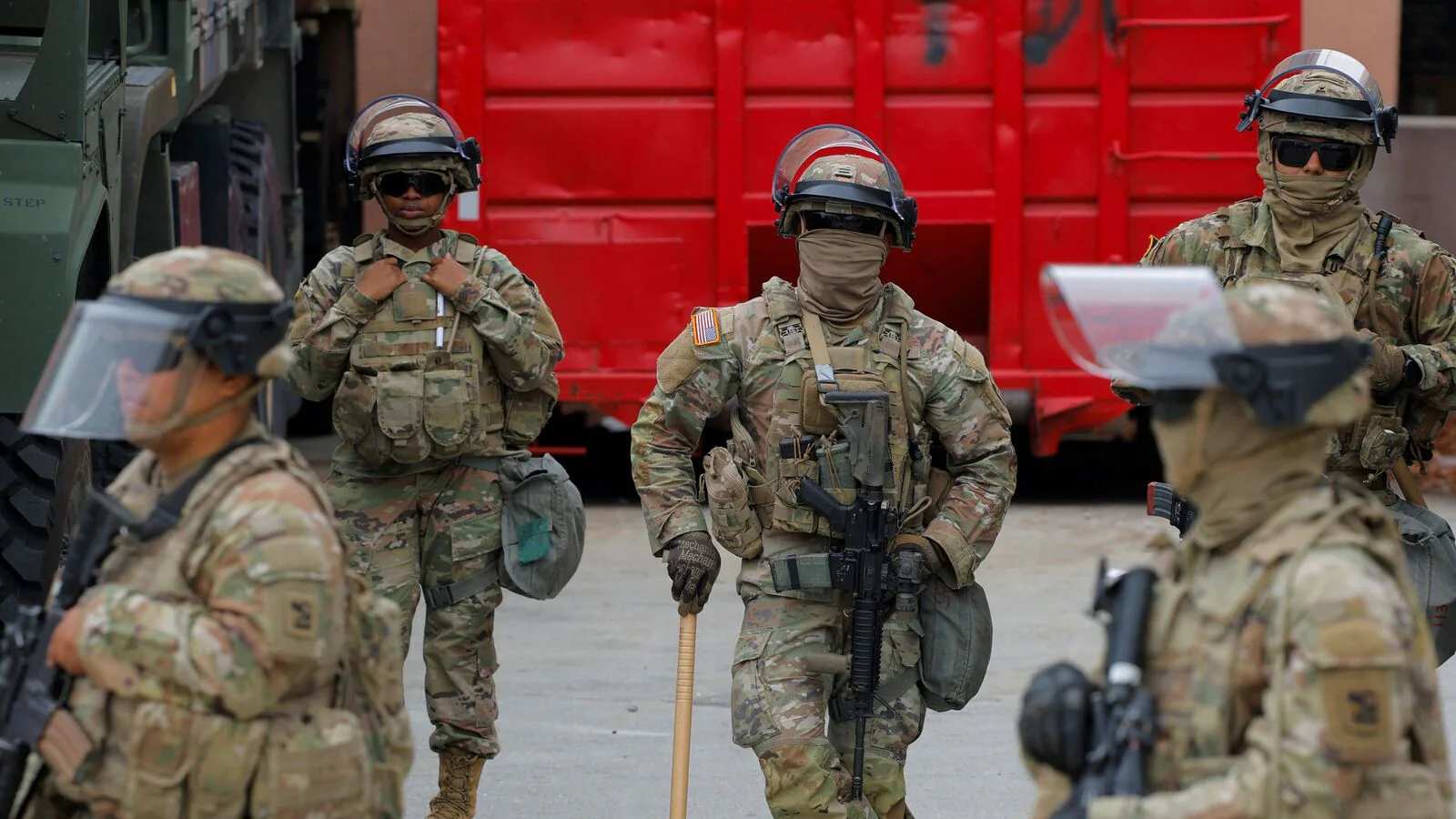
Amid the rising unrest, federal authorities deployed the US National Guard to Los Angeles. Defense Secretary Pete Hegseth, a close ally of President Donald Trump, defended the decision on social media, stating, “Under President Trump, violence & destruction against federal agents & federal facilities will NOT be tolerated.”
The deployment marked a rare federal intervention against the wishes of a state governor. Trump doubled down on his stance, criticizing California leaders for their handling of the situation. On his social media platform, he declared, “If Newsom and Bass won’t do their jobs, the Federal Government will step in and solve the problem—RIOTS & LOOTERS—the way it should be solved!!”
Adding to the controversy, Hegseth warned that active-duty Marines stationed at Camp Pendleton were on high alert and could be mobilized if violence persisted. This unprecedented threat further fueled concerns about federal overreach.
Governor Newsom’s sharp rebuke
California Governor Gavin Newsom was quick to denounce the federal response, describing it as “deranged behavior.” Taking to social media, he criticized the Secretary of Defense’s threats to deploy Marines on American soil. “The federal government is deploying the troops because they want a spectacle,” he wrote. “Don’t give them one. Never use violence. Speak out peacefully.”
Newsom’s condemnation was echoed by Los Angeles Mayor Karen Bass, who highlighted the fear and uncertainty sown by the federal raids. “Everyone has the right to peacefully protest, but let me be clear: violence and destruction are unacceptable,” she stated. Bass also accused federal authorities of using aggressive tactics that instilled terror in immigrant communities.
Escalating political tensions
The deployment has sparked a broader political debate about the federal government’s role in local law enforcement. The White House framed the move as essential for national security, with Press Secretary Karoline Leavitt describing the raids as a response to an “invasion of illegal criminals.” Meanwhile, Republican House Speaker Mike Johnson defended the administration’s actions, arguing that California leaders had “abdicated their responsibility to protect their citizens.”
In contrast, California Congresswoman Nanette Barragán warned of authoritarian overreach, accusing the Trump administration of suppressing dissent. “We agree that if you’re being violent, you should be arrested… But this is not what’s happening,” she told CNN.
Impact on immigrant communities
The ICE raids and subsequent protests have left a lasting impact on Los Angeles’ immigrant communities. Residents in neighborhoods like Paramount and Compton, many of whom have undocumented family members, expressed fear and uncertainty about their future. Local organizations have stepped in to provide legal aid and community support, but the scale of the operation has left many feeling vulnerable.
According to The Guardian, some protesters targeted departing Border Patrol vehicles with fireworks, while others used shopping carts to block roads. Federal agents responded by erecting barbed wire and declaring unlawful assemblies, further escalating the confrontations.
For many, the raids symbolize a deeper divide in America’s immigration policies, with critics accusing the administration of targeting vulnerable communities while promoting a climate of fear.
A nation divided
The events in Los Angeles have highlighted the growing polarization in American society. While federal officials argue that the National Guard deployment is necessary to restore order, opponents see it as an alarming step toward authoritarianism. The debate has amplified longstanding tensions between the Republican-led federal government and Democratic-controlled states like California.
As protests continue, the question remains: How can the United States balance the need for security with the rights of its citizens? For Los Angeles residents, the answer may determine the future of their communities—and the nation as a whole.
The unfolding events in Los Angeles reflect a pivotal moment in America’s political landscape, where issues of immigration, federal authority, and civil liberties converge. As the debate continues, the nation watches closely, searching for a path forward that honors both safety and justice.