
Quick Read
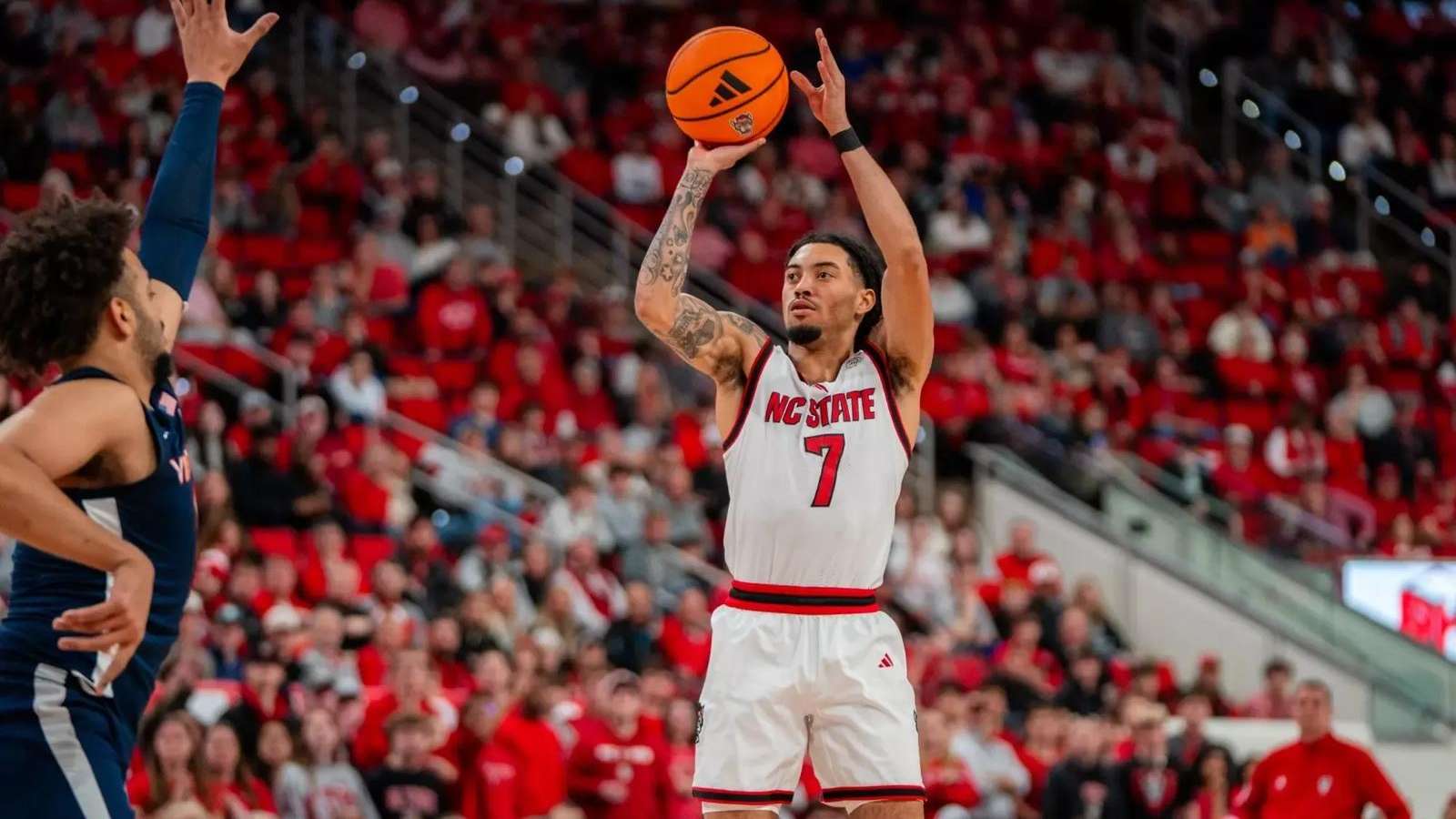
- NC State faced No. 21 Virginia on January 3, 2026, in an ACC basketball game.
- Virginia led NC State 41-20 at the start of the second half.
- Virginia maintained a significant lead throughout the second half, consistently countering NC State’s attempts to rally.
- Key players for Virginia included Thijs De Ridder, Devin Tillis, and Chance Mallory.
- NC State’s notable performers were Alyn Breed, Paul McNeil Jr., and Ven-Allen Lubin.
- Virginia ultimately secured a dominant victory over NC State, with the final score around 76-61.
RALEIGH, NC – January 3, 2026, marked a challenging start to the new year for NC State’s men’s basketball program as they hosted the formidable No. 21 Virginia Cavaliers in a crucial Atlantic Coast Conference (ACC) showdown. From the opening tip, the contest, held at NC State’s home court, promised to be a grueling battle, but it quickly became an uphill climb for the Wolfpack, who found themselves trailing by a significant margin at halftime.
As the second half commenced, the scoreboard already painted a stark picture: Virginia held a commanding 41-20 lead over NC State. The Cavaliers wasted no time in extending their dominance, with Thijs De Ridder immediately converting a free throw after a foul by Darrion Williams, pushing their advantage to 42-20. This early second-half expansion of the lead underscored the defensive pressure and offensive efficiency that had characterized Virginia’s performance in the first half.
The Wolfpack’s Struggle to Ignite a Comeback
Despite the daunting deficit, NC State showed flashes of resilience. Ven-Allen Lubin provided an early spark with a layup, assisted by Darrion Williams, bringing the score to 42-22. Moments later, Alyn Breed, displaying his agility, snatched a steal from Sam Lewis and capitalized with a fastbreak layup, narrowing the gap to 42-24. These quick bursts of offense hinted at the Wolfpack’s potential, but consistency remained elusive against Virginia’s stifling defense.
The Cavaliers, under the guidance of Coach Ryan Odom (as indicated by the postgame context on VirginiaSports.com), maintained their composure. Even as NC State attempted to chip away, fouls and turnovers punctuated their efforts. Alyn Breed, a persistent force for the Wolfpack, earned multiple trips to the free-throw line, converting several to bring the score to 42-28. However, Virginia’s counter-punches were swift and effective. Malik Thomas, for instance, answered with an in-the-paint layup, further solidifying Virginia’s lead at 44-31.
Virginia’s Unyielding Control and Strategic Plays
The middle of the second half saw Virginia expertly manage the game, preventing NC State from building any sustained momentum. Paul McNeil Jr. provided a temporary boost for the Wolfpack with a three-pointer, assisted by Quadir Copeland, making it 42-31. He followed this with successful free throws after a technical foul on the team, bringing the score to 44-35. Yet, Virginia always had an answer. Thijs De Ridder continued to be a pivotal player, scoring layups and free throws, while Devin Tillis and Dallin Hall also contributed crucial points, keeping the Cavaliers comfortably ahead.
Virginia’s defensive prowess was evident throughout the half. Ugonna Onyenso delivered a timely block on a Lubin layup attempt, and Johann Grünloh made several critical blocks and defensive rebounds, disrupting NC State’s offensive flow. Steals by Alyn Breed for NC State and Devin Tillis for Virginia highlighted the intensity of the defensive battle, but Virginia consistently converted these defensive stops into offensive opportunities. The Cavaliers’ ball movement was fluid, with players like Chance Mallory and Malik Thomas dishing out assists, leading to open shots and easy scores.
A Decisive Final Stretch and Individual Standouts
As the clock wound down, Virginia’s lead only grew. Three-pointers from Devin Tillis and Sam Lewis stretched the lead to an imposing 66-44 with just over eight minutes remaining. This forced an NC State timeout, signaling a desperate attempt to regroup. While Darrion Williams managed a three-pointer for NC State, bringing the score to 66-47, the deficit proved too large to overcome.
Chance Mallory and Dallin Hall for Virginia continued to pile on the points, hitting three-pointers and free throws, extending the lead to 74-47. Despite Quadir Copeland and Ven-Allen Lubin finding success with layups and free throws for NC State, Virginia’s advantage never truly wavered. Thijs De Ridder, who started the half strong, also contributed significantly in the final minutes with a tip-in and a three-pointer, showcasing his all-around game.
Key individual performances shaped the narrative of this second half. For Virginia, Thijs De Ridder was a consistent scoring threat, converting free throws, layups, and a crucial three-pointer. Devin Tillis and Chance Mallory also played pivotal roles, particularly with their timely three-pointers and assists. On the NC State side, Alyn Breed’s aggressive play led to multiple free throws and layups, while Paul McNeil Jr. showcased his shooting touch with several three-pointers and free throws, attempting to spark a rally. Ven-Allen Lubin also contributed with several layups in the paint.
The game concluded with Virginia securing a decisive victory, with the final recorded score in the play-by-play indicating 76-61 in favor of Virginia, though the full final box score would likely confirm this as the ultimate outcome. NC State’s valiant efforts in the second half, marked by individual flashes of brilliance, were ultimately insufficient to overcome the Cavaliers’ well-executed game plan and initial dominant lead. The loss, as reported by GoPack.com, underscores the challenges NC State faces in the competitive ACC.
The January 3, 2026, matchup against No. 21 Virginia served as a stark reminder of the precision and defensive intensity required to compete at the highest level of ACC basketball. While NC State displayed moments of individual talent and tenacity, their inability to consistently overcome Virginia’s disciplined approach and a significant early deficit highlighted areas for tactical refinement and sustained offensive execution moving forward.