
Quick Read
- The NCAA Tournament has narrowed to 32 teams, shifting the focus to individual tactical X-factors.
- Michigan’s guard rotation and Texas A&M’s perimeter shooting are cited as critical variables for survival.
- Pressure in the Round of 32 is forcing teams to rely on specific playmakers to dictate tempo and break defensive schemes.
The 2026 NCAA Tournament has reached its most critical juncture as 32 teams prepare for the second round. With the opening round upsets behind them, the focus shifts to the tactical adjustments and specific player performances that will dictate who survives to reach the Sweet 16. Analysts are increasingly identifying individual “X-factors”—players whose ability to control tempo, stretch the floor, or disrupt defensive schemes could swing high-stakes matchups.
Tactical Tempo and Perimeter Threats
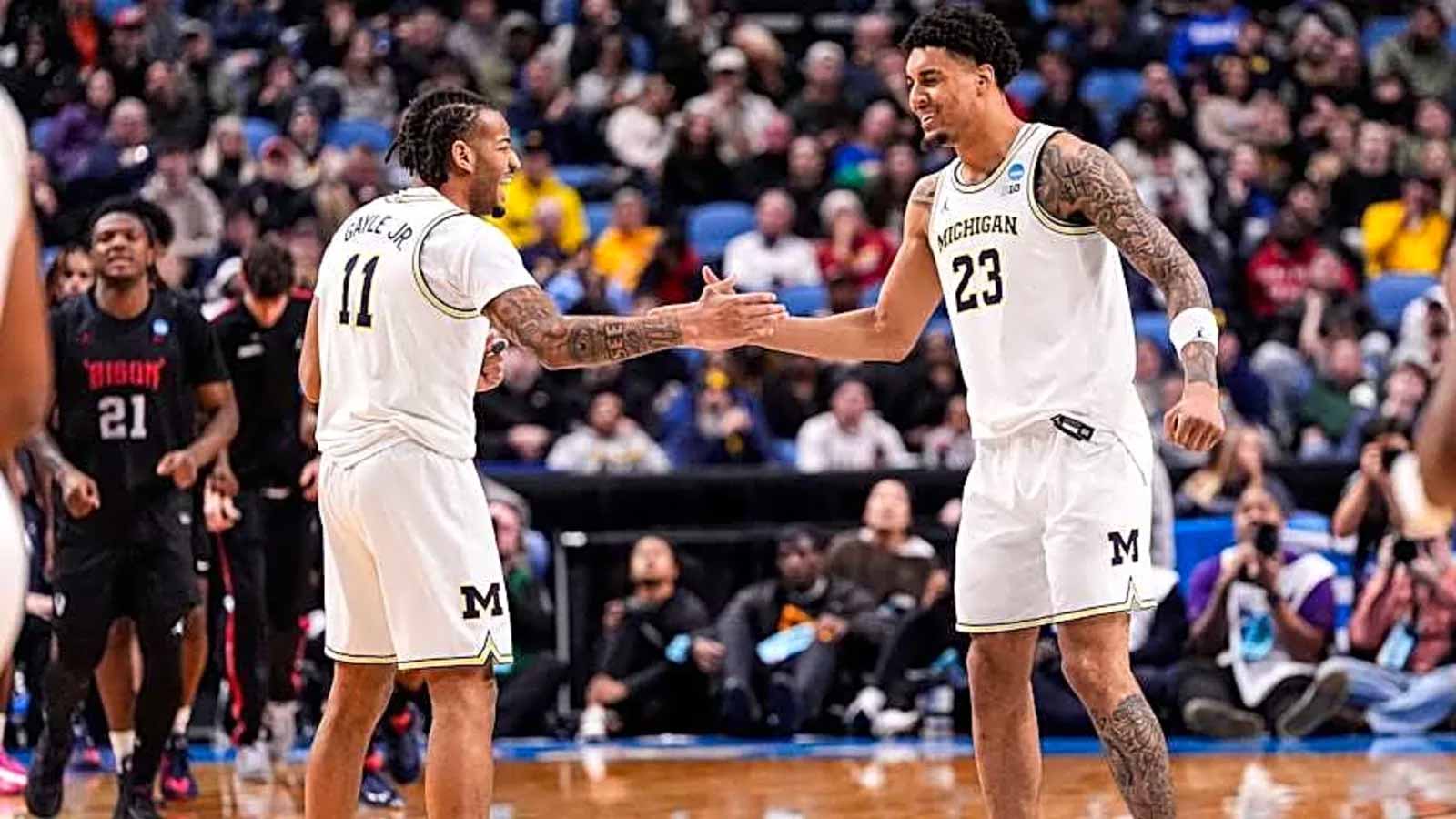
For top-seeded Michigan, the guard rotation of Elliot Cadeau and Nimari Burnett has emerged as the primary X-factor against Saint Louis. While the Billikens rely on their interior efficiency and the versatile play of Robbie Avila, Michigan’s ability to push the pace through their backcourt will be tested. According to The Athletic, Michigan’s willingness to accelerate the game could force Saint Louis out of their preferred half-court rhythm, creating transition opportunities that define tournament outcomes.
Similarly, the Texas A&M versus Houston matchup hinges on perimeter aggression. While Houston boasts an elite defense, Texas A&M’s chances rely on the shooting prowess of Rylan Griffen and Pop Isaacs. If these players can capitalize on deep-range opportunities, they may force Houston to abandon their disciplined defensive shell, potentially turning the contest into a high-scoring affair that favors the underdog’s ability to catch fire from beyond the arc.
Frontcourt Battles and Tournament Pressure
The pressure of the tournament environment is also amplifying the importance of frontcourt stability. In the Duke-TCU showdown, the focus remains on Cameron Boozer, but the game’s outcome may depend on which supporting player steps up to alleviate the double-teams Boozer inevitably faces. Meanwhile, Michigan State’s reliance on their two-big lineup of Jaxon Kohler and Carson Cooper represents a traditional approach to controlling the glass, a strategy that will be pitted against Louisville’s high-volume 3-point attack.
The stakes are equally high for programs like Nebraska, which is looking to capitalize on the momentum of its first-ever tournament win. As the competition narrows, the burden on individual playmakers to maintain composure under the glare of the Round of 32 has never been greater. Whether it is VCU’s defensive ball pressure or Gonzaga’s disciplined internal efficiency, the margin for error has vanished, leaving little room for anything but elite execution.
The shift in media analysis toward identifying specific X-factor players reflects a broader trend in high-stakes basketball, where team-wide systems are often stress-tested by individual players who can uniquely distort opponent defensive schemes through either elite perimeter volume or, conversely, the ability to completely dictate the game’s tempo.