
Quick Read
- Phoebe Dynevor transitions to survival horror, marking a major career pivot post-Bridgerton.
- The film uses the biological reality of bull sharks in freshwater to heighten its ‘plausible’ terror.
- Critical reception is divided between praise for technical competence and critiques of genre predictability.
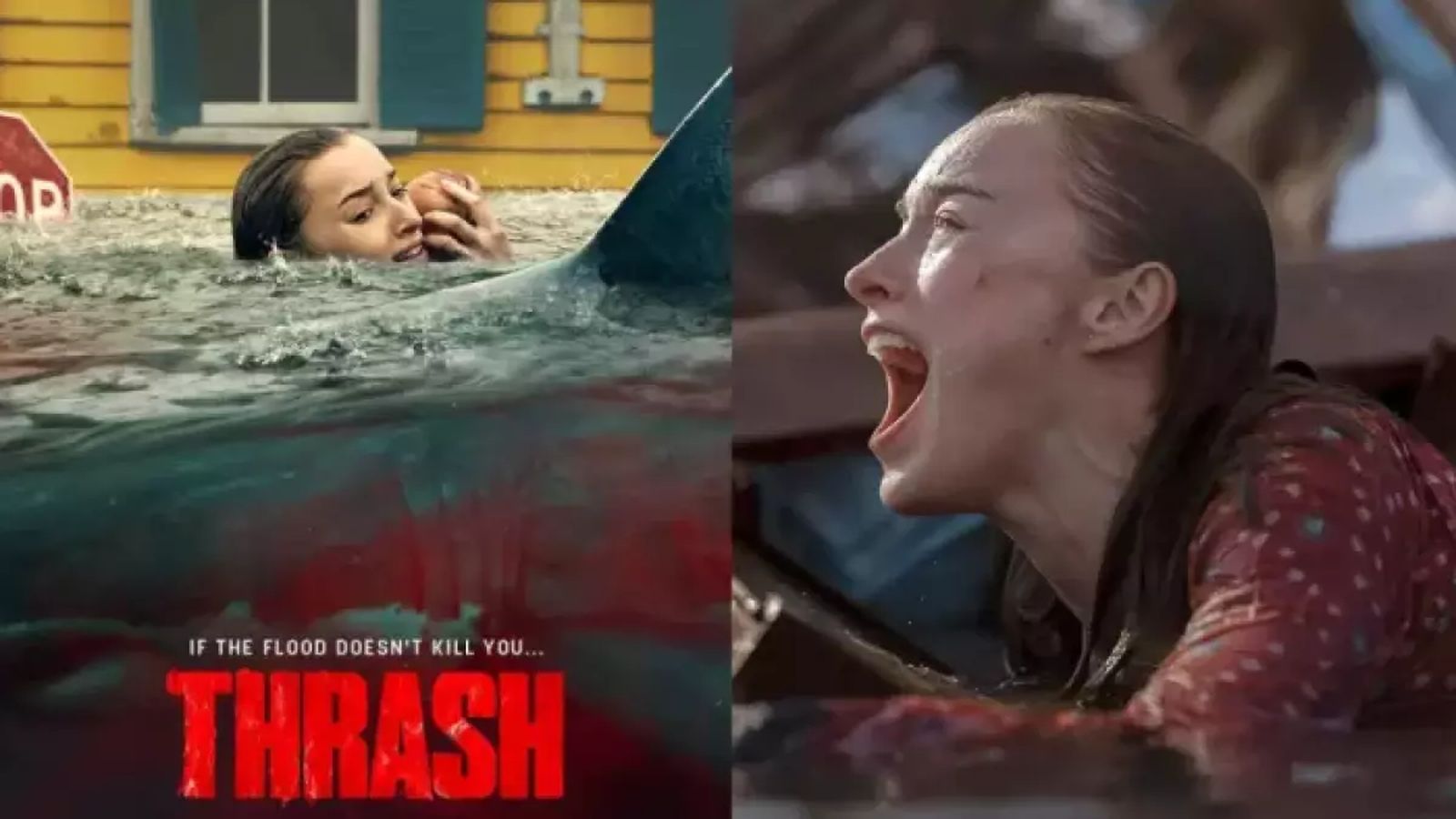
Netflix has officially entered the 2026 summer blockbuster season with the release of Thrash, a survival horror thriller that marks a significant pivot for lead actress Phoebe Dynevor. Following her breakout success in Bridgerton, Dynevor trades period drama for the claustrophobic, water-logged terror of a South Carolina town devastated by a Category 5 hurricane.
The Survival Stakes in ‘Thrash’
Directed by Tommy Wirkola and produced by Adam McKay, the film follows Lisa Fields, played by Dynevor, a woman nine months pregnant who finds herself trapped in a submerged vehicle as floodwaters rise. The narrative tension is driven by a premise that is as simple as it is terrifying: the hurricane has pushed bull sharks inland, turning residential neighborhoods into aquatic hunting grounds. For Netflix, the success of Thrash is a litmus test for its ability to produce high-stakes genre content that balances technical spectacle with character-driven survival.
Critical Reception and Genre Ambition
Initial critical response to Thrash has been polarized. While some reviewers have praised the film’s “lively competence” and fluid staging of action sequences, others have noted its reliance on established genre tropes. Critics have pointed out that the film echoes the structure of classic shark thrillers, often drawing direct inspiration from the visual language of Jaws. Despite this, the film has gained traction for its R-rated intensity and the physical demands placed upon its lead, with many industry observers watching to see if this role effectively establishes Dynevor as a viable action star.
Scientific Plausibility and the Ending
Perhaps the most discussed aspect of the film is its grounding in reality. The script leans heavily on the biological reality of bull sharks, which are uniquely capable of surviving in both saltwater and freshwater environments. Meteorologists and marine experts cited in connection with the film note that the convergence of climate-fueled storm surges and inland estuaries creates a genuine, if rare, risk of shark encounters during severe flooding. The final scene, which leaves the door open for future installments, shifts from typical heroics to a more grim, realistic assessment of survival in an era of unpredictable climate events. This open-ended conclusion has sparked speculation regarding a potential sequel, though Netflix has yet to confirm further plans for the franchise.
The film’s reliance on ‘climate-fueled’ horror suggests a deliberate shift in the survival genre toward utilizing real-world environmental anxieties as primary antagonists, a trend that likely signals Netflix’s intent to keep the franchise viable through topical relevance rather than mere spectacle.