
Quick Read
- New York City experienced a major snowstorm on Monday, with up to 50 cm of snow.
- Schools were closed, flights canceled, and non-essential vehicle traffic was temporarily locked down.
- The storm impacted over 40 million people across the northeastern United States.
- Mayor Zohran Mamdani announced the worst had passed, but more snow was expected.
- Residents are responsible for clearing snow from residential entrances within four hours to avoid fines.
NEW YORK (Azat TV) – New York City experienced a significant snowstorm on Monday, with certain areas reporting snowfall accumulations of up to 50 centimeters. The severe weather brought the bustling metropolis to a near standstill, leading to widespread disruptions across the city and impacting the broader northeastern United States.
Streets and sidewalks, typically vibrant with activity, were largely deserted as residents heeded warnings to stay indoors. The storm necessitated the closure of schools, the cancellation of numerous flights, and a temporary lockdown on non-essential vehicle traffic, which was eventually lifted at noon on Monday. This event marked a notable challenge for the city’s infrastructure and daily operations.
Impact of the New York Snowstorm
The snowstorm’s intensity led to substantial disruptions beyond New York City’s immediate vicinity, affecting an estimated 40 million people across the northeastern United States. The region braced for and then endured heavy snowfall, with some areas experiencing even more extreme conditions. For instance, Providence, Rhode Island, reported an impressive 83 centimeters of snow, highlighting the broad reach and severity of the weather system.
New York City Mayor Zohran Mamdani addressed the public, announcing that the worst of the storm had passed. However, he cautioned that additional snowfall was still anticipated later in the day, urging continued vigilance. The swift response from city officials and emergency services was crucial in managing the immediate aftermath and ensuring public safety.
Citywide Disruptions and Regional Reach
The comprehensive closures and traffic restrictions underscore the profound impact of the snowstorm on urban life. Schools remained shut, providing a snow day for students but also posing logistical challenges for working parents. Air travel was severely hampered, with numerous flights grounded at major regional airports, causing ripple effects for travelers nationwide. The temporary ban on non-essential vehicle traffic was a critical measure to keep roads clear for emergency vehicles and plows, demonstrating the city’s commitment to public safety during extreme weather events.
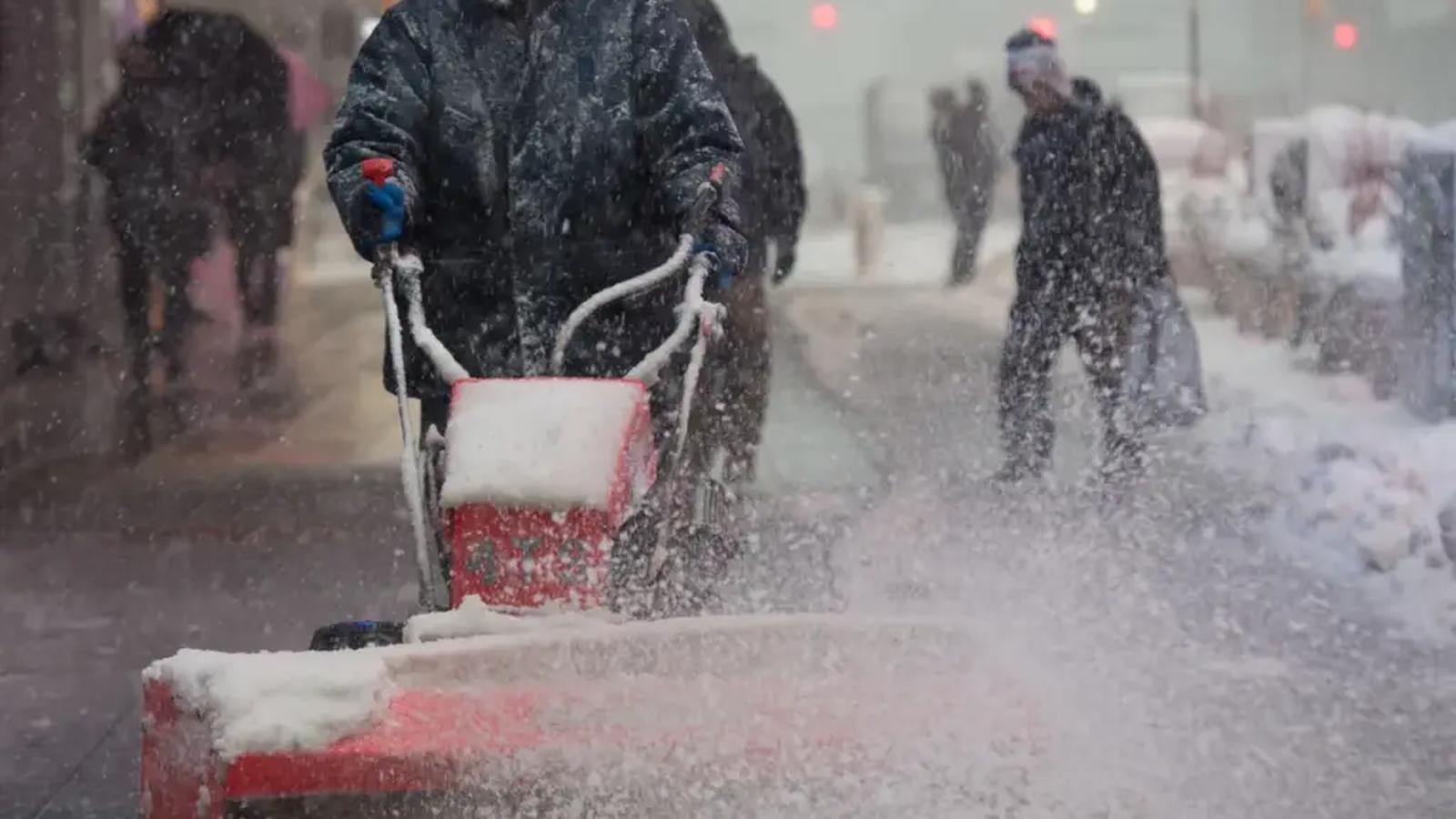
As the storm subsided, attention quickly turned to recovery efforts. City workers and building staff immediately began the arduous task of clearing sidewalks and public spaces. Residents were also reminded of their civic duty to clear snow from their residential entrances within four hours of the storm’s end to avoid potential fines, a standard measure to maintain accessibility and safety across neighborhoods. Despite the conditions, some dog owners ventured out, their pets leaving distinct tracks in the fresh, deep snow, a small sign of life returning to the quieted city.
New York’s Recovery Efforts Underway
The city’s rapid mobilization to clear snow and restore normalcy reflects its preparedness for winter weather. Sanitation crews worked tirelessly, plowing major thoroughfares and residential streets, while salt spreaders helped prevent ice formation. The coordinated effort between municipal departments and the public is essential in mitigating the long-term effects of such a significant weather event. The focus now shifts from immediate response to ensuring all areas are accessible and safe, minimizing inconvenience for New Yorkers as they return to their routines.
The coordinated response and swift recovery measures following New York City’s recent snowstorm highlight the critical importance of robust urban infrastructure and effective emergency planning in managing severe weather events, ensuring community resilience in the face of natural disruptions.