
Quick Read
- ’28 Years Later: The Bone Temple’ is the latest critically acclaimed sequel in the ’28 Days Later’ franchise.
- Directed by Nia DaCosta and written by Alex Garland, it was filmed back-to-back with 2025’s ’28 Years Later’.
- The film stars Jack O’Connell as the menacing Sir Jimmy Crystal and Ralph Fiennes as the eccentric Dr. Kelson.
- It delves into complex themes of survival, distorted masculinity, and the evolution of humanity in a post-apocalyptic UK.
- Released in January 2026, it boasts a 94% Rotten Tomatoes score and is praised for its bold vision and blend of horror and dark humor.
In the unpredictable landscape of cinematic franchises, a return after years of dormancy often carries the risk of disappointment. Yet, the revitalized ’28 Days Later’ series has defied expectations, particularly with its latest installment, ’28 Years Later: The Bone Temple’. Released in January 2026, this sequel, directed by Nia DaCosta, has not only proven to be a compelling entry but has also significantly pushed the boundaries of the post-apocalyptic horror genre, captivating both critics and long-time fans.
The franchise’s resurgence began in 2025 with ’28 Years Later’, which successfully reunited original director Danny Boyle and writer Alex Garland. ‘The Bone Temple’ was filmed back-to-back with its predecessor, with DaCosta taking the directorial reins from Boyle, a transition that has been widely lauded. As *AOL News* reported, this strategic decision allowed for a seamless narrative continuation and a fresh perspective on the established universe.
A World Twisted by Trauma: Plot and Character Dynamics
Picking up shortly after the events of the first ’28 Years Later’, ‘The Bone Temple’ plunges viewers deeper into a United Kingdom ravaged by the Rage Virus. The story follows young Spike (Alfie Williams), now an unwilling recruit in a ruthless group known as the Jimmies, led by the charismatic yet terrifying Sir Jimmy Crystal (Jack O’Connell). Unlike the initial survivors who simply sought refuge, the Jimmies are a bloodthirsty faction, reveling in the brutalization of both the infected and other human survivors. O’Connell, whose performance has been widely praised, shared with *Men’s Health* that his preparation for the role involved gaining weight and drawing inspiration from the casualness of serial killers, aiming to portray a character who has thrived in the apocalypse by embracing a lavish, albeit dark, lifestyle.
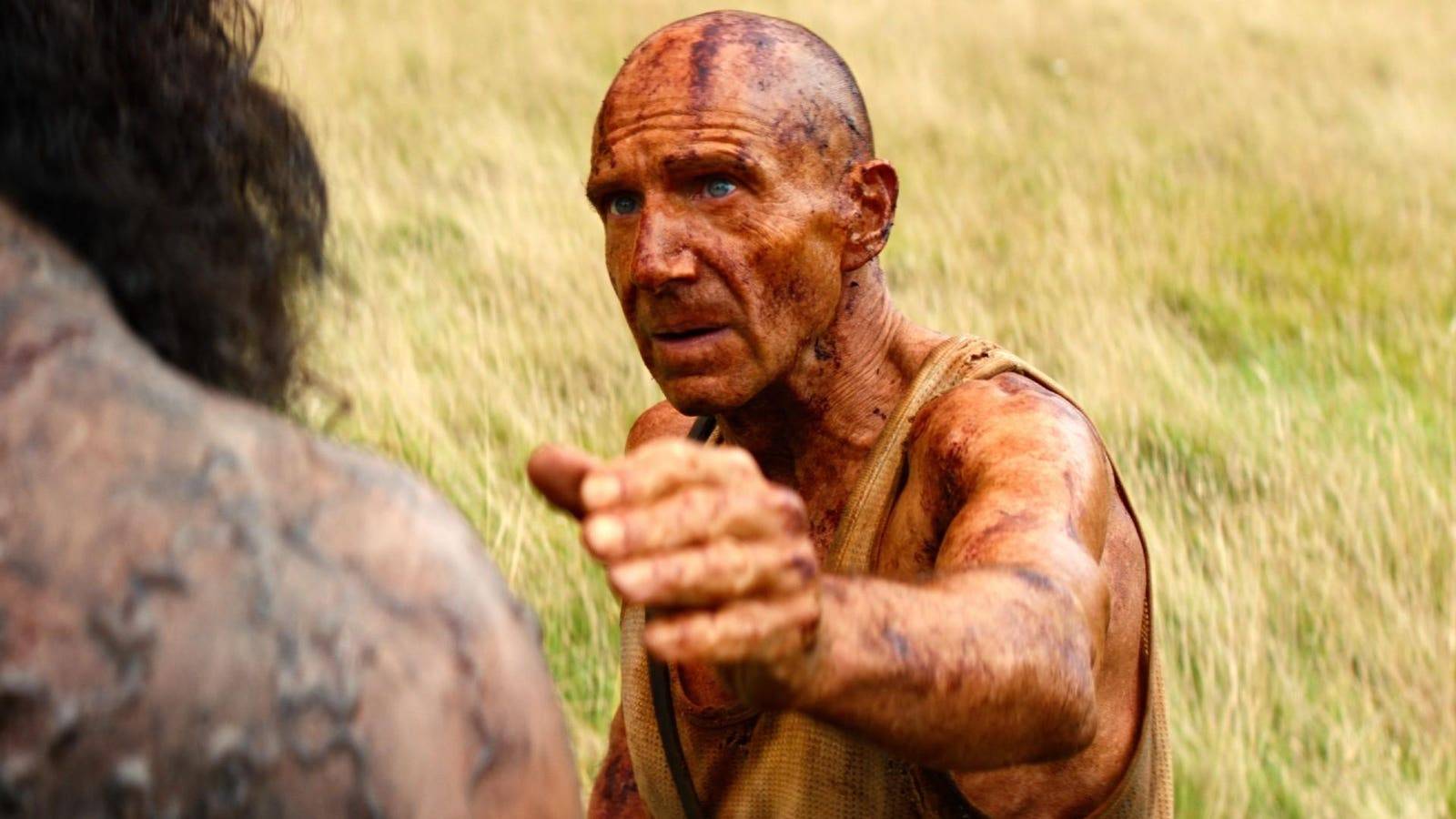
In stark contrast to the Jimmies’ chaotic existence is the solitary world of Dr. Kelson (Ralph Fiennes). His self-built ‘bone temple’ provides a refuge, albeit one interrupted by Samson (Chi Lewis-Parry), a massive infected individual from the previous film. In an unexpected and profoundly strange turn, Kelson manages to form a bond with Samson, aided by morphine, creating a bizarre companionship. This juxtaposition of Kelson’s quiet, scientific, and almost tender approach with the Jimmies’ savage nihilism forms the narrative backbone of the film, allowing for deep character exploration and thematic richness.
Nia DaCosta’s Vision: Redefining Horror and Masculinity
Nia DaCosta, working from Alex Garland’s script, adeptly steps into the franchise’s legacy, choosing to emphasize story and mood over stylistic flourishes. This doesn’t diminish her craft; rather, it highlights her ability to convey the Jimmies’ sadistic nature and extract unexpected, campy comedy from the Kelson-Samson dynamic. The film is described by *Brett Arnold* as a ‘slow burn’ that eventually escalates into ‘uncomfortable’ and ‘extreme gore,’ particularly when human savagery eclipses that of the infected.
The film also delves into complex themes, notably an ‘inquisition on what masculinity is,’ as O’Connell revealed. The relationships between Spike, Dr. Kelson, and Sir Jimmy Crystal present a fascinating study of male mentorship – one figure offering a path of good, the other of evil – forcing Spike to navigate his identity in a fractured world. This thematic depth is a significant departure, moving beyond mere survival horror to explore the psychological scars of trauma and the distortion of humanity.
Evolving the Female Narrative in Horror
A crucial aspect of ‘The Bone Temple’s’ impact, as highlighted by *BBC News*, is its role in the evolving landscape of female representation in horror. Nia DaCosta’s direction marks the first time a woman has helmed an installment in the ’28 Days Later’ franchise, a significant milestone. DaCosta, a self-professed ‘huge fan of horror films,’ approached the project with deep reverence for the original while also seeking to evolve it. She particularly enjoyed directing Jimmy Ink (Erin Kellyman), a character who guides protagonist Spike’s survival and ‘occupies the story’s moral centre.’
The franchise has a history of strong female characters, from Naomie Harris’s Selena in the original ’28 Days Later’ to Jimmy Ink. Harris noted that Selena’s strength came from necessity, making her ’emotionally guarded, decisive and unflinching’ – a radical portrayal for its time. This legacy continues with ‘The Bone Temple’, which arrives at a moment when women, especially those under 35, are a critical demographic for horror films. Analysts like Brandon Katz of Greenlight Analytics confirm a ‘real hunger’ among women for complex, resilient, and deeply human female characters, a demand ‘The Bone Temple’ evidently meets.
Critical Acclaim and Future Prospects
Despite its January release – a month often seen as a ‘dumping ground’ for less-than-stellar films – ‘The Bone Temple’ has garnered overwhelmingly positive reviews. It boasts an impressive 94% on *Rotten Tomatoes*, with reviewers praising DaCosta’s direction and the film’s audacious blend of dark humor, sadistic violence, and profound thematic exploration. Ralph Fiennes’ performance as Dr. Kelson, in particular, has generated early awards-season chatter, with critics like Amy Nicholson of the *Los Angeles Times* calling it ‘gruesomely both low and highbrow’ and Jesse Hassenger of the *AV Club* noting DaCosta’s ability to ‘extract more dark humor from the series than Danny Boyle.’
The film’s success ensures a vibrant future for the franchise. Danny Boyle himself has hinted at being open to returning for a further installment, fueling anticipation for the third planned film in the ’28 Years Later’ series. ‘The Bone Temple’ stands out as a singular, memorable cinematic experience, subverting zombie movie tropes and delivering a thought-provoking, yet strangely crowd-pleasing, journey into depravity and resilience.
’28 Years Later: The Bone Temple’ is more than just a sequel; it is a profound reimagining that leverages the franchise’s established horror to explore the depths of human nature in extremis. By intertwining brutal action with nuanced character development and challenging genre conventions, Nia DaCosta has not only delivered a critically lauded film but has also cemented the ’28 Days Later’ series as a continually evolving and culturally significant force in contemporary cinema.