
Quick Read
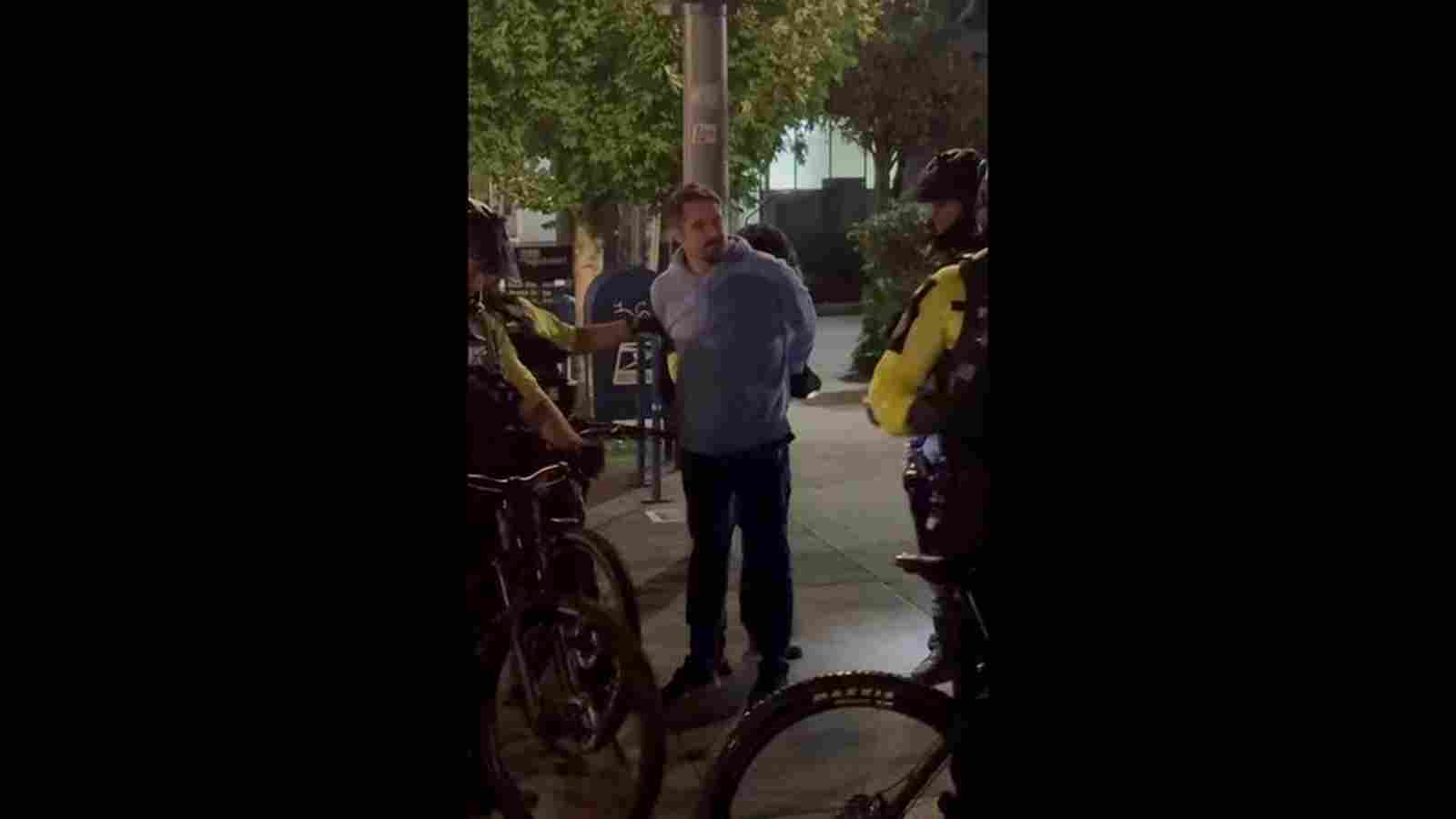
- Nick Sortor, a conservative journalist, was arrested outside Portland’s ICE facility on October 2, 2025, amid protests.
- Sortor and two others were charged with second-degree disorderly conduct and released without bond.
- Video footage suggests Sortor may have been attacked before his arrest.
- Portland’s ICE facility has faced more than 100 nights of protest, with escalating violence.
- Federal and local authorities differ sharply on how to manage the unrest.
Portland’s ICE Facility Becomes a Flashpoint Once Again
On the evening of October 2, 2025, the atmosphere outside the U.S. Immigration and Customs Enforcement (ICE) facility in Portland was thick with tension and uncertainty. For the city, these scenes have become almost routine—a city block transformed nightly into a battleground between protesters, federal agents, and local police. Yet this particular night would draw national attention for a different reason: the arrest of conservative journalist Nick Sortor, a figure whose digital presence and coverage of social unrest has made him a lightning rod for both criticism and support.
According to Fox News, Sortor was present at the scene, capturing footage of protesters clashing with federal agents. His videos—often raw and unfiltered—have garnered him a significant following, especially among those skeptical of official narratives. As the night unfolded, tensions boiled over. Portland Police Bureau (PPB) reported multiple physical altercations near the ICE building, prompting officers to intervene. Sortor, along with two other individuals—Son Mi Yi and Angela Davis—was arrested on charges of second-degree disorderly conduct and booked into the Multnomah County Detention Center.
Chaos, Clashes, and Controversy: What Led to the Arrest?
Eyewitness accounts and video footage shared widely on social media painted a chaotic picture. Independent footage, cited by Mario Nawfal on X, appears to show Sortor being attacked by activists while filming. Witnesses reported that police liaisons were nearby but did not immediately intervene in the scuffle. The question quickly emerged: Did police target the right person?
Sortor later recounted the incident to Fox News correspondent Bill Melugin, describing how he was surrounded and pushed down by protesters before a punch was thrown. He claims he swung back, missed, and then disengaged, seeking out Portland police for help—only to find himself handcuffed and placed in a cruiser. Sortor’s arrest came after a night marked by repeated fights, escalating tensions, and rapid police responses. PPB stated that both parties involved in an earlier fight had been detained and released, with neither wishing to file a police report. The bureau continued to monitor the situation, eventually arresting Sortor and two others during a subsequent outbreak of violence.
Sortor, released without bond, has not publicly commented on the details of his arrest, though his posts on X earlier in the week hinted at his concerns about being targeted. “If I defend myself, *I* will be the one who gets arrested. Not the assailant,” he tweeted, calling Portland a “third world hellhole.”
Political Tensions and Federal Intervention: A City at Crossroads
Portland’s ICE facility has been a focal point for protests, particularly since the Trump administration prioritized the city in its broader crackdown on crime in Democratic-led cities. The unrest has gone beyond chants and signs: officials report that the facility has faced violence for more than 100 consecutive nights. Bottle rockets, rocks, lasers, and barricades have marked the nightly confrontations, with federal agents reporting attacks and doxxing of staff members.
This latest incident occurred just hours before a federal judge was set to hear arguments on whether to block President Trump’s callout of National Guard troops to Portland. The city and state government have challenged the move, arguing that federal intervention infringes on Oregon’s sovereignty in managing its own law enforcement. Despite federal claims of rising disorder, Portland Police Bureau Chief Bob Day told CNN that overall crime is down by double digits and that the unrest is largely confined to a single block. “We’re talking about one city block in 145 square miles,” Day emphasized. He underscored that local police have made over 20 arrests in recent months and remain engaged in managing the situation.
Meanwhile, National Guard troops were being prepared for deployment, receiving supplies and training at a facility 100 miles away. The political and logistical tug-of-war between federal and local authorities adds another layer of complexity to the nightly drama outside the ICE building.
Nick Sortor: A Voice in the Maelstrom
Sortor’s arrest did not go unnoticed online. With over 1.2 million followers on X and a reputation for high-profile coverage—including the East Palestine train derailment and Maui wildfires—Sortor is no stranger to contentious reporting. His presence in Portland was part of a larger narrative: documenting the nationwide immigration enforcement crackdown and its local impact. Supporters claim Sortor was arrested for defending himself, not instigating violence. Critics point to the city’s fraught relationship with demonstrators and reporters, where the lines between observer and participant can blur in the heat of conflict.
Sortor’s coverage often challenges official accounts, bringing attention to stories he believes are underreported or misrepresented. In Portland, this approach has placed him at the center of the storm—both literally and figuratively.
Legal Aftermath and the Debate Over Protest Policing
As of Friday morning, jail records indicated that Sortor and Son Mi Yi were released without bond, while Angela Davis remained in custody. No court date was immediately set, and it was unclear whether any of those arrested had retained attorneys. In the past, Portland prosecutors have often declined to pursue charges for nonviolent offenses during protests, though the Multnomah County district attorney has signaled a potential change in policy. CNN reached out to the DA’s office for comment on Sortor’s case, but no official statement has been released.
The controversy surrounding protest policing in Portland is far from new. The city has faced criticism for both heavy-handed tactics and perceived inaction. The deployment of federal forces and now National Guard troops underscores the high stakes and deep divisions over how best to balance public safety, free speech, and the right to protest.
The Unanswered Questions
Sortor’s arrest has reignited debate about the treatment of journalists and the complexity of law enforcement in protest environments. Was he arrested for defending himself or for his role as a participant? Did police respond appropriately to the chaos, or did they miss the mark? As video footage circulates and social media amplifies each perspective, Portland’s struggle to manage protest-related unrest remains a microcosm of broader national tensions.
For now, Nick Sortor’s story stands as a reminder of how quickly the line between observer and actor can blur—and how, in the rush of events, the facts can become as contested as the streets themselves.
Assessment: The facts presented reveal a city grappling with the consequences of sustained protest, shifting law enforcement priorities, and the precarious position of journalists documenting civil unrest. Nick Sortor’s arrest underscores the challenges facing both reporters and police in fast-moving, emotionally charged environments, and raises critical questions about accountability and transparency in the policing of protest.