
Quick Read
- Nissan’s new $17,000 electric vehicle sees early success in China’s EV market, thanks to its affordability and practicality.
- China’s dominance in EV manufacturing and battery innovation has driven global competition and lower EV prices.
- Despite high demand, global challenges like tariffs, overcapacity, and stiff competition may limit Nissan’s long-term gains.
- EV market growth continues globally, with China and Tesla leading, but regional trade tensions complicate dynamics.
Nissan’s latest $17,000 electric vehicle (EV) has made a splash in China’s competitive market, where it has recorded a surge in early orders. As a global automaker navigating a landscape dominated by Chinese manufacturers and Tesla, this move signals Nissan’s attempt to redefine its position in the evolving EV sector. Yet, the question remains: can Nissan sustain this momentum in one of the most challenging EV markets in the world?
China’s EV Market: A Global Powerhouse
China’s ascent as the leading force in the global EV industry dates back to its strategic pivot in the early 2000s. After joining the World Trade Organization in 2001, China rapidly developed its manufacturing sector, and by 2007, the government prioritized EVs under the guidance of Wan Gang, a German-trained engineer. According to RTÉ, Wan’s policies enabled the country to leapfrog traditional automakers, focusing on lithium-iron-phosphate (LFP) batteries, which are cheaper, safer, and easier to produce domestically. These advancements catapulted Chinese manufacturers like BYD into the global spotlight.
Today, the Chinese auto market is unrivaled in scale. With over 23 million cars expected to be sold in 2024, including 6 million battery EVs and 5 million plug-in hybrids, the country is setting benchmarks for innovation and affordability. Yet this intense competition has also pushed EV prices lower, creating a challenging environment for international entrants like Nissan.
Nissan’s Affordable EV: A Strategic Gamble
Nissan’s $17,000 EV enters the Chinese market at a pivotal moment. By offering a competitively priced model, the company aims to tap into the growing demand for affordable, practical EVs. According to Glassguide, global EV sales surged 35% in 2023, with battery-electric vehicles (BEVs) capturing 15% of the new-car market share. This trend underscores the growing appetite for cost-effective electric options.
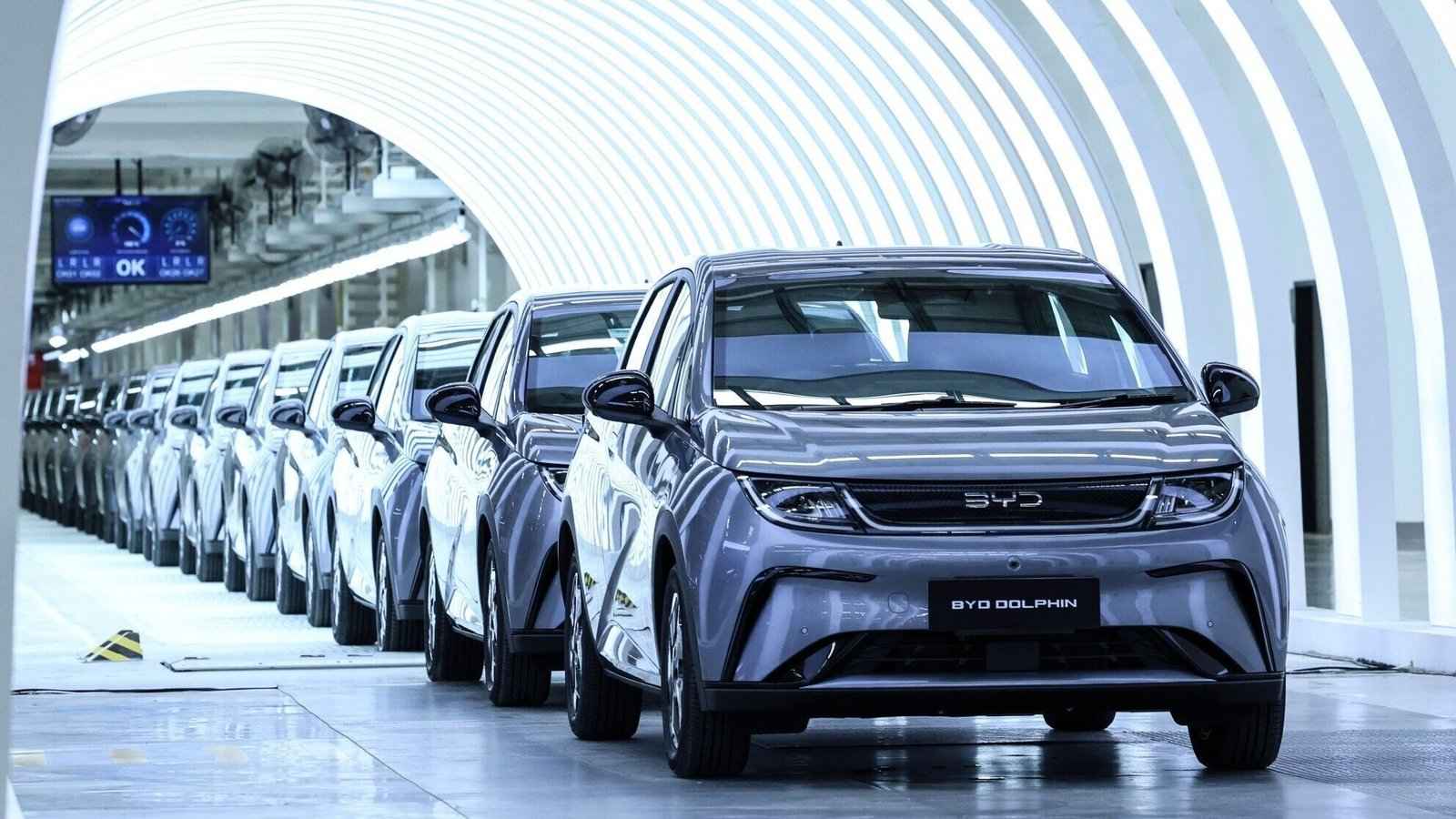
However, Nissan faces stiff competition from Chinese brands like BYD and GAC Aion, which dominate the market with locally-produced vehicles. The BYD Dolphin, for instance, recorded 418,994 deliveries in 2023, showcasing the strong foothold domestic brands have established. Nissan’s ability to carve out a sustainable niche in this crowded field will depend on more than just affordability; innovation and strategic partnerships will be key.
Global Trade Tensions and Their Impact
While Nissan’s move highlights its ambition, external factors like global trade policies could impact its success. In 2023, the Biden administration imposed 100% tariffs on Chinese EVs, while the European Union implemented tariffs of up to 35%. According to RTÉ, these measures aim to counterbalance China’s growing influence in the EV sector but also risk inflating prices and slowing market growth.
China has retaliated with its own tariffs, further fragmenting global markets. As a result, automakers like Nissan must navigate a delicate balance between maintaining competitive pricing and adapting to these geopolitical shifts. For international brands entering the Chinese market, such policies present both risks and opportunities.
China’s Influence on Global EV Pricing
China’s dominance in EV manufacturing has had a ripple effect on global pricing. With overcapacity becoming a significant issue, Chinese manufacturers are aggressively expanding into international markets, including Europe and the United States. This influx of affordable EVs has forced traditional automakers to lower their prices, accelerating the global shift toward electrification.
However, as noted by RTÉ, this competitive pressure has also revealed vulnerabilities among legacy automakers. European manufacturers like Volkswagen are struggling to keep pace with Chinese and American rivals, while South Korean brands like Hyundai and Kia are thriving due to substantial government investments. In this context, Nissan’s $17,000 EV represents a bold but necessary step to remain relevant.
The Road Ahead for Nissan and the Global EV Market
As the EV market evolves, affordability and innovation will remain critical drivers of success. By targeting price-sensitive consumers, Nissan has positioned itself to capitalize on a growing segment. Yet, the company must contend with challenges like overcapacity, trade tensions, and rapidly advancing technology from competitors.
Looking forward, the global EV landscape is set for continued growth. Tesla, which sold over 1.2 million Model Y units in 2023, remains a dominant force, while Chinese brands like BYD are expanding aggressively overseas. For automakers like Nissan, staying competitive will require not only innovation but also strategic adaptability to navigate this dynamic market.
Nissan’s $17,000 EV is a promising step toward greater affordability in the electric vehicle market. However, sustaining success in China’s hyper-competitive landscape will require the company to innovate and adapt amid intensifying global challenges.