
Quick Read
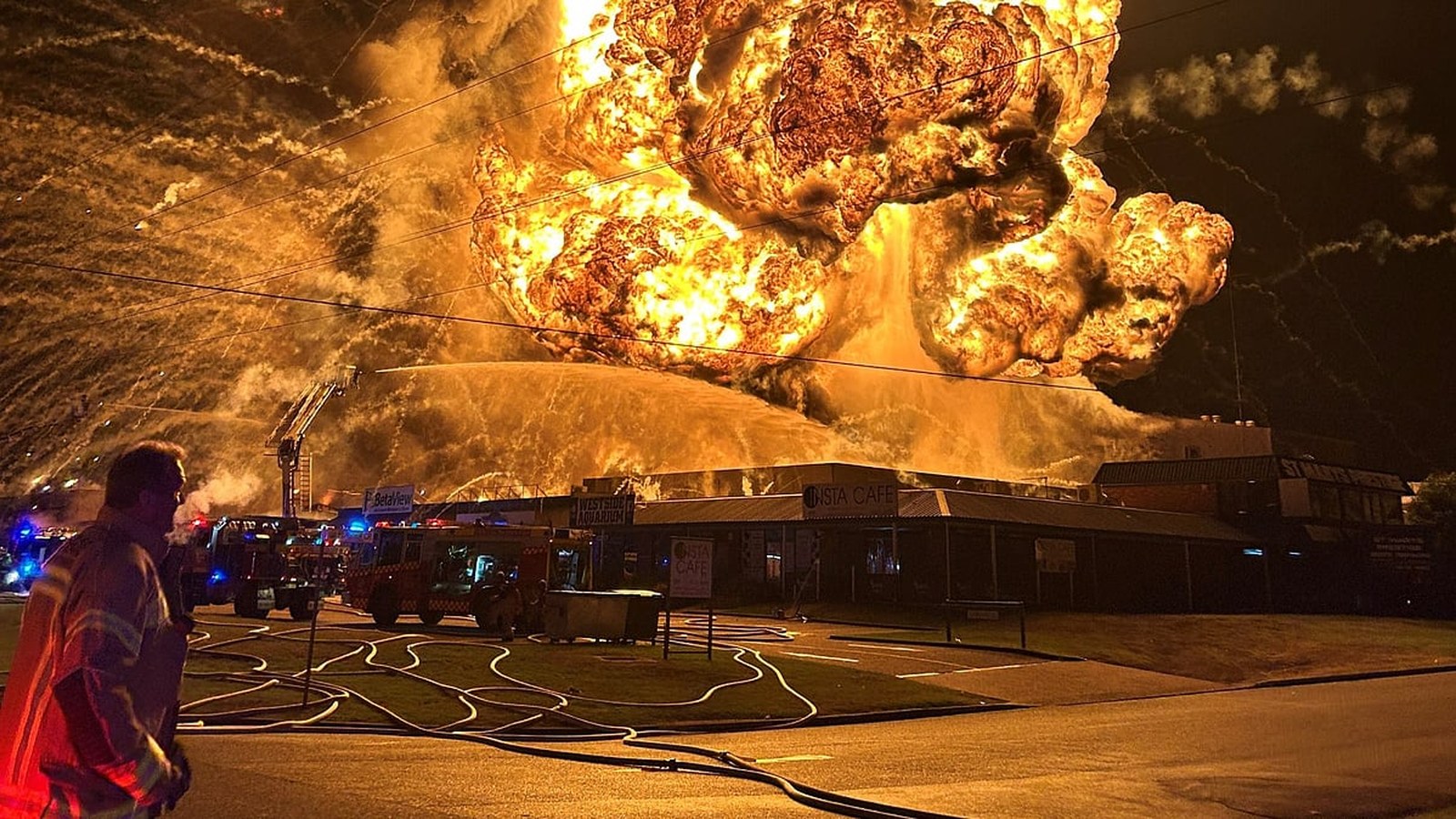
- A violent explosion erupted at a chemical recycling facility in North St Marys, Sydney’s west, on November 29, 2025.
- The fireball reached up to 150 metres, and debris was thrown across neighbouring suburbs.
- Two firefighters sustained minor injuries from chemical exposure but were treated at the scene.
- More than 50 fire units responded, and a 200-metre exclusion zone was established.
- Investigators from multiple agencies are still determining the cause; hazardous materials may fuel the blaze for days.
Massive Fireball and Explosions Rock North St Marys
It started as a typical Saturday night in Sydney’s west, but what unfolded in North St Marys was anything but ordinary. At around 10:50 pm, emergency services rushed to a chemical recycling facility on Kurrajong Street, responding to reports of a fire that, in minutes, would escalate into a once-in-a-career event for seasoned firefighters.
The blaze ignited with extraordinary intensity. Within moments, a violent explosion tore through the facility, sending debris, concrete, and even a storage tank hurtling through the air. Witnesses in nearby suburbs, including Penrith several kilometers away, felt the force of the blasts. According to ABC News, a fireball erupted more than 100 metres into the sky—some reports put the figure at 150 metres—illuminating the night and showering neighbouring properties with bricks and concrete.
Firefighters Face Unprecedented Danger
For Fire and Rescue NSW Commissioner Jeremy Fewtrell, this was an incident unlike any he’d seen in his decades of service. He described the explosion as “significant” and a “once in a career type of experience.” Veteran firefighters echoed his sentiment, some admitting they’d never witnessed a fire of such magnitude in forty years on the job. The scale and ferocity of the explosion left boundary walls of neighbouring businesses blown apart, and crews scrambled to contain the breach and shield what remained inside.
More than 50 fire units and hundreds of firefighters converged on the scene, battling not only the flames but also flying debris. In one extraordinary moment, a storage tank became a projectile, landing nearly 200 metres away—just short of a nearby railway line. Quick thinking and tactical repositioning of equipment, including ladder platforms, likely spared lives. “One of the cherry pickers had just been moved 30 or 40 metres further back, and that definitely kept crews out of the worst of it,” Fewtrell told ABC News.
Injuries and Safety: The Human Cost
Miraculously, despite the scale of destruction, no lives were lost. Two firefighters sustained minor injuries—skin irritation and minor burns from chemical exposure. Both were treated on-site by paramedics and did not require hospitalization. The real miracle, as Commissioner Fewtrell emphasized, was that crews remained safe amid the chaos, thanks to sound judgment and rapid decision-making.
Hazardous Materials and Lingering Danger
The fire’s persistence was fueled by hazardous chemicals stored at the facility, complicating efforts to contain the inferno. Hazardous materials crews remained on-site throughout Sunday, securing chemical substances and monitoring risks. Residents in surrounding suburbs were urged to keep windows and doors shut as plumes of thick, dark smoke drifted across the area. Authorities deployed drones equipped with air monitoring devices to track the spread of fumes and provide real-time data to ground teams. The Environment Protection Agency, alongside fire investigators and NSW Police, initiated a detailed investigation into the cause, with experts warning that the fire could burn for days due to the sheer volume of hazardous material involved.
Officials established a 200-metre exclusion zone around the site, urging motorists to avoid the area. The impact of the explosions, which continued into the morning, hindered initial containment efforts and left the building destroyed, its remains smouldering as dusk fell. Investigators began their painstaking work of piecing together evidence, though the exact cause remains undetermined. As Commissioner Fewtrell noted, “It may be that we’re not able to [determine the cause]; we’ll just see what evidence and information is available.”
Community Response and Ongoing Investigation
The fire’s aftermath reverberated across Western Sydney. Residents awoke to find their neighbourhoods blanketed in smoke, some startled by the force of the explosions hours earlier. The exclusion zone and air quality warnings underscored the seriousness of the incident, as crews continued to monitor the site for flare-ups and chemical hazards.
Firefighting operations have since scaled back, with investigators from multiple agencies—Fire and Rescue NSW, the Environment Protection Agency, and NSW Police—working to determine the sequence of events that led to the disaster. Officials cautioned that the fire could continue to burn for days, and monitoring systems remain in place to assess risks and support containment efforts.
The North St Marys fire was not just another industrial accident. It was a vivid reminder of the unpredictable dangers lurking in facilities that handle hazardous materials, and a testament to the bravery and expertise of firefighters who face the unknown with every callout.
Assessment: The North St Marys fire revealed the razor-thin line between catastrophe and safety in hazardous industrial settings. The rapid, coordinated response of emergency services undoubtedly prevented further tragedy, but the incident also raises urgent questions about risk management and community preparedness around chemical facilities. As investigations continue, the story stands as both a warning and a tribute—to those who run toward danger, and to the resilience of a community shaken but not broken.