


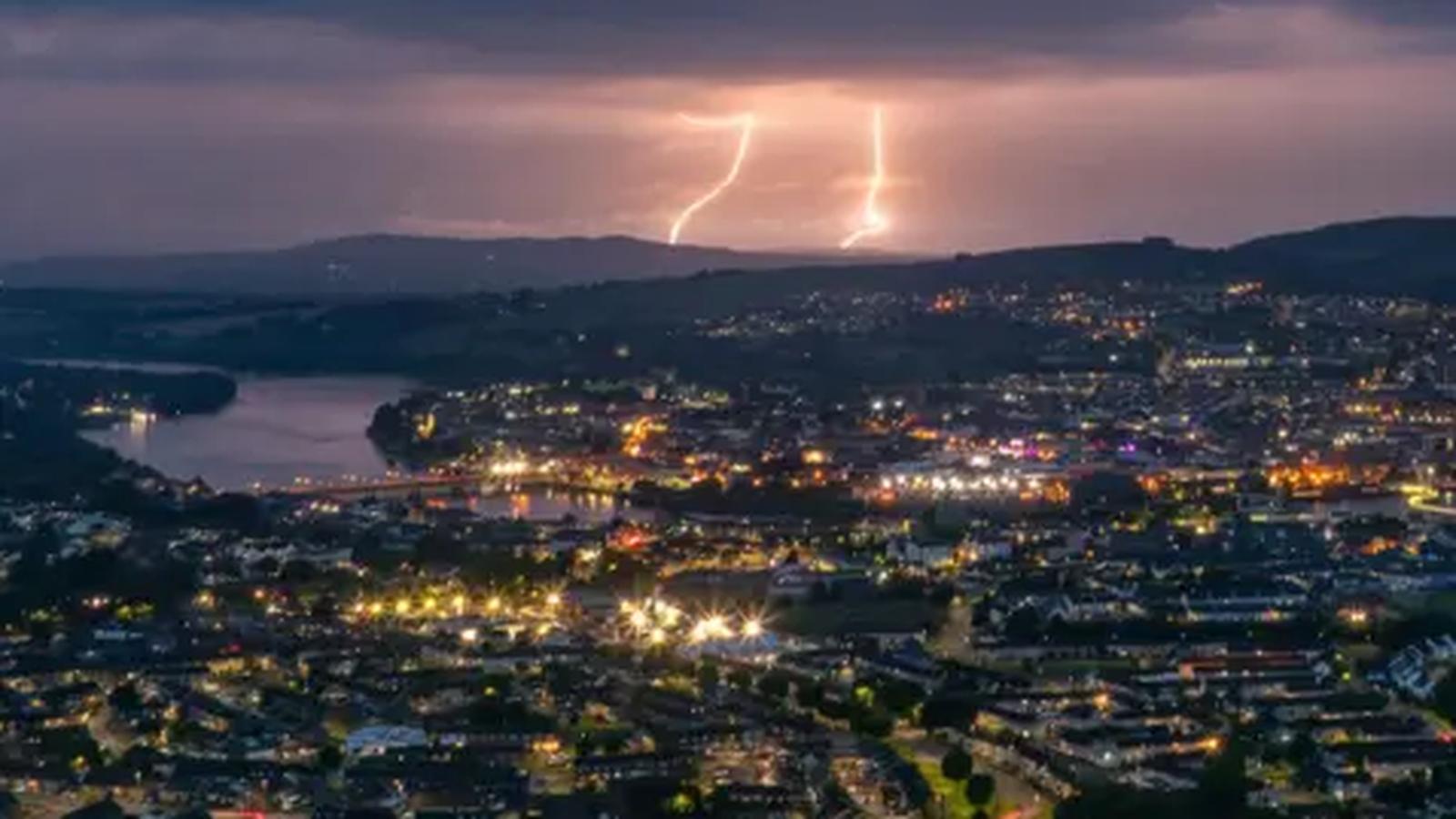
An Electric Night in the North West
The skies over north-west Ireland were illuminated by nearly 9,000 lightning strikes on Thursday night, marking an extraordinary meteorological event following a period of record-breaking heat. Residents across Counties Londonderry and Donegal reported a sustained display of electrical activity that lasted for over an hour, with many describing the phenomenon as a once-in-a-lifetime sight.
The intense storm activity followed soaring temperatures across Northern Ireland. Castlederg in County Tyrone recorded a high of 30.8C, matching a 50-year-old record set in 1976. Furthermore, Murlough in County Down experienced its warmest June night on record, with temperatures failing to drop below 19.1C on Thursday.
Ongoing Meteorological Risks
While the visual spectacle drew crowds to coastal areas like Magilligan beach and Castlerock, authorities remain focused on the potential for infrastructure damage. The Met Office and the Irish weather service, Met Éireann, have issued active thunderstorm warnings for Friday.
Forecasters anticipate that the storms, while localized, could bring between 15-30mm of rain in short periods, along with hail and gusty winds. These conditions pose a tangible risk of localized flooding, travel disruptions, and potential power outages. Met Éireann has extended warnings for nine counties in the Republic of Ireland until 22:00 local time, urging the public to remain vigilant as the weather system clears.
Analysis: A Rare Atmospheric Convergence
Meteorologists point to the sharp transition from extreme heat to unstable, moisture-rich air as the primary driver for the scale of this event. The convergence of high-ground heat in the North West with incoming atmospheric instability created the perfect conditions for a sustained, high-frequency electrical storm.
While thunderstorms are not uncommon in the region, the sheer volume of 9,000 strikes in such a concentrated timeframe highlights the severity of the current atmospheric shift. As Northern Ireland grapples with rising average temperatures, events of this nature serve as a reminder of the volatility that can accompany rapid climatic transitions. For infrastructure managers, the challenge now lies in ensuring that power and transport networks can withstand the dual pressures of extreme heat and sudden, high-intensity storm cells.