
Quick Read
- Novak Djokovic reached his 225th career quarterfinal at the Athens ATP 250, defeating Alejandro Tabilo before facing Nuno Borges.
- Djokovic’s serve was dominant, winning 92% of first-serve points and hitting 13 aces in his last match.
- In a recent interview, Djokovic named Stan Wawrinka as the most underrated player he’s ever faced, citing their Grand Slam battles.
- Djokovic reflected on his rivalries with Federer, Nadal, Alcaraz, and Sinner, noting the evolution of competition in tennis.
- Wawrinka, despite his age, continues to compete at a high level and earned Djokovic’s respect for his career achievements.
Djokovic’s Quarterfinal Dominance in Athens: Numbers Tell the Story
On a brisk November morning at the OAKA Basketball Arena, Novak Djokovic stepped onto the court in Athens, cool and collected, ready to face Portugal’s Nuno Borges for a spot in the ATP 250 quarterfinals. For tennis fans worldwide, this wasn’t just another match—it was a chance to witness the game’s most decorated active player, a 24-time Grand Slam champion, continue his relentless pursuit of excellence.
The opening exchanges set the tone. Djokovic, with his trademark precision, struck first, winning his service game to love. Borges, determined not to fade into the background, saved break points and showed flashes of composure on his serve. Yet the Serb’s high first-serve percentage and aggressive returns kept the pressure mounting. Borges, unable to seize break point opportunities, found himself continually on the defensive.
After ten minutes of intense play, Borges managed to even the score, but Djokovic’s confidence was unmistakable. He looked relaxed, almost serene—a man who knows what it takes to win and trusts his process. The scoreboard ticked to 2-1 in Djokovic’s favor, and the match seemed poised to follow a familiar script: Djokovic dictating the tempo, Borges fighting valiantly to keep pace.
Statistical Mastery: Djokovic’s Serve and the Borges Challenge
Numbers rarely lie in tennis, and Djokovic’s serve statistics for the tournament were nothing short of dominant. Against Alejandro Tabilo in the previous round, Djokovic won a staggering 92% of his first-serve points, blasting 13 aces and conceding zero double faults. He saved every break point he faced—a testament to his composure under pressure.
Borges, to his credit, had also impressed: 8 aces, just one double fault, and winning 78% of his first-serve points in the match prior. But the difference was clear. Djokovic had played fewer sets and games, and yet looked fresher, more efficient. Borges had scored more winners overall, but Djokovic’s ability to win crucial points—especially on serve—meant he rarely faced danger.
As the match progressed, Borges continued to save break points, but Djokovic’s relentless baseline play and shot selection wore him down. The Serb’s focus was unwavering, intent on maintaining momentum ahead of the prestigious Nitto ATP Finals, just a week away.
Djokovic on Rivalries, Tennis Evolution, and Mindset
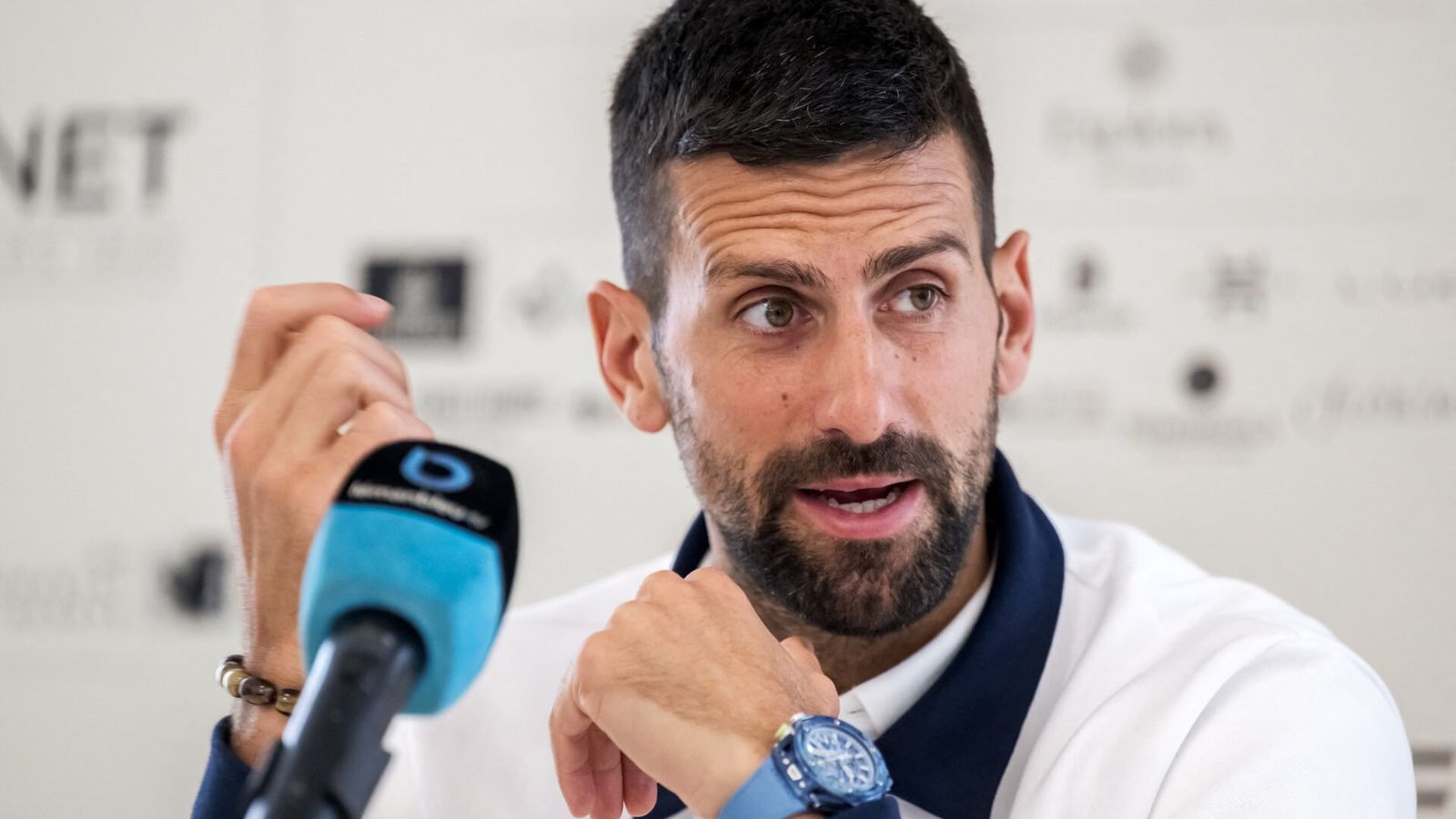
Off the court, Djokovic’s reflections were as thoughtful as his game is clinical. In a candid interview, he mused about tennis history and his own evolution as a player: “I would have loved to see the Wimbledon match between Björn Borg and John McEnroe live. To play with wooden rackets—how different would that have felt?”
He spoke openly about his main rivals—Roger Federer and Rafael Nadal—with whom he has shared more than two decades of competition. “These are two very different rivalries,” Djokovic explained. “With Federer and Nadal, we have history stretching over 20 years. Now, with Carlos Alcaraz and Jannik Sinner, it’s a new chapter. They’re young, and our rivalry is just three years old. It’s not comparable, but it’s exciting for the sport.”
Djokovic also offered advice to young players: “Play for many years, be patient, trust the process. Balance professionalism and your private life. Dedication is essential, but never lose your essence.”
His own journey, he emphasized, was shaped by devotion and passion: “My dedication and love for tennis have been the key to my success. When you achieve something big, you realize it’s not just about winning anymore, but defending your position. The mindset shifts—now it’s about pushing forward, staying on top.”
The Underrated Stan Wawrinka: Djokovic’s Candid Admission
Perhaps the most striking revelation came when Djokovic was asked about the most underrated player he’s ever faced. The answer was immediate: Stan Wawrinka. “He is very underappreciated and underrated, considering he is a three-time Grand Slam champion,” Djokovic noted. “People often forget about him and what he’s achieved—he’s done more than 90% of players in the history of the game.” (The Tennis Gazette)
Djokovic’s battles with Wawrinka have been legendary. The Swiss star denied Djokovic in two Grand Slam finals: the 2015 French Open and the 2016 US Open. In their nine Grand Slam meetings, Djokovic lost four times—a remarkable statistic, given his dominance elsewhere. The 2015 French Open defeat was particularly memorable, as Djokovic missed a chance to complete his Career Grand Slam, having already dispatched Rafael Nadal in the quarterfinals.
While their rivalry has cooled in recent years, Wawrinka’s recent performances in Athens and elsewhere show he’s still a force, even as he approaches his 41st birthday. Djokovic’s respect is genuine, a recognition of the Swiss player’s resilience and achievements.
Looking Ahead: Djokovic’s Quest for More
As Djokovic advances to yet another quarterfinal—his 225th—he remains a symbol of consistency and ambition in men’s tennis. His preparation for the upcoming Nitto ATP Finals is meticulous. Each match, each point, is a step toward further cementing his legacy.
For Borges, the experience of playing Djokovic is invaluable. The Portuguese player showed heart and skill but came up against a competitor whose standards remain sky-high. For fans, it’s a reminder that tennis at this level is a game of margins—and that greatness is forged not just in victory, but in the ability to maintain it over time.
As the Athens tournament continues, all eyes remain on Djokovic. Will he add yet another trophy to his collection? Or will a new challenger emerge to test his resolve?
Djokovic’s journey in Athens isn’t just about winning matches—it’s a masterclass in preparation, mentality, and respect for the sport’s history. His recognition of Wawrinka’s underrated greatness and his philosophical approach to rivalry show why he remains a compelling figure, both on and off the court. As the tennis world looks ahead, Djokovic’s story continues to set the standard for what it means to pursue excellence, adapt to change, and honor the game’s legacy.