
Quick Read
- Zohran Mamdani emerged as the frontrunner in the NYC mayoral debate, emphasizing affordability and integrity.
- Andrew Cuomo highlighted his extensive experience but faced criticism over past scandals.
- Curtis Sliwa positioned himself as an outsider, appealing to moderate voters.
- Key issues discussed included Trump’s influence, housing affordability, and the Gaza conflict.
- The debate showcased the contrasting styles and priorities of the candidates.
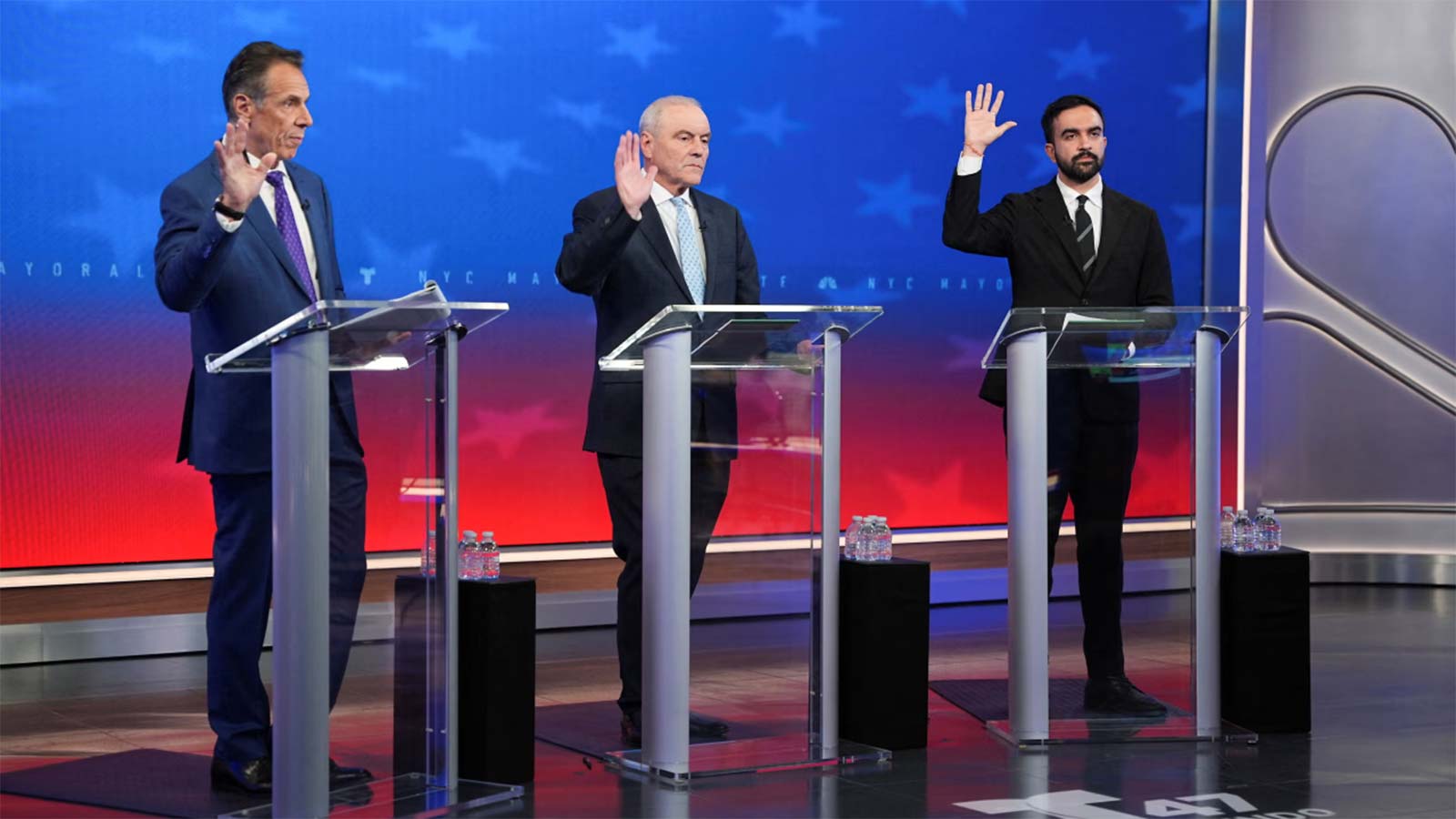
The first general election debate for New York City’s mayoral race brought together Zohran Mamdani, Andrew Cuomo, and Curtis Sliwa in a heated exchange on key issues affecting the city. With early voting set to begin soon, the stakes were high for all three candidates vying to lead America’s largest city. Zohran Mamdani, the Democratic nominee and a self-described democratic socialist, stood out as the frontrunner in polls, while former Governor Andrew Cuomo and Republican Curtis Sliwa aimed to challenge his lead.
Trump’s Presence Looms Over the Debate
Donald Trump’s influence was a recurring theme throughout the debate, underscoring his impact on New York City politics. All three candidates agreed they would resist Trump’s potential intervention, such as deploying the National Guard to the city. Mamdani positioned himself as the candidate who could “stand up to Trump and deliver on affordability.” Cuomo warned that Trump might seek to dominate New York City if Mamdani were elected, referring to the possibility of “Mayor Trump.” Sliwa took a different stance, cautioning against provoking Trump unnecessarily.
Mamdani criticized Trump’s deportation policies while emphasizing his willingness to cooperate with the president if it meant addressing affordability issues. The candidates were also asked about their interactions with Trump, with Mamdani revealing he had never spoken to him, while Cuomo and Sliwa recounted past conversations. The discussion highlighted the complex relationship New York City has with the $1 and his administration.
Experience vs. Integrity: Cuomo and Mamdani Clash
Andrew Cuomo leveraged his extensive political resume, including his tenure as New York’s governor, attorney general, and housing secretary, to argue his case for leadership. He criticized Mamdani’s lack of experience, stating, “This is no job for on-the-job training.” Mamdani countered by emphasizing his integrity and lived experience as a New Yorker. He pointed to his time as a state assembly member and his familiarity with the city’s challenges, such as unreliable public transportation and high rent.
The debate highlighted the tension between Cuomo’s claim to expertise and Mamdani’s appeal as a relatable figure who understands the struggles of everyday New Yorkers. Mamdani’s response, “What I don’t have in experience, I make up for in integrity,” resonated with many viewers, contrasting sharply with Cuomo’s polished but impersonal approach.
Sliwa’s Outsider Appeal
Curtis Sliwa, founder of the Guardian Angels, positioned himself as the outsider in the race, distancing himself from the political establishment. He criticized Mamdani’s policies as unrealistic and mocked Cuomo for losing the Democratic primary. Sliwa’s remarks often carried a street-smart charm, drawing on his long history of working with New Yorkers facing crises, such as homelessness and mental health issues.
Sliwa’s performance was marked by fiery exchanges, including his claim that Cuomo lacked the legacy of his father, Mario Cuomo. Despite his efforts to stand out, Sliwa struggled to gain traction against his more prominent opponents, though he did manage to appeal to moderate voters dissatisfied with the other candidates.
Housing, Gaza, and Affordability: Key Policy Debates
Housing emerged as a critical issue, with Mamdani highlighting affordability as his primary focus. He proposed freezing rent increases for rent-controlled apartments and making buses free, though his opponents questioned the feasibility of these plans. Cuomo and Sliwa criticized Mamdani’s proposals as overly ambitious, with Cuomo calling them “myths” reliant on unrealistic tax reforms.
The candidates also sparred over the Gaza conflict and Israel. Mamdani faced scrutiny for his past remarks on Israel but emphasized his commitment to learning from conversations with Jewish New Yorkers. Cuomo accused Mamdani of anti-Israel sentiment, while Mamdani called out Cuomo for failing to engage meaningfully with Muslim communities. The exchanges underscored the complexities of navigating international issues within a local political context.
The Front-Runner Emerges
Mamdani’s performance during the debate solidified his status as the frontrunner. He remained calm and focused, effectively addressing affordability concerns while countering attacks from his opponents. His ability to connect emotionally with voters, particularly on issues like migrant education and housing, set him apart. Cuomo’s emphasis on experience and Sliwa’s outsider rhetoric added depth to the debate but ultimately failed to overshadow Mamdani’s appeal.
The debate offered a glimpse into the candidates’ visions for New York City’s future, highlighting their strengths and weaknesses. As early voting approaches, the race remains a critical moment for the city, with implications that extend beyond its borders.
New York City’s mayoral race is a pivotal event, reflecting the city’s challenges and aspirations. The debate showcased the candidates’ contrasting styles and priorities, leaving voters with much to consider as they decide who will lead this vibrant and complex metropolis.