
Quick Read
- SWIFT partners with ConsenSys and 30+ banks to build on-chain payments infrastructure.
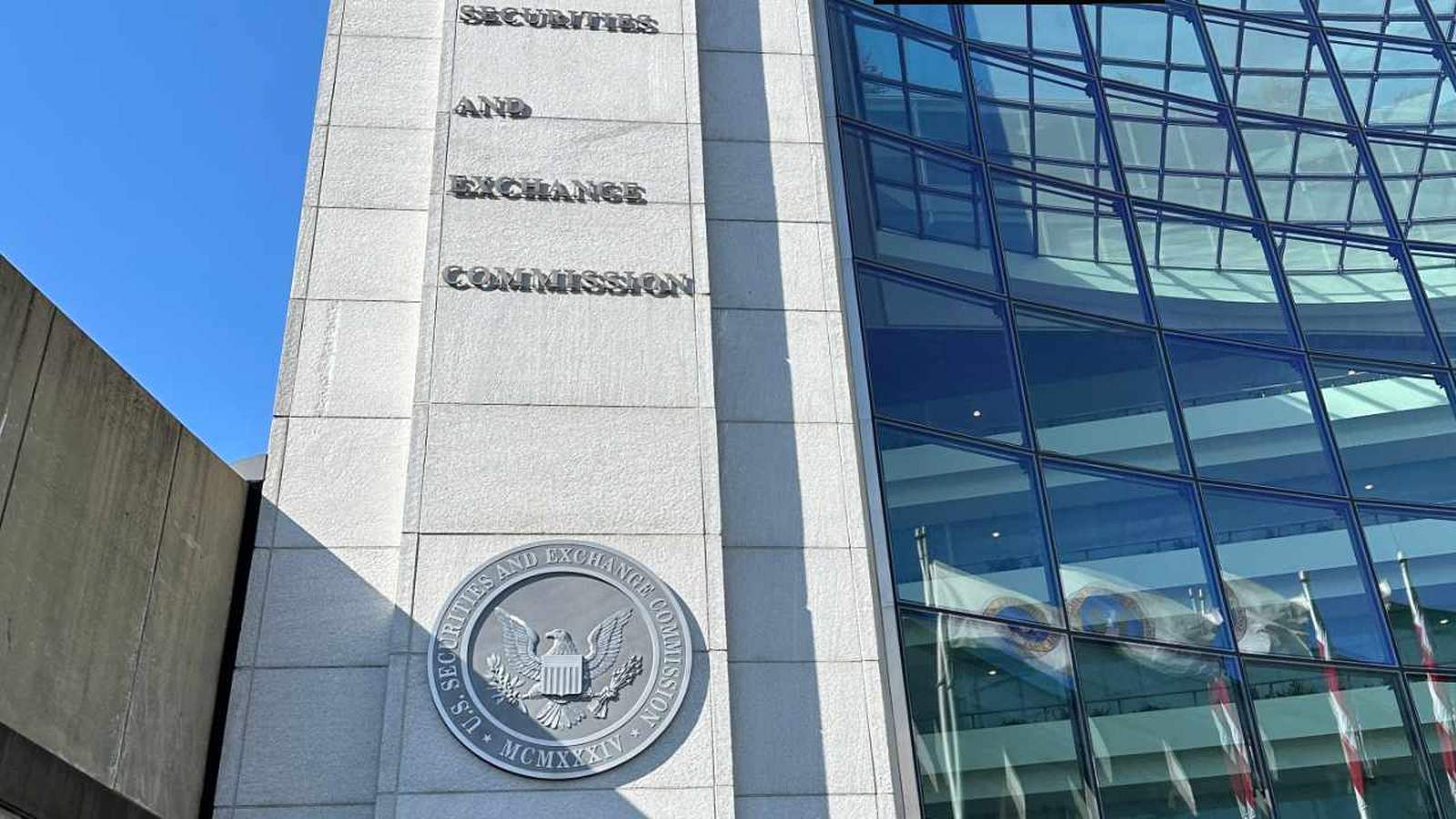
- SEC halts trading of QMMM stock after a nearly 1,000% surge linked to crypto treasury announcement.
- Indonesian university launches on-chain credentialing for 60,000 students.
- KGeN raises $43.5M to expand verified, on-chain identity and loyalty across AI, DeFi, and gaming.
- SEC and CFTC pledge closer cooperation on crypto market oversight.
SWIFT and the Blockchain Leap: A Turning Point for Global Payments
For decades, SWIFT has been the silent backbone of international finance, connecting over 11,500 institutions across more than 220 countries. Now, the world’s most ubiquitous interbank messaging network is poised for a radical shift. SWIFT announced it will integrate a blockchain ledger into its infrastructure, starting with a prototype designed by ConsenSys, the Ethereum-focused development powerhouse. The goal? Instant, round-the-clock cross-border payments validated by smart contracts, not just paperwork and trust.
In partnership with over 30 global financial institutions—including Bank of America, Citi, JP Morgan Chase, Deutsche Bank, and Wells Fargo—SWIFT’s move marks a watershed moment for traditional finance (TradFi). The ledger will not only record and sequence transactions but also enforce rules and compliance standards via code. This approach promises to bridge legacy rails with emerging digital networks, making tokenized value transfers a seamless reality.
Javier Pérez-Tasso, SWIFT’s CEO, described the initiative as a necessary evolution: “Banks are ready for it. And they’re asking us to play a bigger role.” For SWIFT, this isn’t just about technological upgrade—it’s a strategic response to the mounting demand for trusted, programmable, and interoperable digital payments. The ledger’s architecture, still under consideration between Ethereum’s mainnet and Linea (a ConsenSys blockchain), will likely set industry standards for years to come.
The implications are profound. If successful, SWIFT’s on-chain ledger could slash costs, accelerate settlement times, and increase transparency for institutions and regulators alike. Stablecoins and tokenized deposits stand to gain the most, as their adoption across banking giants could finally bridge the gap between fiat and crypto ecosystems. As Decrypt notes, this integration signals not just acceptance but a strategic embrace of blockchain as the default payment rail for the future.
SEC’s Crackdown: The Risks of On-Chain Hype and Manipulation
While the financial world celebrates blockchain’s promise, regulators are sharpening their focus on the risks. The U.S. Securities and Exchange Commission (SEC) recently halted trading in QMMM, a Solana treasury stock, after its price surged nearly 1,000% in three weeks following a crypto allocation announcement. The dramatic spike, driven in part by social media hype and external promotion, prompted the SEC to cite potential market manipulation and the dangers of speculative crypto disclosures.
QMMM’s plan to build a $100 million portfolio in Solana, Bitcoin, and Ethereum set off a frenzy, with shares peaking at $207 before settling to $88 in after-hours trading. The SEC’s action is not isolated; it suspended Smart Digital Group Ltd. in the same sweep and launched a dedicated Task Force to investigate digital asset pump-and-dump schemes. According to Blockchain Magazine, this is part of a broader regulatory effort to prevent artificial demand and protect investors from volatility driven by online speculation.
The risks extend beyond one company. Market analysts flagged other suspicious surges, such as MYX Finance’s 270% jump in a day, and noted how Coinbase’s reduction of XRP reserves during high volatility raised further concerns. The SEC’s intervention underscores the delicate balance regulators must strike between fostering innovation and preventing manipulation. As companies increasingly link their equity performance to crypto treasury strategies, the need for clear guidelines—and robust oversight—becomes ever more critical.
Beyond Finance: On-Chain Use Cases Transforming Education and Identity
The blockchain revolution isn’t confined to Wall Street. In Indonesia, Universitas Gadjah Mada (UGM) is pioneering on-chain credentialing for its 60,000 students. Partnering with Space and Time, a decentralized database platform, UGM will store course records directly on-chain, creating immutable credentials accessible to employers and institutions worldwide. The initiative, which begins with English proficiency courses, aims to modernize education access—especially for the unbanked—and provide students with verifiable, portable achievements.
Each student receives a digital wallet preloaded with SXT tokens to pay tuition and fees, bypassing traditional financial infrastructure. As Scott Dykstra, CTO of Space and Time, told Decrypt, “By onboarding students on-chain, we hope to help overcome intermediaries and create traceable, verifiable records.” Still, experts caution that gaps in digital readiness could widen inequities, as not all students or institutions are equally equipped for the transition.
This move dovetails with a broader trend: institutions using blockchain for identity, reputation, and loyalty. KGeN, a protocol building a Verified Distribution Network across AI, DeFi, and gaming, recently raised $13.5 million, bringing total funding to $43.5 million. With 38.9 million users and partnerships spanning 60 countries, KGeN leverages its privacy-preserving POGE framework to verify real users and compose engagement on-chain. Its success, cited by BeInCrypto, highlights the growing demand for scalable, verifiable distribution rails that power trust in digital commerce.
Regulatory Crossroads and the Future of On-Chain Securities
As SWIFT, the SEC, and innovators like UGM and KGeN blaze new trails, the regulatory landscape is shifting in tandem. The SEC and Commodity Futures Trading Commission (CFTC) have pledged closer cooperation in overseeing crypto markets, aiming to reduce duplication and conflict. This joint effort comes as the SEC faces pivotal decisions on a wave of crypto ETF applications covering assets from Solana to Dogecoin—choices that could set precedents for how securities are traded and valued on-chain.
Meanwhile, market dynamics remain volatile. Bitcoin, after an all-time high at $124,500, now trades near $113,000, while ETFs see record inflows. Yet, as the SEC’s QMMM halt demonstrates, the intersection of equity and crypto treasuries is fraught with both opportunity and risk. Companies must navigate the fine line between leveraging blockchain’s transparency and falling prey to speculative hype.
For investors and institutions alike, the message is clear: on-chain solutions are no longer fringe experiments—they are rapidly becoming the infrastructure of global finance and beyond. Yet, with great transparency comes great responsibility. Regulators, technologists, and market participants must work together to ensure that the promise of trust and efficiency does not give way to manipulation or exclusion.
SWIFT’s blockchain pivot and the SEC’s regulatory clampdown both reveal a financial world in flux—one where the promise of on-chain trust must be balanced against the perils of unchecked speculation. As institutions embrace digital ledgers, the challenge is not just technological but ethical: building a system where transparency drives growth, not hype, and where every transaction, credential, or investment is anchored in verifiable reality.