
Quick Read
- Qesser Zuhrah, a 20-year-old Palestine Action-linked prisoner, was hospitalized after 46 days on hunger strike at HMP Bronzefield.
- At least five other prisoners are continuing hunger strikes, with some surpassing 40 days, amid demands for bail and the lifting of the Palestine Action ban.
- Over 50 MPs and peers have called for government intervention; lawyers warn of fatal risks.
- Authorities say all procedures and medical assessments are being followed, but activists allege delays and inadequate care.
- The hunger strikes have triggered debate over protest rights, prisoner welfare, and government accountability.
Palestine Action Hunger Strikers Push UK Government to Respond
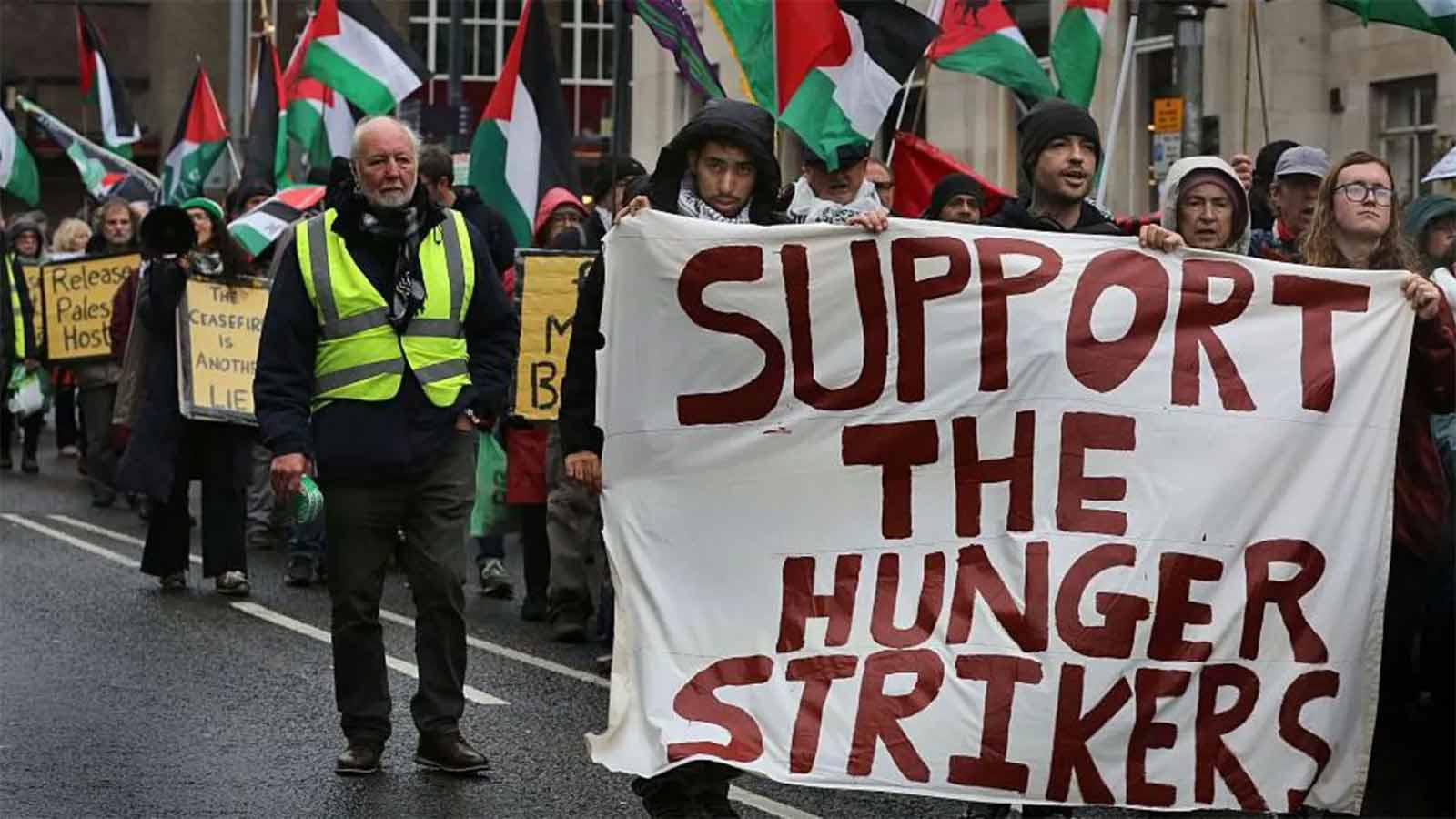
In late 2025, a series of coordinated hunger strikes by Palestine Action-linked prisoners in the UK has become a flashpoint for activists, politicians, and the public. With several detainees refusing food for weeks, concerns have mounted over their deteriorating health, the length of their pre-trial detention, and the broader implications for protest rights in Britain.
Medical Crisis at HMP Bronzefield: The Case of Qesser Zuhrah
The most dramatic development unfolded outside HMP Bronzefield in Surrey. There, 20-year-old Qesser Zuhrah, awaiting trial for alleged offences related to Palestine Action protests, entered her 46th day of hunger strike. Supporters and family reported that Zuhrah was experiencing severe chest pain, breathlessness, and abdominal pain. According to The Guardian, intermittent monitoring and a shortage of electrolytes compounded the risk to her life, with claims that vital signs were not being consistently tracked after a previous hospital discharge.
On December 17, activists and politicians converged at the prison gates, demanding immediate medical intervention. Your Party MP Zarah Sultana arrived at 3am and vowed not to leave until Zuhrah was admitted to hospital. The pressure paid off: later that day, an ambulance arrived, and Zuhrah was transferred for urgent care. Green Party peer Jenny Jones warned the situation could be life-threatening, while supporters circulated footage of the ambulance’s arrival on social media, amplifying public concern.
Prolonged Hunger Strikes and the Plight of Remand Prisoners
Zuhrah is not alone. At least five other prisoners—Heba Muraisi, Teuta Hoxha, Kamran Ahmed, Amy Gardiner-Gibson, and Lewie Chiaramello—are also refusing food, with some surpassing 40 days. Lawyers for the group have repeatedly petitioned the government for a meeting, warning of an “increasingly likely potential” for fatal outcomes. The activists’ demands include immediate bail, the lifting of the ban on Palestine Action (proscribed under terrorism legislation), and the closure of a UK defence firm linked to Israel. All deny the charges against them, which relate to alleged break-ins and property damage during protests.
Notably, these prisoners have spent over a year in pre-trial custody, far exceeding the usual six-month limit. This has raised questions about the fairness and proportionality of their treatment, with supporters arguing that the prolonged detention is itself a form of punishment.
Some detainees have been hospitalized and then discharged, either by medical staff or by choice. Others, like Lewie Chiaramello, are particularly vulnerable due to underlying conditions such as diabetes. An eighth prisoner reportedly joined and left the hunger strike intermittently, citing health reasons.
Political Pressure and Government Response
The hunger strikes have triggered a flurry of political activity. More than 50 MPs and peers signed a letter, initiated by Jeremy Corbyn, urging Deputy Prime Minister and Justice Secretary David Lammy to meet with the prisoners’ lawyers. In Parliament, Corbyn pressed Prime Minister Sir Keir Starmer about breaches of prison conditions and the urgent need for dialogue. Starmer, echoing Justice Minister Jake Richards, insisted that “rules and procedures” were being followed and that the Ministry of Justice (MoJ) had “robust and proper guidance” for managing hunger strikes.
The MoJ maintains that prisoners’ wellbeing is continuously assessed, with medical treatment provided as needed. HMP Bronzefield officials emphasized that all detainees have access to healthcare, including external medical facilities, and receive regular physical and mental health assessments if refusing food.
Despite these assurances, activists and some MPs remain unconvinced. Zarah Sultana and others allege that emergency services were initially refused, and that the response only came after sustained public and political pressure.
Broader Context: Protest, Prison, and Policy
At the heart of the hunger strikes lies a larger debate about protest rights, state response, and the boundaries of legitimate dissent. Palestine Action, the group linked to the prisoners, was banned under terrorism legislation following a series of direct actions targeting defence firms accused of supplying equipment to Israel. Critics argue that such bans risk criminalizing protest and silencing political opposition, especially on contentious international issues like Palestine.
The government, for its part, stresses security and the rule of law. Yet the situation at HMP Bronzefield, with prisoners on the brink of medical collapse and politicians camped outside demanding action, has exposed cracks in the system. Questions persist about whether procedures are sufficiently humane, whether detainees’ rights are being upheld, and whether there is adequate oversight when protest crosses into criminal charges.
As trials for the detainees are not expected until the following year, the hunger strikes may well continue—and with them, the debate over how Britain handles political protest and the welfare of those awaiting justice.
Assessment: The Palestine Action-linked hunger strikes have become a powerful lens through which to examine the UK’s approach to protest, detention, and prisoner welfare. The rapid escalation from private suffering to public crisis reveals not only deep divides over Palestine but also systemic tensions in how the state responds to dissent. As medical emergencies mount and political pressure intensifies, the government faces a critical test: balancing security and legal process with the fundamental rights and dignity of those in its care.