
Quick Read
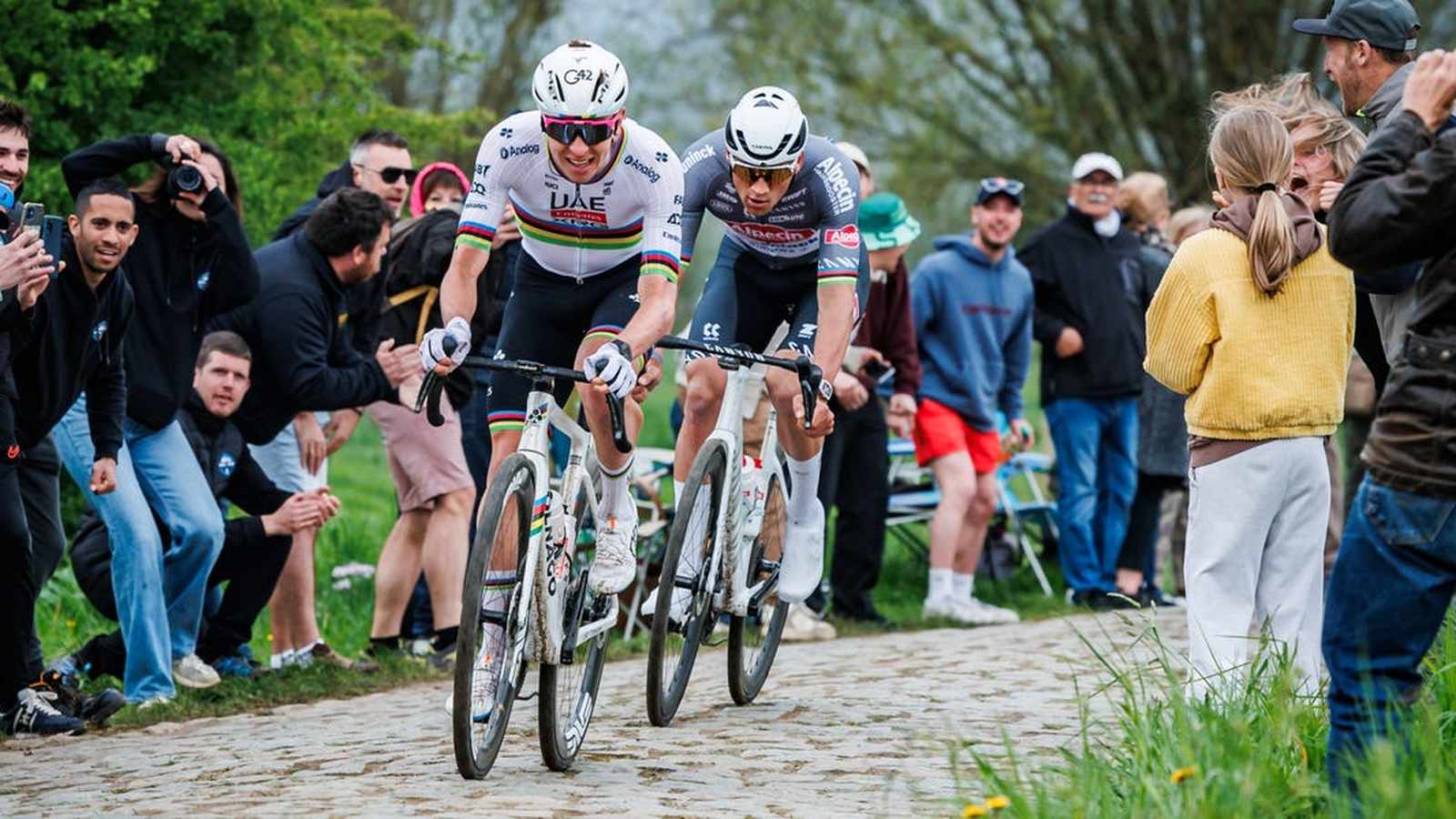
- Tadej Pogacar is challenging three-time champion Mathieu van der Poel in the 2026 Paris-Roubaix.
- The race covers 258.3km, featuring over 50km of iconic cobblestone sections.
- Data from the Archdiocese of Paris shows a significant rise in adult baptisms, highlighting a shift in local social demographics.
COMPIÈGNE (Azat TV) – The cycling world turns its eyes to northern France today, April 12, as Tadej Pogacar attempts to break Mathieu van der Poel’s iron grip on the Paris-Roubaix, the most grueling of the sport’s five Monuments. As riders prepare to tackle 258.3 kilometers of unforgiving terrain, including 54.8 kilometers of treacherous cobblestones, the stakes could not be higher for the Slovenian star, who has openly admitted he would trade a Tour de France title for a victory on the Roubaix velodrome.
The Battle for the Hell of the North
Mathieu van der Poel enters this year’s edition as the three-time reigning champion, seeking to solidify his legacy by matching the historic four-win record held by legends Roger De Vlaeminck and Tom Boonen. For Pogacar, the race represents a personal crusade; after a crash derailed his debut last year, the Slovenian has spent the off-season obsessively training on the course. While he has already conquered the other four Monuments, the pavé sections—specifically the Trouée d’Arenberg and Carrefour de l’Arbre—remain the final frontier for his pursuit of total cycling dominance.
Global Viewing and Broadcast Access
Fans worldwide are tuning in to witness what analysts describe as a pivotal moment in modern cycling. In the United States, coverage is available via NBC’s Peacock, while UK viewers can access the race through TNT Sports. In Australia, SBS On Demand provides free-to-air access, a model mirrored by France TV in the host nation. The race is expected to reach its climax in the early afternoon, with the peloton navigating the transition from the start in Compiègne to the final, iconic lap in the Roubaix Velodrome.
Beyond the Race: A Changing Paris
While the city of Paris hosts the global sports spotlight today, a different kind of transformation is occurring within its parishes. Recent data from the Archdiocese of Paris highlights an unexpected trend: 788 adults were baptized in the city this Easter, with the Church of Saint-Roch leading the surge. As younger generations seek coherence and tradition, the city is witnessing a notable influx of new congregants, mirroring the intensity of the athletic competition taking place on the outskirts of the capital.
The heightened competitive intensity between Pogacar and Van der Poel, coupled with the shifting social demographics within the city, illustrates a 2026 landscape where both sporting and traditional institutions are grappling with the pursuit of historical significance and a renewed sense of purpose.