
Quick Read
- Pete Davidson warns that intense fan adoration can quickly turn to fatigue.
- Davidson predicts Walton Goggins may face the same backlash as Pedro Pascal.
- Goggins responds with humility and gratitude, pledging to enjoy his success.
- Pedro Pascal continues to land major roles despite public debate over his ubiquity.
The Fame Pendulum: From Idol to Overexposure
In the age of instant celebrity and viral moments, the public’s love can be as fleeting as it is intense. Pete Davidson—no stranger to the volatility of the spotlight—recently offered a candid warning about this very phenomenon. On Theo Von’s This Past Weekend podcast, Davidson reflected on the dizzying trajectory of actor Pedro Pascal’s career: from hard-fought recognition to a sudden surge of global adoration, then to the inevitable whispers of “Pascal fatigue.”
“Look at Pedro Pascal right now,” Davidson mused. “Two years ago, he was a hardworking, great actor—struggling, grinding. Then he blows up so hard, everyone’s like, ‘Daddy, daddy!’ A year later, he’s in everything, and suddenly people are like, ‘Go away, dude.’”
Davidson’s point was both simple and sharp: the faster fame arrives, the faster audiences seem to tire of their latest obsession. “We build everybody up, and now it’s so fast to turn,” he added. “It’s within months, where you’re like, what the f**k?”
Pedro Pascal: The Double-Edged Sword of Success
Pedro Pascal’s journey reads like a Hollywood parable. After decades of steady work, he catapulted into the stratosphere with roles in The Mandalorian, The Last of Us, and a slew of high-profile projects. This year alone, Pascal has appeared in The Fantastic Four: First Steps, Materialists, Eddington, and The Last of Us Season 2—a remarkable run by any measure.
But with ubiquity comes risk. The public, ever hungry for novelty, can turn on a dime. The same actor hailed as “Daddy” becomes, almost overnight, the target of memes and critiques. Headlines about “too much Pascal” begin to surface, echoing a broader conversation about the exhausting churn of the celebrity cycle. As Davidson observed, “You gotta give someone time to adjust to that new level of fame. He’s been banging at it for 30 years, and now he’s learning how to get a cup of coffee or deal with someone who taps you on the shoulder while you have your earbuds in and freaks you out. You got to give that guy a f***ing second to adjust.” (IGN)
Walton Goggins: Next in Line?
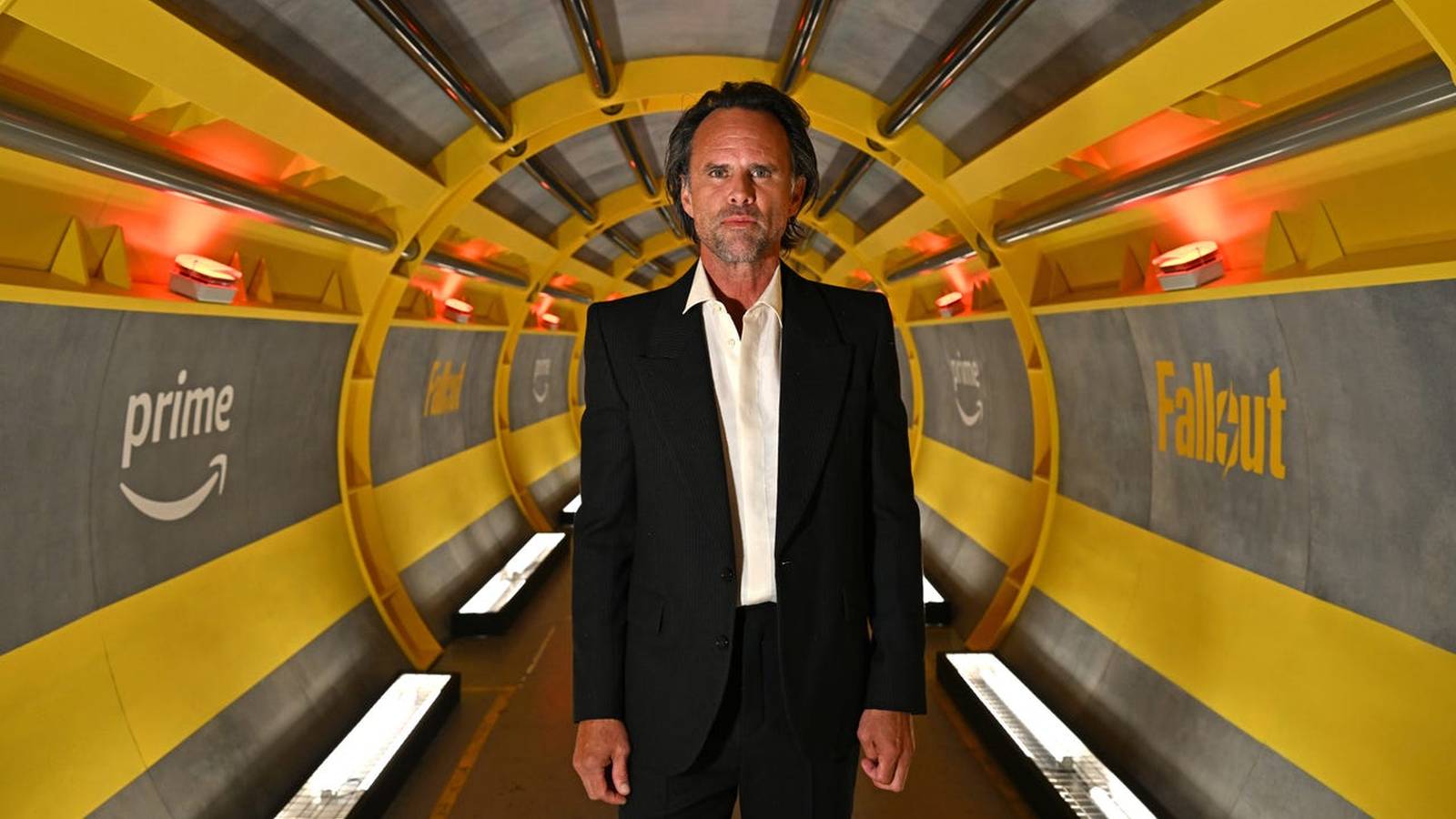
Davidson didn’t stop with Pascal. He looked ahead to the next potential ‘victim’ of the fame cycle. “They’re gonna do it with Walton Goggins… will be next,” Davidson predicted, referencing the actor’s rising profile. Goggins, already a respected figure for his roles in The White Lotus and, most recently, as The Ghoul in Amazon’s hit series Fallout, is set to reprise the latter role in the show’s second season.
For Goggins, the sudden surge of attention is both a blessing and a challenge. In response to Davidson’s comments, Goggins took to Instagram after seeing The Hollywood Reporter’s coverage. His message was disarmingly honest. “I suspect some people are tired of hearing my homilies,” he wrote, acknowledging the potential for overexposure. “But I have to talk about these projects to honor all of those that worked so hard to bring these stories to fruition.”
He urged fans not to click on stories with his name “unless you want to,” before expressing genuine gratitude for even being part of the conversation. “If saying yes in life more than saying no is a crime, then I’m guilty as charged,” Goggins added.
And, in a flourish worthy of his on-screen persona, he signed off: “If this headline is a possibility or an inevitability… if this is my fate… Well… F*** it. I’m going to enjoy the F*** OUT OF IT.”
The Human Cost of Hype: Navigating Modern Celebrity
What’s at stake here isn’t just the careers of Pascal or Goggins, but the very nature of public adoration in the digital era. Social media, streaming platforms, and the relentless news cycle have compressed the rise-and-fall arc of celebrity into months, sometimes weeks. A star can be “everywhere” overnight—and just as quickly, become the butt of jokes or the target of backlash.
For actors like Goggins, the challenge is to remain grounded amid the swirl. His response—gracious, a little weary, but ultimately defiant—suggests a seasoned perspective. He’s aware of the risks but unwilling to let them dictate his choices. Instead, he focuses on the collaborative effort behind each project and the privilege of being in the conversation at all.
Pedro Pascal, for his part, continues to rack up high-profile roles, with upcoming appearances in The Mandalorian and Grogu and the Marvel Cinematic Universe’s Avengers: Doomsday. The very projects that threaten to exhaust public patience are also testaments to his enduring appeal and versatility.
This cyclical pattern—idolization followed by fatigue—isn’t new. But the speed and intensity are. As Davidson’s comments make clear, even those at the top of the pyramid can feel the ground shifting beneath their feet. Fame, in this climate, is a wave: thrilling to ride, perilous to misjudge, and always threatening to crash.
As the entertainment industry barrels forward, the stories of Pascal, Davidson, and Goggins remind us that behind every headline is a human being, adapting to a world where adoration can turn to apathy in the blink of an eye. The only real certainty? Enjoy the moment—and brace for the next twist.
In a landscape where fame is both rocket fuel and quicksand, Davidson’s warning and Goggins’s response offer a rare window into the emotional calculus of modern celebrity. Their candor underscores the need for empathy, both from fans and from the stars themselves, as they navigate the dizzying highs and sudden reversals of the public eye.