
Quick Read
- Defense Secretary Pete Hegseth addressed hundreds of top generals and admirals at Quantico.
- Hegseth called for strict fitness and grooming standards, ending ‘unacceptable appearance’.
- President Trump joined Hegseth, framing the event as a morale booster amid government shutdown fears.
- The gathering drew speculation about possible defense strategy changes and was unprecedented in scale.
- Costs and logistics of the meeting raised questions about priorities in the Department of War.
Hegseth’s Call for a ‘Warrior Ethos’ in Tumultuous Times
In the shadow of a potential government shutdown, Defense Secretary Pete Hegseth stood before an auditorium packed with the nation’s highest-ranking military leaders—an assembly so rare that some international observers called it unprecedented. The stage was set at Marine Corps Base Quantico in Virginia, banners declaring “strength, service, America” flanking the speakers, and the American flag looming large behind.
Hegseth wasted no time addressing what he sees as the heart of military readiness: culture. “We must be prepared,” he told the audience. “Either we’re ready to win or we are not.” He spoke with conviction about the need to revive the “warrior ethos”—a term he’s championed since taking the helm of the newly rebranded “Department of War.” This, he argued, is about more than tactics or equipment; it’s about the spirit that binds combat units together and enables them to succeed when the stakes are highest.
In a tone both direct and unapologetic, Hegseth declared an end to what he called the era of “unacceptable appearance.” His message: no more “fat generals,” and no more “beardos.” He demanded that all service members, regardless of rank, meet rigorous fitness and grooming standards. “The era of unacceptable appearance is over,” he announced, drawing a line in the sand that signaled a return to strict discipline and tradition.
Quantico Gathering: Unusual, Unprecedented, and Charged with Speculation
The meeting itself was shrouded in mystery. Hundreds of generals and admirals, summoned on just days’ notice, traveled from as far as Europe, South Korea, and the Middle East. According to BBC News, attendees included not only high-level officers but also senior enlisted personnel—the trusted advisors who form the backbone of every military unit.
Security was tight, reflecting the gravity of the moment. Some, like Italian Admiral Giuseppe Cavo Dragone, chair of the NATO Military Committee, remarked, “As far as my 49 years of service, I’ve never seen that before.” Mark Cancian of the Center for Strategic and International Studies told Reuters it was mystifying that the event was not held virtually, suggesting Hegseth wanted his message to resonate more powerfully in person.
Speculation ran rampant. Was this a precursor to sweeping changes in defense strategy, or urgent cuts to military personnel? The Pentagon declined to comment, fueling further intrigue. Vice-President JD Vance attempted to downplay the event, calling it “not particularly unusual,” but the sheer scale and secrecy spoke otherwise.
Political Overtones: Trump Joins Hegseth, Signals Shift in Defense Priorities
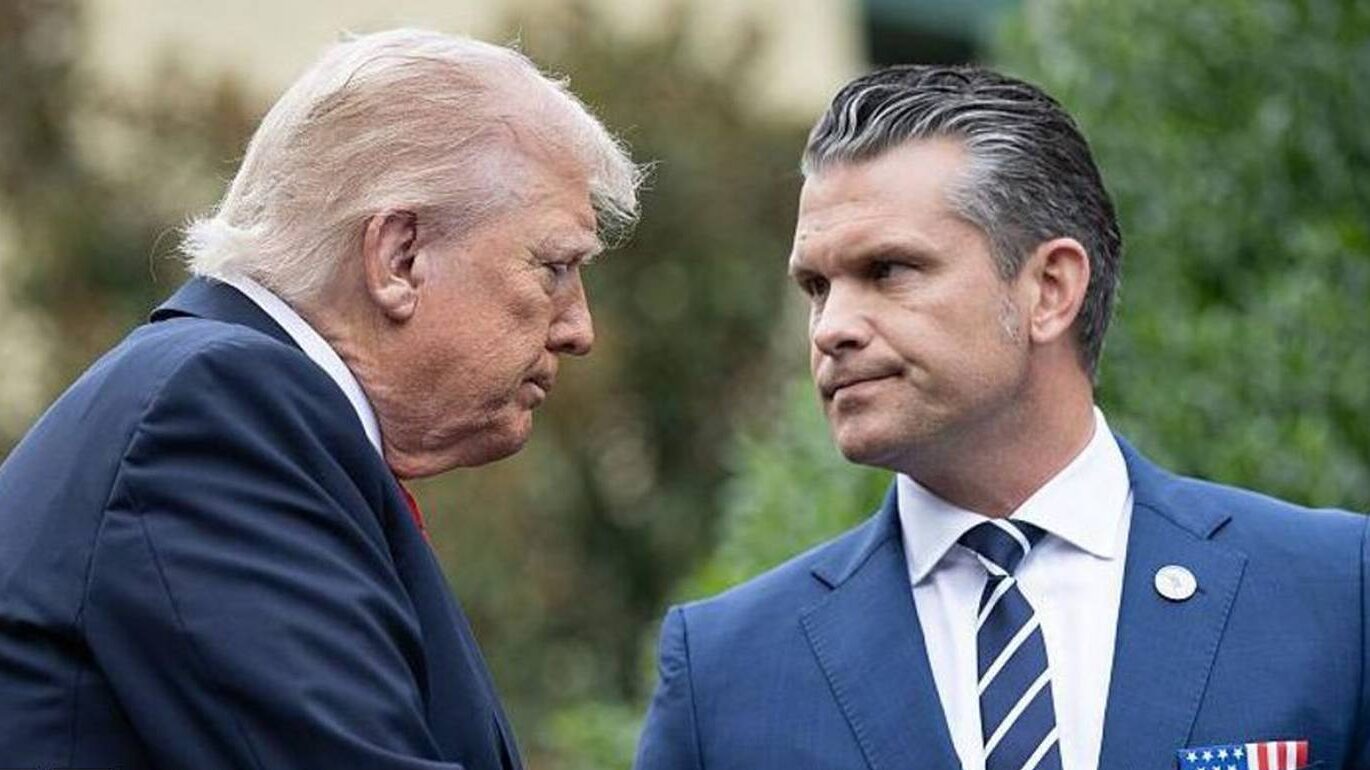
The program was jolted when President Donald Trump announced he would join Hegseth at Quantico. His arrival transformed the event from a high-level military meeting into a moment of political theater, with the White House describing it as an opportunity to “galvanize the troops.” Trump himself told NBC News the meeting was about “how well we’re doing militarily,” aiming to foster “esprit de corps.”
The speech was livestreamed, offering the public a rare glimpse of the nation’s military elite assembled under the leadership of Hegseth and Trump. The optics were unmistakable: the president and his defense secretary, standing before the armed forces, signaling a new era of tradition and discipline.
In the midst of this, the government teetered on the brink of shutdown. If Congress failed to pass a spending bill by midnight, some 2 million service members faced the prospect of working without pay. The Pentagon’s contingency plans prioritized border security, missile defense—including the controversial “Golden Dome”—and ongoing operations in the Middle East and shipbuilding. The uncertainty added a layer of urgency to Hegseth’s message: readiness is not optional.
Behind the Rhetoric: Fitness, Discipline, and the Cost of Change
Hegseth’s emphasis on fitness and appearance was more than symbolic. He insisted that all service members must pass rigorous physical tests and maintain a clean-shaven look, arguing that these standards are essential for combat effectiveness. The message was clear: tradition and discipline are not relics of the past, but vital tools for today’s challenges.
The logistics of the event itself sparked debate. Flying hundreds of officers to Quantico on short notice came at a considerable cost—estimated in the hundreds of thousands of dollars. Some wondered if the resources spent reflected a shift in priorities, as Hegseth and Trump rebranded the Department of Defense as the Department of War, signaling a more aggressive posture.
Throughout his tenure, Hegseth has been outspoken against what he terms “woke” culture in the military. His critics argue that focusing on appearance and tradition risks overlooking deeper issues of strategy, modernization, and morale. Supporters, however, see in his approach a necessary corrective—a return to the values that have long defined the U.S. armed forces.
The View from Within: Generals, Tradition, and a Divided Audience
As the event drew to a close, the assembled generals and admirals returned to their duty stations, carrying with them Hegseth’s message of discipline and readiness. The impact of the Quantico gathering remains to be seen. Some officers reportedly viewed the speech as a “rally the troops” moment, while others questioned whether it signaled more profound changes in defense policy.
For now, the Department of War—under Hegseth’s stewardship—appears intent on shaping both the culture and the priorities of the U.S. military. The Quantico address, with its blend of tradition, spectacle, and political overtones, marked a turning point in how America’s military leaders are engaged by civilian leadership.
Hegseth’s address at Quantico was more than a call for discipline—it was a calculated message about the future of the U.S. military. By invoking tradition and demanding readiness, he set the tone for what could be a period of profound change. Whether this signals renewed strength or deeper division will depend on how these words translate into action across the ranks.