
Quick Read
- A seven-vehicle collision occurred on Picton Road in Cataract on Wednesday, January 7, 2026, at 11:55 AM.
- Thirteen people were injured, with six requiring hospitalisation; one 38-year-old driver sustained life-threatening injuries and was airlifted.
- The crash was reportedly caused by a 38-year-old four-wheel-drive driver suffering a medical episode and veering onto the wrong side of the road.
- Picton Road was closed in both directions for several hours, causing significant traffic disruptions.
- A 100-liter diesel spill from the truck necessitated HAZMAT firefighter intervention, and police declared the scene a crime scene for ongoing investigation.
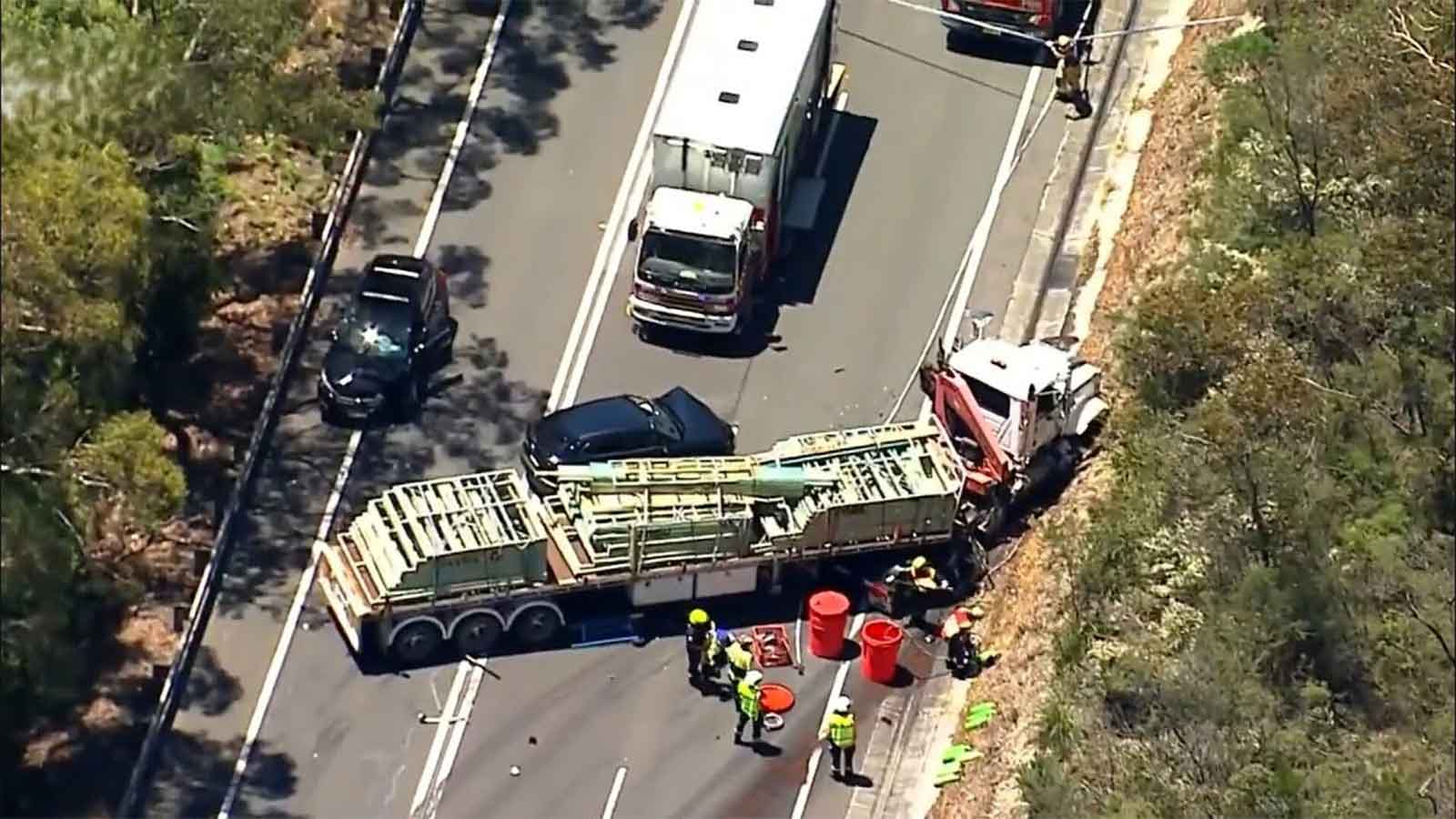
A chaotic scene unfolded on Picton Road in Cataract on Wednesday, January 7, 2026, when a multi-vehicle collision involving a truck and six cars left thirteen people injured and brought traffic to a standstill. The incident, which stretched over approximately 130 meters, prompted a massive emergency response and led to the closure of a vital arterial road connecting Wollongong and south-west Sydney for several hours.
The chain of events began around 11:55 AM, about one kilometer west of the Mount Keira Road intersection. Authorities believe a 38-year-old man, driving a four-wheel-drive westbound, suffered a medical episode. This sudden health crisis allegedly caused his vehicle to veer dangerously onto the wrong side of the road, setting off a devastating sequence of collisions.
Understanding the Collision’s Genesis and Immediate Impact
According to NSW Ambulance chief inspector Norm Rees, who was among the first emergency crews on the scene, a truck traveling in the opposite direction desperately ‘tried to avoid it, hitting the guardrail and then running back into traffic.’ This evasive maneuver, while perhaps an attempt to mitigate a head-on impact, unfortunately resulted in the truck re-entering the flow of traffic, triggering a wider pileup. The collision ultimately involved a semi-trailer and six other vehicles, creating a scene described by Chief Insp Rees as ‘pretty chaotic and spread out over a long distance.’
The sheer scale of the accident presented immediate challenges for first responders. Initial reports to triple-zero indicated as many as nine vehicles were involved, necessitating a rapid and thorough triage process upon arrival. Paramedics had to quickly assess the scene, determine the exact number of vehicles, and identify those with the most critical injuries amidst the wreckage. This initial assessment is crucial in mass casualty incidents, ensuring that limited resources are directed to those in most urgent need of medical attention. The fact that thirteen people were injured underscores the severity and widespread impact of the incident.
The Human Cost: Injuries and Hospitalizations
Of the thirteen individuals injured, six required hospitalisation, highlighting the serious nature of the crash. The 38-year-old driver of the four-wheel-drive, whose medical episode initiated the collision, sustained the most severe injuries. He suffered life-threatening chest, pelvic, and arm injuries and was trapped in his vehicle. Rescue teams worked tirelessly to free him before a rescue helicopter airlifted him to Liverpool Hospital in a serious condition. His wife, also involved in the crash, was transported to the same hospital, underscoring the personal tragedy intertwined with the broader incident.
Four other individuals, who sustained non-life-threatening injuries, were taken by road ambulance to Wollongong Hospital in stable conditions. Thankfully, the remaining seven people involved did not require hospitalisation, a testament, perhaps, to the combined efforts of emergency services and a degree of sheer luck amidst the devastation. As Inspector Rees told ABC News, ‘Considering the size of the scene and the number of people involved… it’s been a very lucky escape for all involved to come out with the injuries that they have.’ The truck driver, despite the significant impact, was freed from the wreckage without physical injury by Fire and Rescue NSW and taken to hospital for mandatory testing, a standard procedure following serious collisions.
Emergency Response and Road System Strain
The aftermath of the collision was not limited to human injuries. The flat-top truck, carrying a load of construction wood, suffered a diesel spill of approximately 100 litres. This necessitated the involvement of specialist HAZMAT firefighters to contain the fuel, preventing further environmental damage and ensuring the safety of the scene. Rural Fire Service personnel were also on hand, providing fire protection during the complex recovery operation, as reported by ABC News.
The closure of Picton Road in both directions, between Macarthur Drive and the M1 Princes Motorway (Mount Ousley Road), caused significant disruption. This stretch of road is a critical link, and its closure during the busy school holiday period exacerbated traffic woes. Transport authorities urged motorists to find alternative routes and allow extra travel time. Live Traffic NSW advised light vehicles to divert via Mount Keira Road, while heavy vehicles were asked to park up or use Appin Road and Narellan Road, illustrating the extensive logistical challenges posed by such an incident on major thoroughfares.
The Ongoing Investigation and Calls for Caution
In the wake of the crash, NSW Police declared the area a crime scene, with forensic officers brought in to meticulously photograph and document the site. Acting Inspector Owen Barnes from Wollongong Police confirmed that enquiries into the cause of the accident are ongoing. Police have already spoken to a number of witnesses at the scene but are still keen to interview others who may have crucial information. They have specifically appealed to anyone with dashcam footage of the incident to contact Wollongong Police or Crime Stoppers, emphasizing the importance of public assistance in piecing together the full picture of what transpired.
The incident serves as a stark reminder of the unpredictable nature of road travel and the critical importance of driver awareness, especially during peak travel periods like school holidays. Acting Inspector Barnes urged all drivers to ‘take care when they’re driving through these school holidays,’ stressing the need to ‘make sure you’re paying attention, make sure you’re not distracted and get to your destination safely.’ This message resonates deeply in the context of a medical emergency leading to such widespread consequences, highlighting that vigilance on the road extends beyond avoiding typical distractions to being prepared for the unexpected.
The Picton Road crash, triggered by an unforeseen medical event, serves as a powerful illustration of how quickly ordinary journeys can turn catastrophic, demanding a swift and coordinated response from emergency services while simultaneously disrupting daily life and underscoring the perpetual need for heightened road safety awareness.