
Quick Read
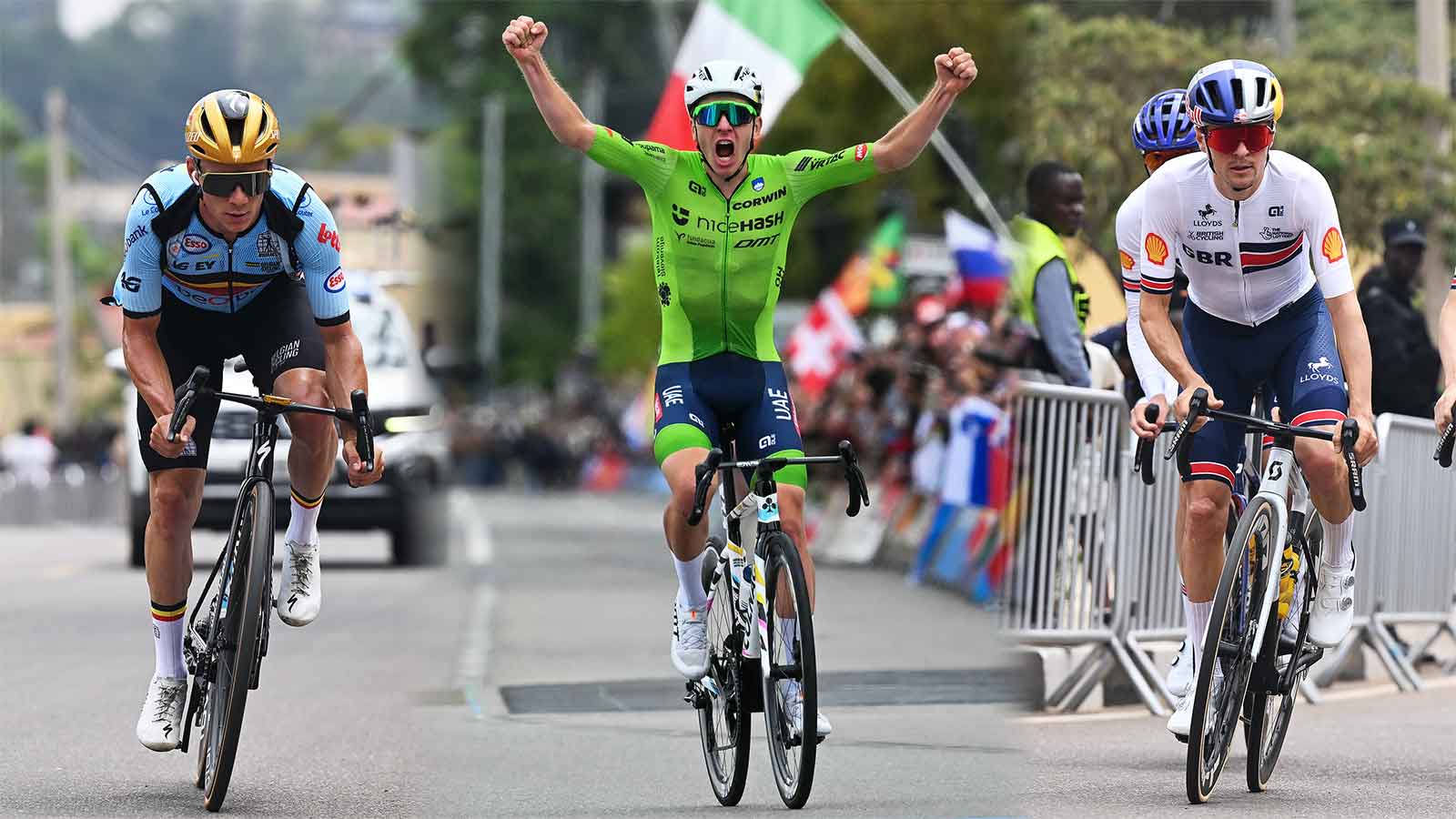
- Tadej Pogačar launched a decisive solo attack with 65km to go, maintaining a minute’s lead to the finish.
- Remco Evenepoel, despite mechanical problems, led the main chase but could not close the gap.
- The peloton fractured repeatedly on Kigali’s cobbled climbs, with numerous favorites abandoning.
- Isaac del Toro impressed early but faded as the race’s brutal length and climbs took their toll.
- The Rwandan crowds set a new standard for atmosphere at the World Championships.
2025 UCI Road World Championships: Rwanda’s Historic Challenge
The road to the rainbow jersey is never simple, but this year’s UCI Road World Championships in Kigali, Rwanda, was a test of grit, nerve, and endurance that pushed cycling’s elite to their limits. From the opening kilometers, the peloton was restless—riders jostling for position, teams eyeing each other warily, and the crowd roaring with every attack. For Tadej Pogačar, the Slovenian superstar, it was a race that demanded not just power, but wisdom and timing.
Pogačar’s Early Moves and a Fractured Peloton
The race began with the expected nervous energy. The peloton was already shedding riders as early as the 230-kilometer mark, with attacks coming from lesser-known names and national favorites. Rwanda’s Eric Manizabayo, cheered by a home crowd, launched repeated attacks, determined to make his mark on the local roads. But it was the relentless pace set by Slovenia and Belgium that started to shape the day’s drama. Cyclingnews reported how these two teams kept the breakaway’s lead under control, mindful not to let the race slip away as it had in the women’s event the day before.
Mechanical issues and abandonments became a recurring theme. France lost key riders early, with Julian Alaphilippe’s erratic attacks ending in an untimely withdrawal. The peloton saw a crash involving Belgium’s Van Wilder and Spain’s Soler, both of whom struggled to rejoin the race. Australia’s Luke Plapp, a surprise exit, hinted at just how grueling the course was. The relentless cobbled ascents—especially the Mur de Kigali and Côte de Kimihurura—shattered any illusions of an easy day out.
The Battle for Control: Belgium vs Slovenia
As the race approached the halfway mark, the favorites began to show their cards. Remco Evenepoel, Belgium’s ace, was fresh off a time trial victory and hungry for a double. He and his team took up the chase, methodically whittling down the breakaway’s advantage. Yet, as Reuters noted, the peloton was anything but unified—mechanical issues plagued Evenepoel, forcing him to switch bikes and chase back repeatedly. The Belgians, frustrated but determined, continued to drive the pace, with domestiques like Hermans and Uijtdebroeks sacrificing themselves to keep hope alive.
Slovenia, meanwhile, was down to fewer teammates as the relentless pace and climbs took their toll. Pogačar, often left to fend for himself, displayed the kind of tactical maturity that’s earned him Grand Tour victories. As the laps ticked by, he measured his efforts, ensuring that every attack counted and every moment of recovery was seized.
The Decisive Attack: Pogačar Goes Solo
With about 65 kilometers remaining, the race’s complexion changed. On the less punishing Côte de Kigali Golf, Pogačar sensed weakness and launched his move. Del Toro, the young Mexican talent, tried to follow but was soon dropped—Pogačar’s pace was simply relentless. The Slovenian’s experience shone as he maintained a one-minute gap over the chase group, never letting the pressure break his rhythm.
Behind, Evenepoel led the chase, hammering up the Kimihurura cobbles and pushing his companions—Healy, Pidcock, Skjelmose, Hindley—to their limits. But despite their combined efforts, the gap refused to shrink. Fabio Christen’s late attack from the third group proved futile; Pogačar’s lead only grew as fatigue set in and the unforgiving Rwandan terrain punished every lapse in concentration.
The chase group itself began to fragment. Hindley was dropped as Evenepoel increased the tempo; Pidcock lost the wheel soon after. Ayuso, Seixas, and Sivakov, briefly forming a second chase, were eventually reabsorbed. The peloton, now a shadow of its former self, struggled to keep cohesion as the kilometers dwindled.
Endurance and Tactics on Rwanda’s Brutal Course
The final laps were a showcase of endurance. Pogačar’s solo effort was as much a mental battle as a physical one. He matched the chasers pedal for pedal, never allowing his minute-long advantage to slip. The course’s extreme length—over 250 kilometers—combined with repeated climbs at high altitude, created an atmosphere of attrition. Riders who had shone in earlier stages faded; mechanicals and cramping claimed more victims.
As the finish line approached, the crowd’s energy reached fever pitch. Kigali’s streets, lined with fans and echoing with cheers, bore witness to a historic moment: Pogačar, alone, powering through the final laps, his lead growing imperceptibly, his focus unbroken.
A Race for the Ages: Legacy and Lessons
When Pogačar crossed the finish line, his margin over the chasers told the story—this was a victory not just of talent, but of resilience and intelligence. Evenepoel, despite his tenacity, could only lead the chase home. Del Toro, the young upstart, had shown flashes of brilliance but learned just how unforgiving the world championships can be.
The aftermath was one of reflection. Riders spoke of the course’s brutality, the tactical battles, and the sheer unpredictability that Rwanda had offered. Some, like Eritrea’s Biniam Girmay, lamented the climbing-heavy route that neutralized their strengths. Others praised the crowds and the atmosphere, recognizing that this edition of the World Championships had set a new bar for what elite cycling can be.
In the days to come, the cycling world will debate the tactics, the turning points, and the performances that defined Kigali 2025. But for now, Pogačar stands alone—not just as the winner, but as the embodiment of perseverance in a race that demanded everything and gave nothing away cheaply.
Pogačar’s triumph in Rwanda is a testament to the evolution of world championship racing: where tactical nuance, adaptability, and sheer endurance now outweigh raw power alone. This edition will be remembered not only for its grueling terrain and mechanical drama, but for the way it demanded riders to think, react, and endure. Kigali has shown that the world’s best are not just athletes—they are strategists and survivors.