
Quick Read
- Pope Leo XIV is the first American pope, elected in May 2025.
- He criticized U.S. immigration policies, questioning their alignment with pro-life values.
- Pope Leo also addressed climate change skepticism after President Trump dismissed global warming.
- He advocates for moral consistency on issues like abortion, the death penalty, and care for immigrants.
Pope Leo XIV Confronts U.S. Immigration Practices
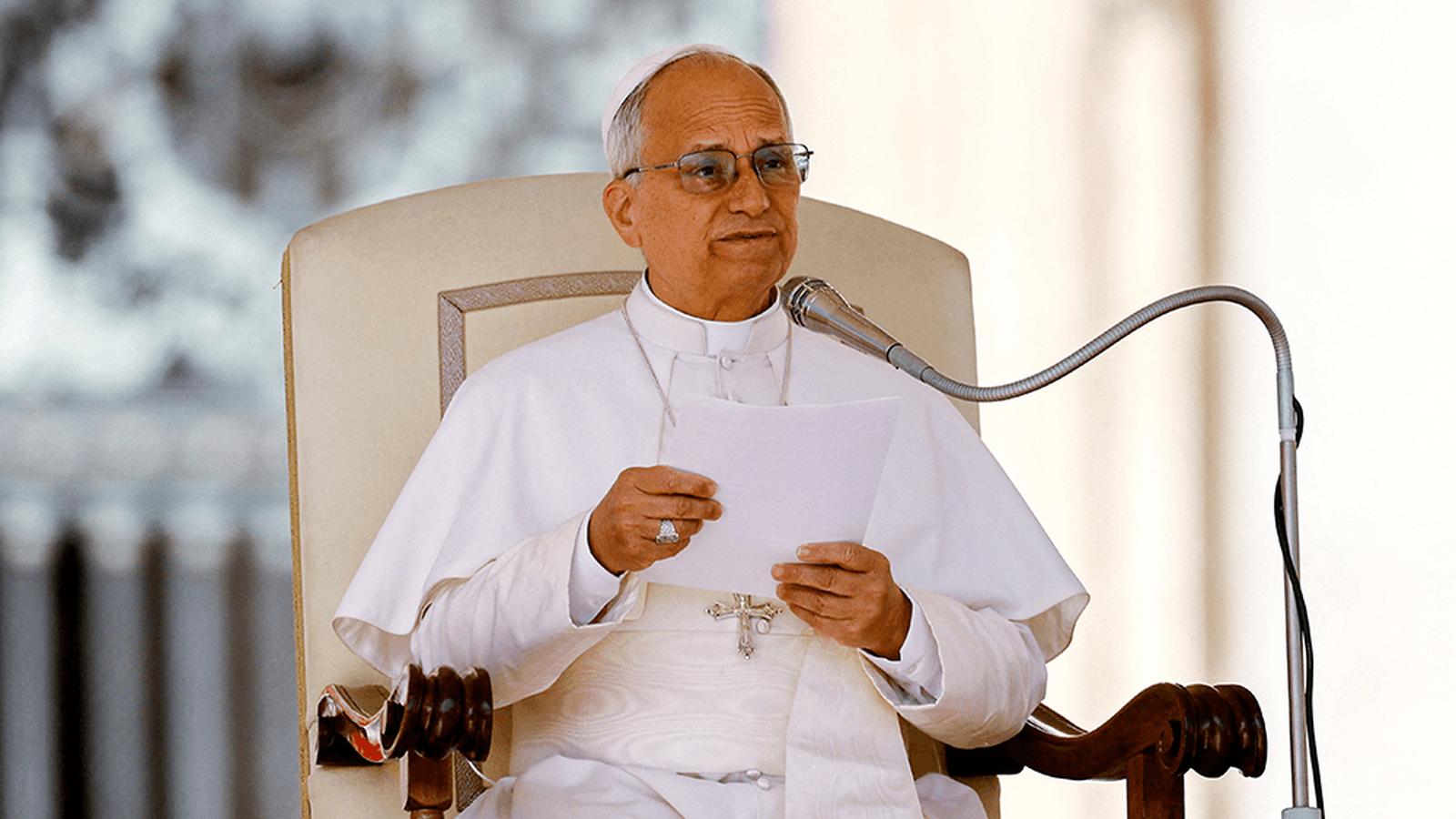
On a brisk autumn morning in Castel Gandolfo, Pope Leo XIV stood before a cluster of journalists, his words carrying a weight that seemed to linger in the air long after he spoke. As the first American to ascend to the papacy, Leo’s every statement is scrutinized for what it might signal—not only to Catholics, but to policymakers around the globe.
In his latest remarks, delivered outside his residence, Pope Leo directly addressed the contentious issue of U.S. immigration policy. The pontiff’s measured tone belied a deep concern: “Someone who says I am against abortion, but I am in agreement with the inhuman treatment of immigrants in the United States, I don’t know if that’s pro-life.” His words, reported by Reuters, landed at the heart of an ongoing debate that has split both the American Catholic community and the broader public.
For Pope Leo, the Catholic Church’s pro-life stance is not a slogan to be selectively applied. “Life is sacred from conception until natural death,” he reminded, referencing one of the Church’s most foundational teachings. The implication was clear—pro-life must mean more than opposition to abortion; it must encompass compassion and justice for the vulnerable, including immigrants.
The backdrop to Leo’s comments is a wave of hardline immigration measures enacted under President Donald Trump. From ICE raids that tear families apart to the specter of mass deportations, the human cost of these policies is felt daily in communities across America. The White House, for its part, maintains that Trump is fulfilling promises made to voters. “He is keeping his promise to the American people,” spokesperson Abigail Jackson insisted in a statement.
Yet, for the pope, promises to voters must be weighed against higher moral obligations. Leo’s critique, though reserved compared to his predecessor Francis’s frequent public admonishments, signals a shift in papal engagement—one focused less on fiery rhetoric and more on challenging the faithful to reconsider what it truly means to value life.
Balancing Church Teachings and Political Realities
Pope Leo’s willingness to engage the intersection of faith and policy has not been limited to immigration. During his Jubilee audience in St. Peter’s Square on September 27, 2025, he addressed a controversy brewing within the American Church: the decision by the archdiocese of Chicago to honor Senator Dick Durbin, a Democrat who supports abortion rights.
The award sparked outrage among conservative Catholics and several U.S. bishops, who view support for abortion rights as incompatible with Catholic doctrine. But Leo urged a broader perspective. “It is very important to look at the overall work that the Senator has done,” he said, acknowledging the tension but refusing to reduce moral evaluation to a single issue. “I understand the difficulty and the tensions, but I think, as I myself have spoken in the past, it’s important to look at many issues that are related to what is the teaching of the Church.”
He then delivered a pointed reminder: “Someone who says I am against abortion but says I am in favor of the death penalty is not really pro-life.” The line, simple yet profound, calls into question the way morality is compartmentalized in American politics—and, by extension, in American Catholicism.
Pope Leo Rebukes Climate Skepticism Amid U.S. Debate
Just days after his comments on immigration, Pope Leo shifted his focus to another polarizing issue: climate change. The timing was no coincidence. President Trump had recently dismissed global warming as a “con job,” doubling down on his administration’s skepticism despite mounting scientific evidence and record-breaking heatwaves across Europe.
Pope Leo’s rebuke was unequivocal. Drawing on Catholic social teaching and the moral imperative to protect creation, he challenged climate skeptics to reconsider their stance. His remarks, covered by Politico, resonated against a backdrop of environmental crises—from deadly heatwaves in Italy and Spain to delayed climate targets across the EU.
The pope’s intervention comes as international institutions struggle to meet commitments under the Paris Agreement. Recent reports from the European Environment Agency warn that backtracking on climate goals threatens both security and prosperity. In this context, Leo’s words serve as a moral anchor, reminding leaders that stewardship of the earth is not optional, but essential to the common good.
Redefining Leadership: The First U.S. Pope’s Approach
Since his election in May 2025, Pope Leo XIV has charted a distinctive course. Unlike Francis, whose papacy was marked by frequent and pointed criticism of the Trump administration, Leo has favored a quieter, more reflective style. Yet, when the moment demands, he does not shy away from hard truths.
His approach invites Catholics—and the world—to wrestle with uncomfortable questions. What does it mean to defend life in all its stages? Can a society claim moral leadership if it is indifferent to the plight of immigrants, the condemned, or the environment? Leo’s answers are rooted not in politics, but in the enduring teachings of the Church.
As the global community confronts crises both old and new, the pope’s words are a reminder that faith, when lived authentically, demands more than slogans and selective outrage. It calls for an integrated ethic—a vision of dignity that transcends borders and party lines.
Pope Leo XIV’s interventions reveal a papacy intent on moral clarity over political expediency. His insistence on consistency—whether in defending the lives of immigrants, opposing the death penalty, or confronting climate denial—signals a challenge not only to policymakers but to every person of conscience. In a time of polarized debate, Leo’s voice stands as a call to integrate faith and justice, refusing to let one be sacrificed for the other.