
Quick Read
- Prada will launch a limited-edition sandal collection inspired by India’s Kolhapuri chappals, priced at $930 per pair.
- The sandals will be produced by artisans in Maharashtra and Karnataka, combining traditional techniques with Prada’s modern design.
- The initiative is a response to cultural appropriation backlash and includes a three-year training partnership for local craftsmen.
- Prada’s collaboration is expected to boost artisan incomes, preserve heritage, and increase global recognition for Indian craftsmanship.
- No immediate plans for major Prada retail expansion in India, but the market is seen as a future growth opportunity.
Prada and Kolhapuri Chappals: From Controversy to Collaboration
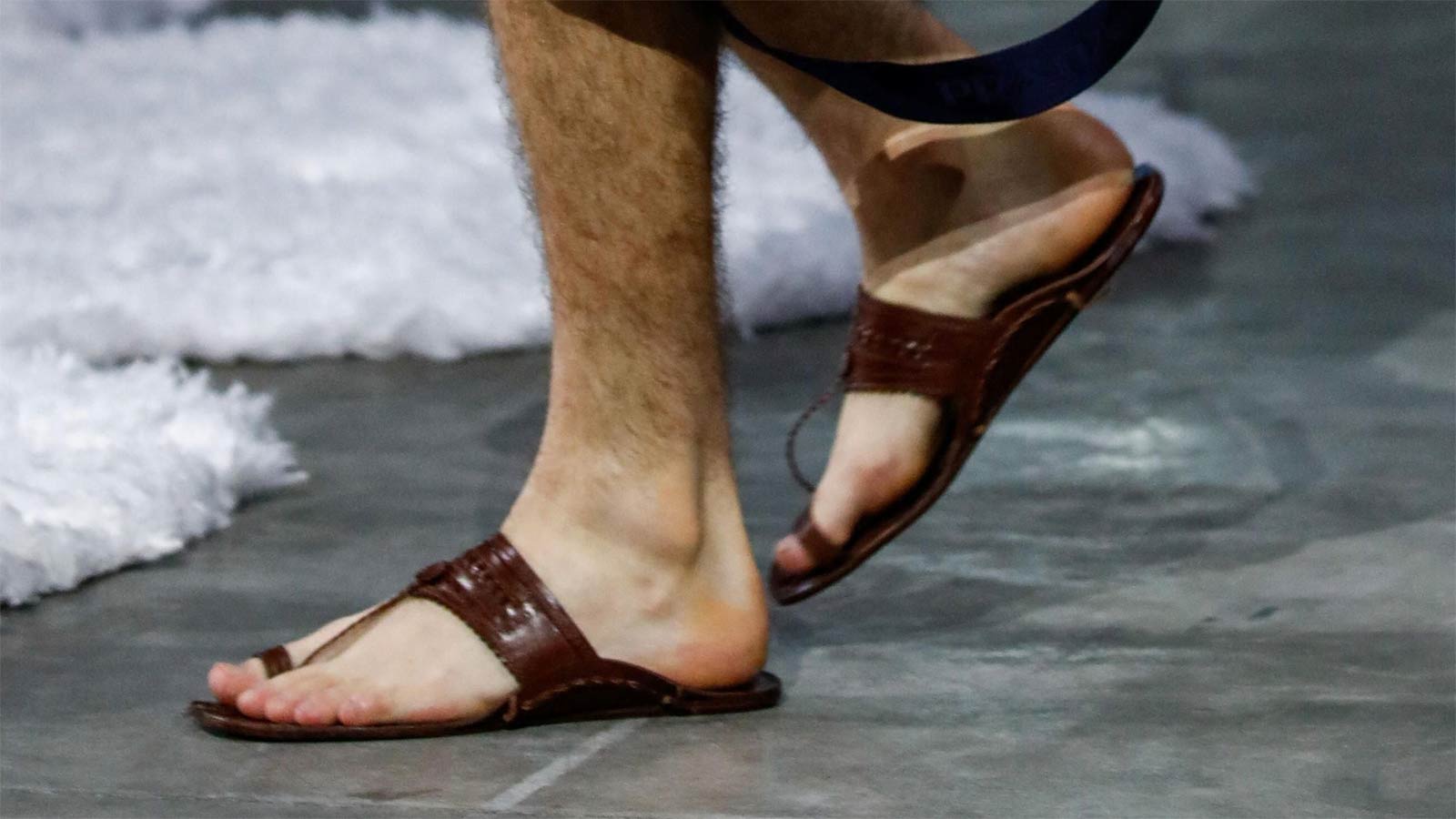
When images of Prada’s latest sandals strutted down the runway in Milan last year, few expected a global fashion house to find itself at the center of a cultural storm. Yet, the resemblance between those high-priced shoes and India’s iconic Kolhapuri chappals was impossible to ignore. What began as accusations of cultural appropriation quickly evolved into a dialogue—and now, a partnership—between Prada and Indian artisans. (Reuters, Sentinel Assam)
Turning Criticism Into Opportunity
Six months ago, social media lit up with criticism as Indian politicians and artisans decried Prada’s sandals for mimicking the centuries-old Kolhapuri chappal, a traditional leather slipper crafted by skilled hands in Maharashtra and Karnataka. Rather than retreating, Prada’s senior executive Lorenzo Bertelli acknowledged the roots of the design and opened talks with artisan groups. The result is a limited-edition line of sandals—2,000 pairs, each selling for around $930—set to launch in February 2026 across 40 Prada stores worldwide and online.
This is not just a commercial venture. Prada’s decision to manufacture in India, in partnership with state-backed organizations like Sant Rohidas Leather Industries and Charmakar Development Corporation (LIDCOM) and Dr. Babu Jagjivan Ram Leather Industries Development Corporation (LIDKAR), marks a rare moment in luxury fashion where authenticity and heritage are placed front and center. The move is designed to blend local craftsmanship with Italian technology, creating footwear that pays homage to its origins while meeting the standards of a global luxury brand.
Preserving a Legacy, Creating New Opportunities
The story of Kolhapuri chappals is woven into the fabric of western and southern India, where generations of artisans from marginalized communities have handcrafted these sandals using techniques passed down through centuries. Today, the tradition is under threat from cheap imitations and waning demand. The collaboration with Prada is being hailed as a potential lifeline—not only raising incomes for skilled workers, but also enticing younger generations to learn and preserve this unique art form.
“Once Prada endorses this craft as a luxury product, definitely the domino effect will work and result in increasing demand for the craft,” said Prerna Deshbhratar, Managing Director of LIDCOM. The hope is that global recognition will ensure both credit and fair compensation flow directly to artisans, many of whom have seen their skills undervalued in the mass market.
Under the three-year partnership, training programs will be established in India, and select artisans will have the opportunity to attend Prada’s Academy in Italy. The project, expected to cost several million euros, promises to deliver both financial and educational benefits to the communities involved.
A New Dialogue Between Heritage and Modernity
The Memorandum of Understanding (MoU) for the “Prada Made in India – Inspired by Kolhapuri Chappals” initiative was signed at the Italian Consulate in Mumbai during the Italy-India Business Council meeting. The Indian government has thrown its support behind the project, with leaders such as Chief Minister Devendra Fadnavis and Social Justice Minister Sanjay Shirsat emphasizing the broader social and economic impact. “This special collection will give new direction to Indian artisans and further strengthen the global recognition of their skills,” Shirsat said.
The footwear will be crafted in eight districts across Maharashtra and Karnataka—including Kolhapur, Sangli, Satara, Solapur, Belagavi, Bagalkot, Dharwad, and Bijapur—combining traditional manufacturing techniques with Prada’s contemporary designs and premium materials. The aim is not just to create a high-end product, but to foster a fresh dialogue between India’s rich heritage and the ever-evolving world of luxury fashion.
India’s Luxury Market: The Next Frontier?
While Prada has opened its first beauty store in Delhi, the company says it has no immediate plans to expand its retail clothing operations or set up factories in India. Bertelli describes India as “the real potential new market,” but says any expansion will be measured and likely to happen over the next three to five years. According to Deloitte, India’s luxury goods market was valued at about $7 billion in 2024 and is set to quadruple by 2030 as economic growth lifts the middle and upper classes. Still, the Indian market is dwarfed by China’s, which generated nearly $50 billion in luxury sales in 2024. Most international brands have entered India through joint ventures with local conglomerates, but Prada is taking a slower, more independent route.
For the artisans of Maharashtra and Karnataka, though, the immediate focus is clear: this collaboration offers not only a platform for their craft but also a shot at sustainable livelihoods in a changing world. As K M Vasundhara, Managing Director of LIDKAR, put it, “This collaboration will open vast avenues of training, employment, and global opportunities.”
Prada’s partnership with Indian artisans is more than a response to criticism—it’s a calculated step towards redefining luxury as both inclusive and respectful of cultural origins. Whether this approach will set a new standard for global fashion remains to be seen, but for Kolhapuri chappal makers, it signals long-overdue recognition and the chance for their craft to step onto the world stage.