

Quantum Computer Prices in 2025: A Detailed Overview
Quantum computing, once a futuristic concept, is rapidly becoming a tangible technology poised to revolutionize numerous industries. From enhancing data encryption to accelerating artificial intelligence, the potential applications are vast. However, the intricate nature of quantum computers translates to significant costs, making it crucial to understand the current pricing landscape. This article delves into the prices of quantum computers in 2025, exploring the factors that contribute to their expense and the evolving accessibility of this groundbreaking technology.
What Defines the Value of a Quantum Computer?
Unlike classical computers that store information as bits representing 0 or 1, quantum computers leverage quantum mechanics to perform computations. They utilize quantum bits, or qubits, which exist in a state of superposition. This allows qubits to represent 0, 1, or both simultaneously, enabling quantum computers to perform complex calculations at speeds far exceeding classical counterparts.
Furthermore, quantum entanglement, another unique quantum phenomenon, links two or more qubits in such a way that their quantum states are interconnected. This entanglement empowers quantum computers to perform operations on multiple qubits concurrently, offering exponential speed increases for specific computational tasks, such as complex system simulations and cryptography.
Types of Quantum Computers and Their Costs
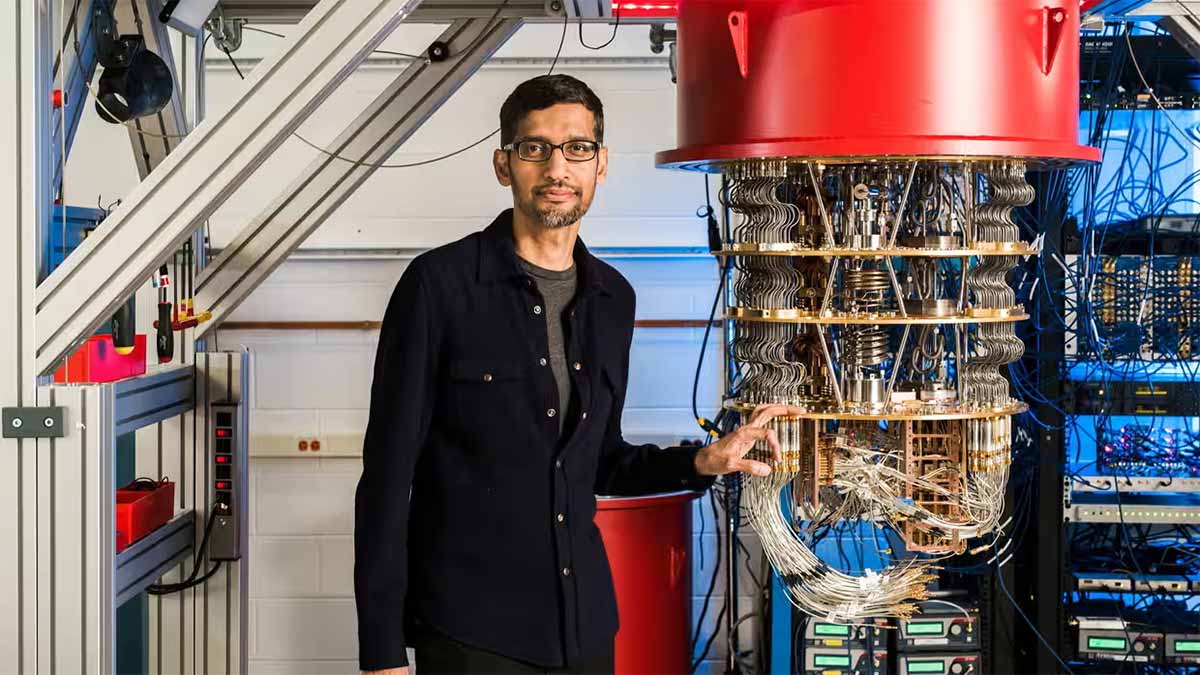
The quantum computing landscape in 2025 features diverse types of computers, primarily differentiated by their qubit modality. The five leading approaches include:
- Superconducting Quantum Computers: Utilizing superconducting materials in minute electrical circuits to create and manipulate qubits. Key players include Google, IBM, and Microsoft.
- Trapped Ion Quantum Computers: Employing ions trapped and manipulated by electric and magnetic fields to store and process quantum information. Companies like Quantinuum and IonQ are prominent in this area.
- Photonic Quantum Computers: Using photons (light particles) to carry and process quantum information, with companies such as PsiQuantum and Xanadu leading development.
- Neutral Atoms Quantum Computers: Utilizing arrays of neutral atoms suspended in a vacuum by lasers for quantum processing. ColdQuanta and QuEra are active in this modality.
- Quantum Dots Quantum Computers: Employing silicon-based quantum dots as qubits, attracting investment from companies like Intel and Diraq.
Each type possesses unique advantages and is suited for different problem sets. The price of a quantum computer is significantly influenced by the chosen qubit modality and the complexity of its engineering.
Purchasing a Quantum Computer in 2025: Is it Possible?
While technically possible to purchase a quantum computer in 2025, it’s not a straightforward consumer transaction. These machines are exceptionally expensive, challenging to manufacture, and largely operated by major corporations, research institutions, and governments. Direct purchase is less common than accessing quantum computing power through cloud services offered by companies like IBM, Microsoft Azure Quantum, and Amazon Braket.
Cloud-based quantum computing provides a more accessible entry point, allowing researchers, developers, and businesses to leverage quantum resources without the capital expenditure of owning hardware. Costs for cloud access vary based on usage but generally range from a few dollars to thousands per hour, with providers like Microsoft Azure offering initial free credits to new users.
- Quantum Leap: Scientists Achieve Distributed Quantum Computing
- Quantum-Si Raises $50 Million to Strengthen Proteomics Leadership
- Google’s Quantum Chip Raises Questions About Multiverse Theory
Quantum Computer Prices in 2025: Enterprise vs. Cloud
Pricing quantum computers remains more of an estimation than a precise science due to the technology’s nascent stage and customization factors. Key cost determinants include the type of quantum system, the number of qubits, and the level of vendor support required.
- Enterprise Quantum Systems: Purchasing a complete quantum computer system in 2025 represents a multi-million dollar investment. Estimates suggest price ranges from $10 million to $45 million for systems from leading manufacturers like Google (Quantum AI: $25M-$35M), IBM (Eagle: $30M-$45M), and D-Wave (Advantage: $20M-$30M). These figures encompass not only the hardware but often include full-service contracts spanning several years, covering maintenance, technical support, software updates, and component upgrades, contributing to annual operating costs between $4.5 million and $8 million .
- Cloud Quantum Computing: Cloud platforms offer significantly more cost-effective access. Basic plans from providers like IBM Quantum, Google Quantum, Amazon Braket, and Azure Quantum start from $48 to $99 per month , providing limited qubit access, basic tools, and community support. Pro plans, offering more qubit time, advanced features, and priority support, range from $250 to $5,000 per month . Enterprise-level custom plans are also available for dedicated access and tailored solutions.
Component Costs: The core hardware components contribute substantially to the overall price. Quantum processors range from $5 million to $25 million , cooling systems (essential for superconducting computers) from $2 million to $8 million , control electronics from $1 million to $5 million , and infrastructure from $2 million to $8 million . Installation, including clean rooms and environmental controls, can add another $1 million to $8.5 million .
Future Price Trends and Commercial Viability
Industry experts anticipate a continued decrease in quantum computing hardware costs due to technological advancements, improved manufacturing, and enhanced error correction. Cloud pricing is also expected to become more competitive with the entry of new providers and feature enhancements.
While current quantum computers with hundreds of qubits represent significant progress, achieving widespread commercial utility may require scaling to thousands or even millions of qubits, alongside advancements in error correction and infrastructure. Despite these challenges, practical applications are anticipated to emerge within the next one to two decades, potentially revolutionizing fields like machine learning, optimization, and materials science.
Navigating Quantum Computing Costs: Strategic Approaches
- For Enterprises: Carefully assess computational needs, compare total ownership costs versus cloud options, and rigorously evaluate return on investment (ROI) before committing to quantum computing.
- For Researchers: Explore grant opportunities, leverage cloud services for experimentation, and consider collaborative resource-sharing models to minimize costs.
- For Developers: Begin with cloud platforms’ free tiers to learn the fundamentals and gradually build expertise before considering larger investments.
Quantum computing is becoming increasingly accessible, primarily through cloud services, lowering the barrier to entry for organizations of all sizes. As the technology matures and prices decline, quantum computing’s transformative potential will become increasingly realized across diverse sectors.
To stay updated with the latest developments in quantum computing and related technologies, regularly visit Azat TV’s IT and Science sections: IT , Science .