
Quick Read
- Rahm Emanuel proposed a mandatory age limit of 75 for the President, Congress, Cabinet, and federal judges.
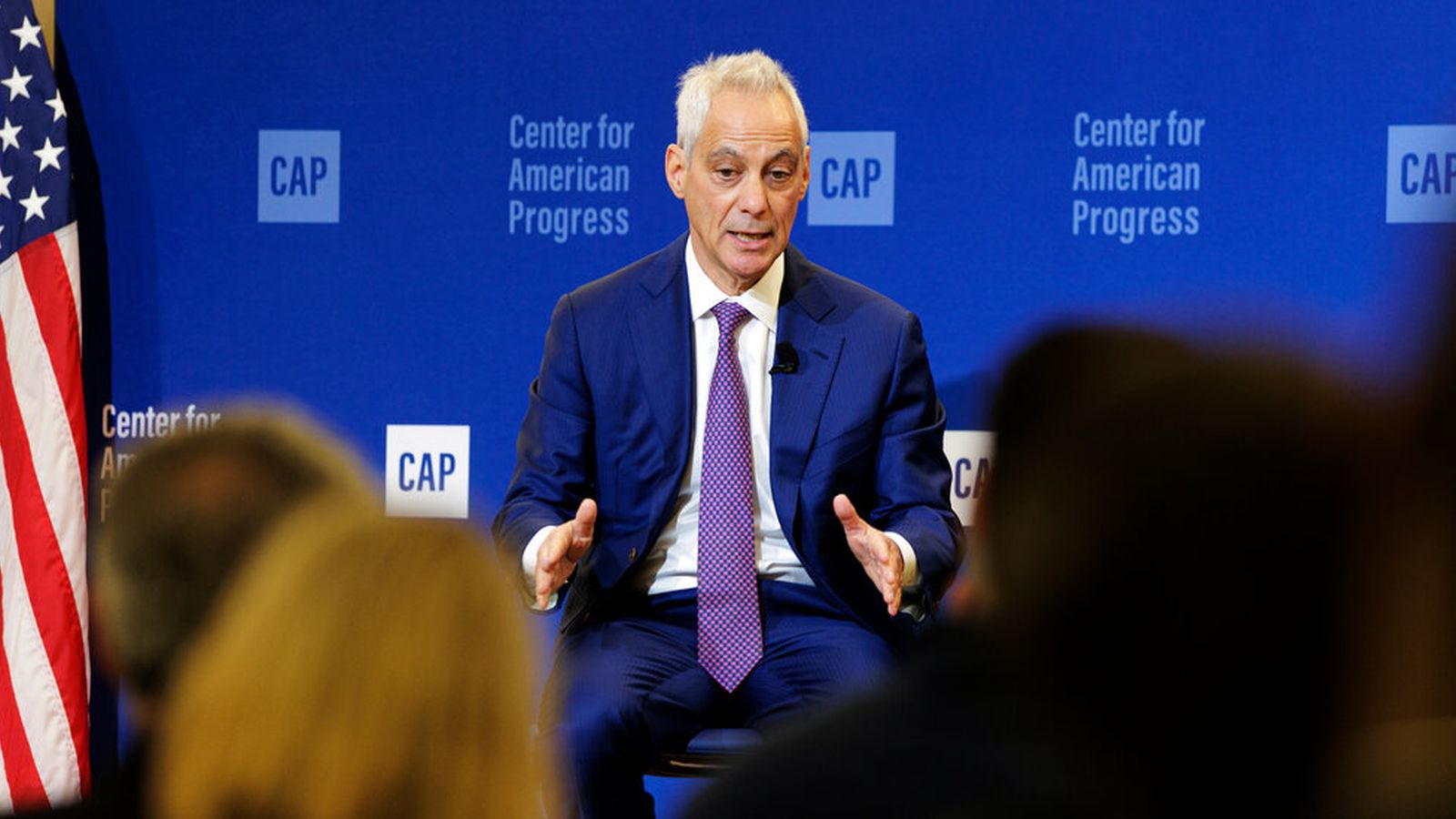
- The former Chicago mayor’s remarks were made at the Center for American Progress in Washington D.C.
- Emanuel cited age limits in the military and corporate America as precedents for his proposal.
- The proposal follows concerns over the advanced age of $1 Biden (81) and current President Trump (79).
- Emanuel, 66, is considering a presidential run in 2028, which would be impacted by his own proposed age limit for a second term.
Rahm Emanuel, a prominent Democrat, former Chicago mayor, and ambassador to Japan, has publicly called for a mandatory age limit of 75 for the President, members of Congress, cabinet officials, and federal judges. The proposal, articulated during remarks at the Center for American Progress in Washington D.C., seeks to address mounting concerns about the advanced age of some of America’s top leaders and their perceived ability to effectively govern. Emanuel’s initiative comes at a time when the nation has recently experienced the presidencies of its two oldest leaders, sparking a broader national conversation about the role of age in public service and the necessity for fresh perspectives in government.
Speaking at the Democratic think tank, Emanuel laid out a proposal for sweeping ethics changes, explicitly stating, “Across all three branches of government, 75 years — you’re out.” He justified his stance by drawing parallels to other demanding sectors, noting, “you can’t do that in the military, you can’t do it in corporate America, you should not be in government at all. Thank you for your service, up and out.” This comparison underscores a growing sentiment among some political observers that if age limits exist for high-pressure roles in the private sector and military, similar considerations should apply to the highest offices of government, where decisions carry immense national and global weight.
Emanuel’s call is not merely an abstract policy suggestion; it is deeply rooted in recent American political history. The United States has just witnessed two consecutive presidencies held by individuals who were the oldest in the nation’s history. $1 Joseph R. Biden Jr., who was 81, was compelled to withdraw from his 2024 re-election bid after facing significant public and internal party pressure regarding his age and perceived fitness for office. His predecessor, President Trump, 79, has also been the subject of scrutiny, with reports, including those cited by The New York Times, mentioning instances where he appeared to fall asleep during critical Oval Office meetings. These highly visible events have amplified public dialogue about the physical and cognitive demands of the presidency and whether advanced age inherently poses a barrier to effectively meeting those demands.
While Rahm Emanuel, at 66, is older than many of the rising stars in both Democratic and Republican parties, his proposal is strategically aligned with a desire to shape the future direction of the Democratic Party. Often seen as a pragmatic centrist, Emanuel is actively engaged in guiding the party’s narrative as it navigates challenges and plans for future electoral success. His own potential presidential aspirations for 2028 add another layer of intrigue to his proposal. If elected, an age limit of 75 would theoretically prevent him from seeking a second term, suggesting a willingness to apply the standard to himself, thereby lending credibility to his argument. This move could be interpreted as an attempt to position himself as a forward-thinking leader committed to systemic reform, appealing to voters concerned about the longevity of political careers.
The debate surrounding age in politics is multifaceted, balancing the invaluable wisdom and experience often accrued over decades of public service against concerns about declining cognitive function, adaptability, and connection with younger generations. Proponents of older leadership argue that seasoned politicians bring a wealth of knowledge, a deeper understanding of complex policy issues, and a steady hand during crises. Their long careers can foster crucial relationships and provide institutional memory, preventing repeated mistakes. However, critics suggest that extended tenures can lead to stagnation, resistance to new ideas, and a disconnect from the evolving needs and perspectives of a diverse electorate. The physical toll of demanding roles, such as the presidency, is also a significant factor, with the rigorous schedule of travel, public appearances, and high-stakes decision-making potentially becoming unsustainable at advanced ages.
Implementing such a comprehensive age limit across all branches of government would represent a monumental shift in American political structure. For the presidency and Congress, it would likely require a constitutional amendment, a notoriously difficult process requiring broad bipartisan consensus. For federal judges, who currently hold lifetime appointments, an age limit would fundamentally alter the judiciary’s independence and composition, potentially leading to more frequent appointments and a younger bench. The implications for the seniority system in Congress, which often grants significant power to long-serving members, would also be profound, potentially accelerating leadership transitions and fostering a more dynamic legislative environment.
The proposal also invites scrutiny into the broader concept of “ethics reform” that Emanuel alluded to. Beyond age, the discussion of Washington’s ethics often encompasses issues such as campaign finance, lobbying, and financial disclosures. By linking age limits to a broader ethics agenda, Emanuel suggests a holistic approach to purifying the political system. However, the political feasibility of such radical changes remains a significant hurdle. Many current members of Congress and federal judges would be directly impacted by a 75-year age cap, creating powerful vested interests opposed to its implementation. The prospect of convincing a majority of elected officials to vote themselves out of office, or to impose such restrictions on their colleagues, is daunting.
Historically, the United States has largely relied on voters to make judgments about a candidate’s fitness, including age. While there are minimum age requirements for holding various offices, there have never been maximum age limits. This reflects a foundational belief in democratic choice and the idea that voters are best equipped to weigh a candidate’s attributes. Emanuel’s proposal challenges this long-standing tradition, suggesting that a structural safeguard is necessary to ensure optimal leadership. The debate will undoubtedly explore whether such a limit enhances democratic health or infringes upon the electorate’s right to choose who they believe is best suited for public office, regardless of age.
Rahm Emanuel’s proposal for a mandatory age limit of 75 for key government positions marks a significant intervention in the ongoing national discourse about leadership fitness and the future direction of American politics, directly addressing recent high-profile concerns about the advanced age of presidential figures.