
Quick Read
- Raila Odinga, Kenya’s revered opposition leader, passed away at 80, leaving a legacy of democratic reform and social justice.
- Odinga’s five presidential campaigns and push for electoral transparency redefined Kenya’s political landscape.
- His state funeral was attended by tens of thousands, highlighting his significance as a unifying national figure.
- Odinga’s fight for devolution and support for marginalized communities cemented his place as a champion of the people.
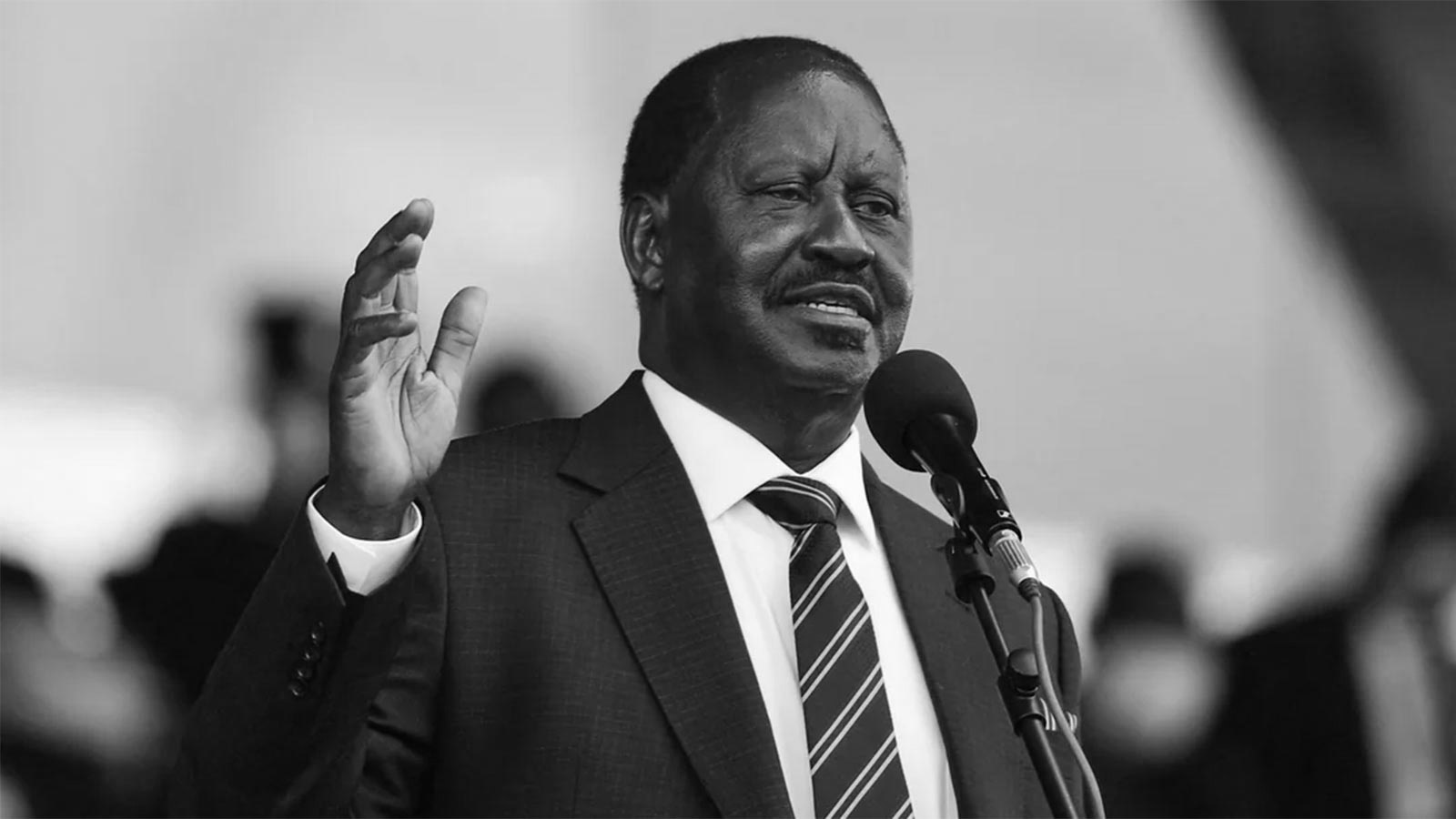
Few figures in Kenyan history have left as indelible a mark as Raila Odinga, the revered opposition leader and former Prime Minister. His passing at the age of 80 has been met with an outpouring of grief, not only in Kenya but across the African continent. Known for his relentless pursuit of justice, democracy, and unity, Odinga’s life was a testament to resilience and service to his country.
Early Life and Political Beginnings
Born into a prominent political family, Raila Odinga was the son of Jaramogi Oginga Odinga, Kenya’s first Vice President. From an early age, Raila displayed a profound interest in public service and governance. He was educated in East Germany, where he studied engineering—a discipline that informed his practical approach to problem-solving throughout his political career.
Odinga’s entry into politics was marked by his involvement in the push for multi-party democracy during the 1980s and 1990s. His activism often came at a personal cost, including imprisonment and political exile. These experiences only deepened his resolve to fight for the ordinary Kenyan and to ensure that democracy would take root in the country.
Champion of Democracy and Opposition Leadership
Raila Odinga’s name became synonymous with Kenya’s struggle for electoral transparency and fairness. Over the course of his career, he contested the presidency five times, each campaign focusing on issues of equity, governance, and anti-corruption. Although he never ascended to the presidency, Odinga’s efforts were instrumental in reforming Kenya’s electoral processes.
His leadership was especially critical during periods of national crisis. Following the disputed 2007 elections, which led to widespread violence, Odinga entered into a power-sharing agreement as Prime Minister, demonstrating his commitment to peace and national unity. His tenure saw significant reforms, including the push for a new constitution in 2010 that decentralized power through devolution.
Legacy of Resilience and Unity
One of Odinga’s most enduring legacies is his unwavering belief in the power of the common citizen. He championed policies that sought to uplift marginalized communities and was a vocal advocate for social justice. His ability to connect with ordinary Kenyans, coupled with his charismatic leadership, earned him a devoted following.
Odinga’s personal sacrifices for the nation’s democratic ideals were profound. He endured imprisonment, exile, and political setbacks, yet he remained steadfast in his mission. His daughter Winnie poignantly captured this spirit during his funeral, stating, “True leadership is service, not power.”
Farewell to a National Icon
Raila Odinga’s state funeral was a deeply emotional event that underscored his significance to Kenya and the wider region. Held at Nairobi’s Nyayo National Stadium, the ceremony was attended by tens of thousands, including regional leaders and dignitaries. Tributes poured in, celebrating his contributions to democracy and peace.
President William Ruto, a former rival, highlighted Odinga’s role in shaping Kenya’s political landscape. The ceremony also featured symbolic moments, such as the singing of Odinga’s favorite reggae song, “Jamaican Farewell,” and traditional Luo rituals that celebrated his life and legacy.
Odinga’s final journey took him to Kisumu, his political stronghold, and then to his ancestral home in Bondo, where he was laid to rest. His passing has left a leadership vacuum in Kenya’s opposition, but his ideals continue to inspire future generations.
Conclusion
Raila Odinga’s life was a beacon of hope and resilience for Kenya and beyond. His commitment to justice, democracy, and unity serves as a lasting legacy, reminding us that true leadership is measured not by power but by service to the people. As Kenya mourns his loss, it also celebrates a life that transformed the nation’s political and social fabric.