
Quick Read
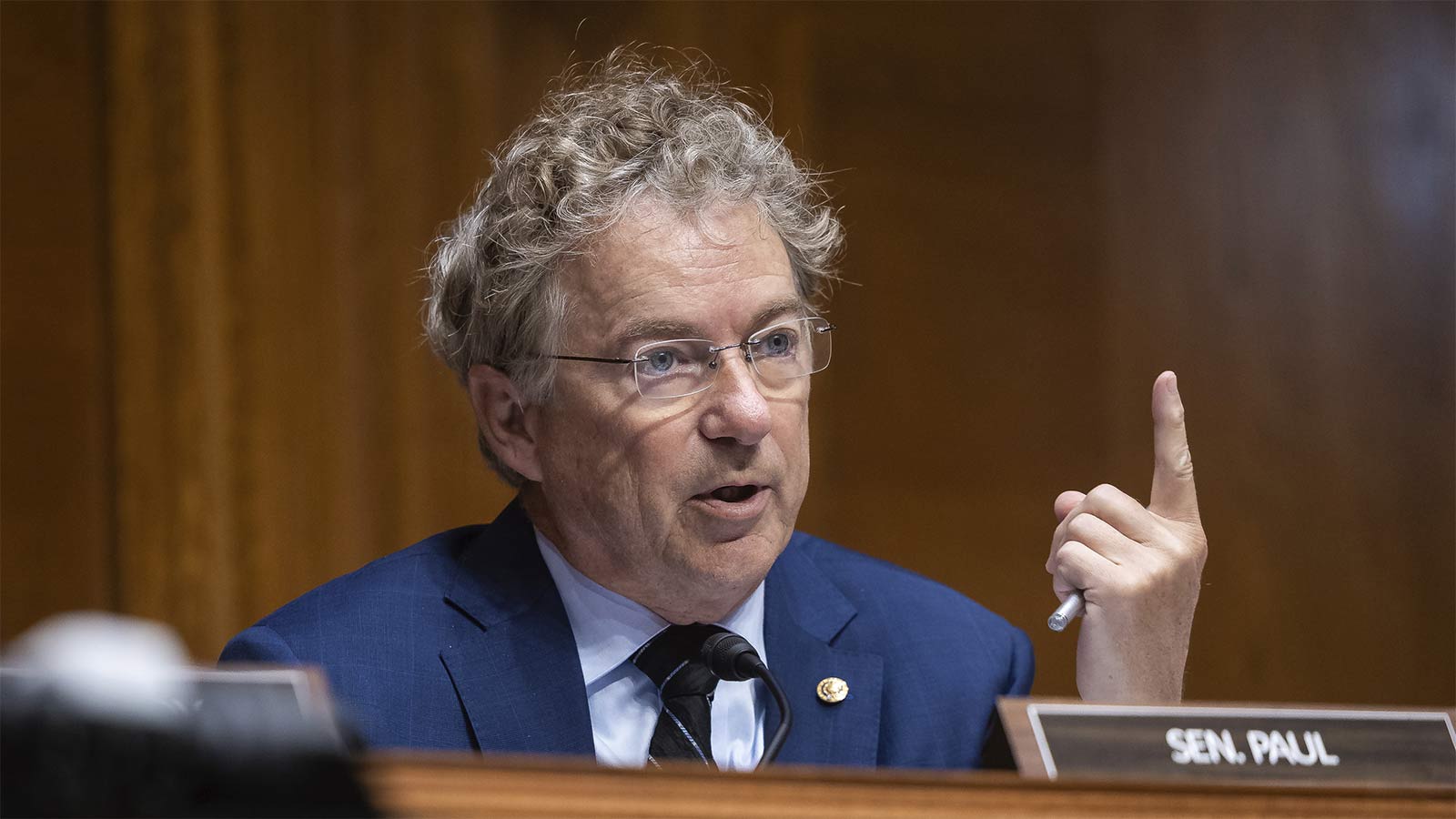
- Senator Rand Paul is slated to be an early guest on Chris Cuomo’s new SiriusXM show, ‘Cuomo Mornings,’ launching January 20, 2026.
- ‘Cuomo Mornings’ aims to foster bipartisan dialogue and solutions-oriented conversations, moving beyond partisan divides.
- President $1 Trump publicly criticized Rand Paul on January 13, 2026, calling him a ‘stone cold loser.’
- Trump’s criticism stemmed from Paul’s vote to restrict the President’s ability to conduct unilateral military strikes in Venezuela without congressional approval.
- Paul’s vote aligns with his consistent libertarian stance on foreign policy and constitutional checks on executive power.
In the dynamic and often tumultuous landscape of American politics, Senator Rand Paul of Kentucky continues to carve out a distinct path, engaging in efforts to foster bipartisan dialogue while simultaneously facing sharp criticism from influential figures within his own party. The coming weeks will see Paul stepping into a new arena of political discourse as an anticipated guest on Chris Cuomo’s freshly launched SiriusXM program, ‘Cuomo Mornings.’ This engagement unfolds against the backdrop of recent, scathing remarks from President $1 Trump, who publicly castigated Paul as a ‘stone cold loser’ over a contentious vote on foreign policy.
Cuomo Mornings: A New Platform for Dialogue
Starting January 20, 2026, veteran journalist Chris Cuomo is set to host ‘Cuomo Mornings’ on SiriusXM’s bipartisan POTUS Politics channel. The live weekday program, airing from 7–9 am ET, aims to cut through the partisan noise and foster genuine, solutions-oriented conversations. Senator Rand Paul is listed among the expected early guests, signaling the show’s commitment to featuring a broad spectrum of ideological viewpoints.
Cuomo himself has articulated a clear vision for the program, stating, «Too much of our politics is about teams instead of truth. ‘Cuomo Mornings’ is going to be about breaking through those barriers, asking better questions, and bringing people into the conversation instead of talking past them. We need to prioritize common sense, accountability, and real dialogue, and SiriusXM’s POTUS channel is exactly where that belongs.» This ethos suggests a deliberate effort to create a space where disagreement doesn’t necessarily translate into division, a concept that aligns well with Paul’s often contrarian, yet intellectually driven, approach to policy.
Paul’s participation on a show explicitly designed to bridge political divides underscores his willingness to engage with diverse audiences and challenge conventional partisan lines. Known for his libertarian-leaning principles and a consistent emphasis on constitutionalism, his presence on ‘Cuomo Mornings’ offers a significant opportunity to articulate his perspectives on critical issues to a broad, national listenership that, according to SiriusXM, seeks a more nuanced understanding of political developments.
The program promises interviews with newsmakers from across the ideological spectrum and direct engagement with listeners of all political viewpoints. For Senator Paul, this platform offers a chance to elaborate on his positions on everything from fiscal policy to foreign intervention, issues where he often diverges from mainstream party orthodoxy. His ability to articulate complex ideas in an accessible manner makes him a fitting guest for a show aiming to elevate public discourse beyond mere partisan talking points.
Trump’s Scathing Rebuke Over Venezuela Strikes
Just as Senator Paul prepares for this new venture into bipartisan media, he finds himself at the center of a political firestorm ignited by President $1 Trump. During an economic address in Detroit on January 13, 2026, Trump lashed out at a group of Republican senators, including Paul, who had voted to advance a resolution that would restrict the President’s ability to conduct unilateral military strikes in Venezuela without congressional approval. Trump’s criticism was unsparing, labeling Paul a «stone cold loser» and even claiming credit for the Kentucky senator’s past re-election victories.
The controversy stems from a vote where Paul, alongside four other Republican senators – Lisa Murkowski of Alaska, Susan Collins of Maine, Josh Hawley of Missouri, and Todd Young of Indiana – supported a measure designed to assert congressional authority over military engagements. This move directly challenged the executive branch’s power, a long-standing point of contention between the legislative and executive branches, particularly regarding the deployment of military force.
Trump, in his remarks, expressed incredulity at their votes, stating, «They don’t have a Rand Paul that votes against everything.» He framed the recent operation in Venezuela, which reportedly gave the U.S. access to the nation’s crude oil, as a successful endeavor financially beneficial to the United States. His speech in Detroit also touched on broader economic themes, including inflation, which held steady at 2.7% in December, and his ongoing criticism of Federal Reserve Chair Jerome Powell.
Senator Collins, one of the targeted Republicans, had previously issued a statement on January 8, clarifying her position. While she supported the operation to capture deposed Venezuelan leader Nicolás Maduro, she unequivocally stated, «I do not support committing additional U.S. forces or entering into any long-term military involvement in Venezuela or Greenland without specific congressional authorization.» This sentiment reflects a constitutional principle that many, including Paul, staunchly uphold: that the power to declare war and authorize military action rests with Congress.
Paul’s vote is consistent with his long-held libertarian stance on foreign policy, advocating for a more restrained approach to international intervention and a strict adherence to constitutional checks and balances. His willingness to defy a popular figure like Trump, especially on an issue perceived by the $1 as a success, highlights his independent streak and his commitment to principles over party loyalty.
A Politician of Principle in a Polarized Era
The juxtaposition of these two events—Rand Paul’s upcoming appearance on ‘Cuomo Mornings’ and his recent condemnation by Donald Trump—paints a vivid picture of a politician navigating the complex currents of contemporary American politics. On one hand, he is willing to engage in forums that actively seek to bridge ideological divides, demonstrating a belief in the power of dialogue. On the other, he remains steadfast in his constitutional principles, even when it means incurring the wrath of powerful figures within his own party.
This dual identity positions Paul as a unique voice. He is a Republican who has consistently challenged the foreign policy establishment, advocating for non-interventionism and a careful exercise of presidential power. His recent vote on Venezuela is not an isolated incident but rather a continuation of a pattern of legislative independence. Such actions, while drawing ire from some, also solidify his reputation among those who value consistency and adherence to stated principles.
In an era often characterized by rigid partisan alignment and an all-consuming focus on loyalty, Senator Rand Paul stands out as a politician willing to embrace both thoughtful deliberation across the aisle and principled dissent within his own ranks. His readiness to engage in challenging conversations while simultaneously defending constitutional prerogatives, even against the formidable influence of a $1, underscores a political identity defined by conviction rather than mere convenience. This approach, while sometimes controversial, positions him as a significant and often unpredictable player in shaping future political discourse and policy debates.