
Quick Read
- Raphinha finished fifth in the 2025 Ballon d’Or rankings.
- Barcelona won a domestic treble: La Liga, Copa del Rey, and Spanish Super Cup.
- Ousmane Dembele (PSG) won the Ballon d’Or; Lamine Yamal was runner-up.
- Raphinha was a key leader in Barcelona’s successful campaign.
Raphinha: Barcelona’s Relentless Engine in a Season of Glory
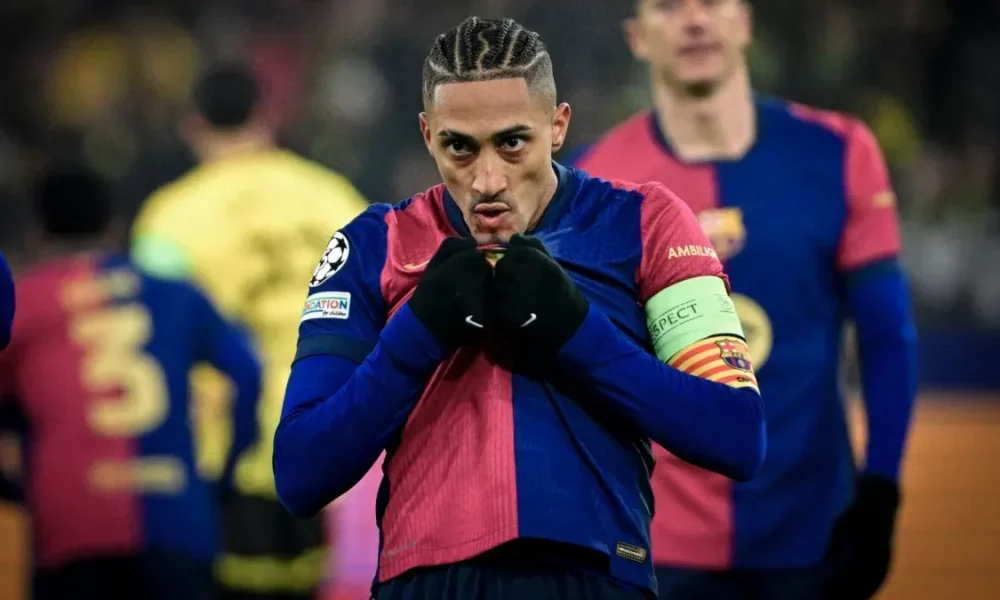
When the curtain rose at the Théâtre du Châtelet in Paris on a crisp September evening in 2025, the football world was abuzz with anticipation. The Ballon d’Or gala—football’s most prestigious individual accolade—was set to crown its latest king. While much of the spotlight was fixed on the prodigious Lamine Yamal and the electric Ousmane Dembele, an equally remarkable journey quietly played out: Raphinha, Barcelona’s Brazilian maestro, clinched a well-deserved fifth place in the Ballon d’Or rankings.
For Raphinha, this moment was more than a personal milestone. It was a celebration of resilience, consistency, and a testament to how a player’s influence can ripple far beyond the stat sheet. As the crowd’s applause echoed through the historic venue, the significance of Raphinha’s achievement resonated not only within the walls of the theater but across the hearts of Barcelona fans worldwide.
From Leeds to La Liga Royalty: Raphinha’s Meteoric Rise
Just a few seasons ago, Raphinha was dazzling Premier League crowds with his flair at Leeds United. His journey to Barcelona was marked by determination and a relentless drive to improve. In the 2024-25 season, Raphinha evolved into one of Barcelona’s most vital cogs—a leader on and off the pitch. As much as the Catalan side’s season was about the brilliance of youth, it was also about the steady hands and mature heads who held the team together when the pressure mounted.
Raphinha’s statistics painted a picture of an all-action winger: goals, assists, and relentless pressing. But his true value lay in the intangibles—the moments when he lifted teammates, pressed with purpose, and delivered when the stakes were highest. It’s a role that sometimes escapes headlines but never goes unnoticed by those who watch closely. As Barca Universal highlighted, Raphinha was “one of the leaders of the Barça team that won the domestic treble last season and made a strong case for a podium finish.”
The Ballon d’Or Rankings: A Night of Stories
This year’s Ballon d’Or ceremony was a showcase of narratives converging at the summit of world football. Ousmane Dembele, former Barcelona winger now starring for PSG, took home the golden orb after a treble-winning campaign capped by Champions League glory. Lamine Yamal, just 18, stunned the footballing establishment by finishing second, a leap from his eighth-place finish the year before. Between these two, the generational handover was palpable—a story of old friends turned rivals, pushing each other to new heights.
Raphinha’s fifth-place finish saw him just behind Vitinha of PSG and Liverpool’s Mohamed Salah, both global superstars in their own right. In a field packed with attacking talent, Raphinha’s recognition was a nod to his influence during a season when Barcelona swept La Liga, Copa del Rey, and the Spanish Super Cup. For a player whose journey started far from the glare of Europe’s biggest stages, this moment was hard-won.
The Season That Defined Raphinha
Barcelona’s 2024-25 campaign was a tapestry of ambition and rejuvenation. While Yamal’s emergence lit up the Camp Nou and Dembele’s exploits in Paris dominated headlines, Raphinha’s consistency was the glue. He was there in the scrappy away wins, the high-stakes finals, and the training ground huddles, setting the tempo and demanding more from those around him.
His contributions were not limited to the pitch. Raphinha’s leadership in a dressing room filled with rising stars was vital. He bridged generations, offering guidance to the likes of Yamal while sharing in the ambitions of veterans. It’s easy to overlook such roles in the age of highlight reels, but Barcelona’s treble owed much to his stabilizing presence.
As Reuters reported, Barcelona’s domestic dominance was built on collective buy-in and tactical discipline—a system where Raphinha thrived. The Brazilian was often the link between defense and attack, orchestrating quick transitions and punishing defenses with his quick feet and sharper mind.
Recognition on the World Stage
Football’s top honors are fiercely contested. For Raphinha, finishing fifth in the Ballon d’Or rankings places him among the sport’s true elite—a validation of years of hard work and an inspiration to countless young players dreaming of similar paths. The acknowledgment comes at a time when Brazilian football is searching for its next talisman, and Raphinha’s ascent serves as a beacon of what persistence and belief can achieve.
The Ballon d’Or is, by its nature, as much about narrative as it is about numbers. While Dembele’s Champions League triumph for PSG tipped the scales this year, Raphinha’s role in Barcelona’s treble-winning season cannot be overstated. He may not have lifted the golden orb, but his journey to the top five was a victory in itself.
As the night concluded in Paris, with flashbulbs popping and tributes flowing, Raphinha stood tall—proof that sometimes the most compelling stories in football are not just about the winners, but about those who inspire through their example, bridging the gap between aspiration and achievement.
Raphinha’s fifth-place finish in the 2025 Ballon d’Or is a testament to the power of persistence and team spirit in modern football. While individual brilliance shines, it is often the quiet leaders who shape the destiny of great teams. In a season where Barcelona reclaimed its place among Europe’s elite, Raphinha’s recognition stands as a reminder that success is rarely a solo act—and that football’s greatest honors are built on the shoulders of many.