
Quick Read
- Ray Dalio warns the U.S. is heading toward 1930s-style autocracy.
- He highlights economic stagnation and widening wealth gaps as key risks.
- UBS estimates a 93% probability of a U.S. recession based on hard data.
- Dalio and others emphasize the importance of Federal Reserve independence.
- Political and economic instability could have global repercussions.
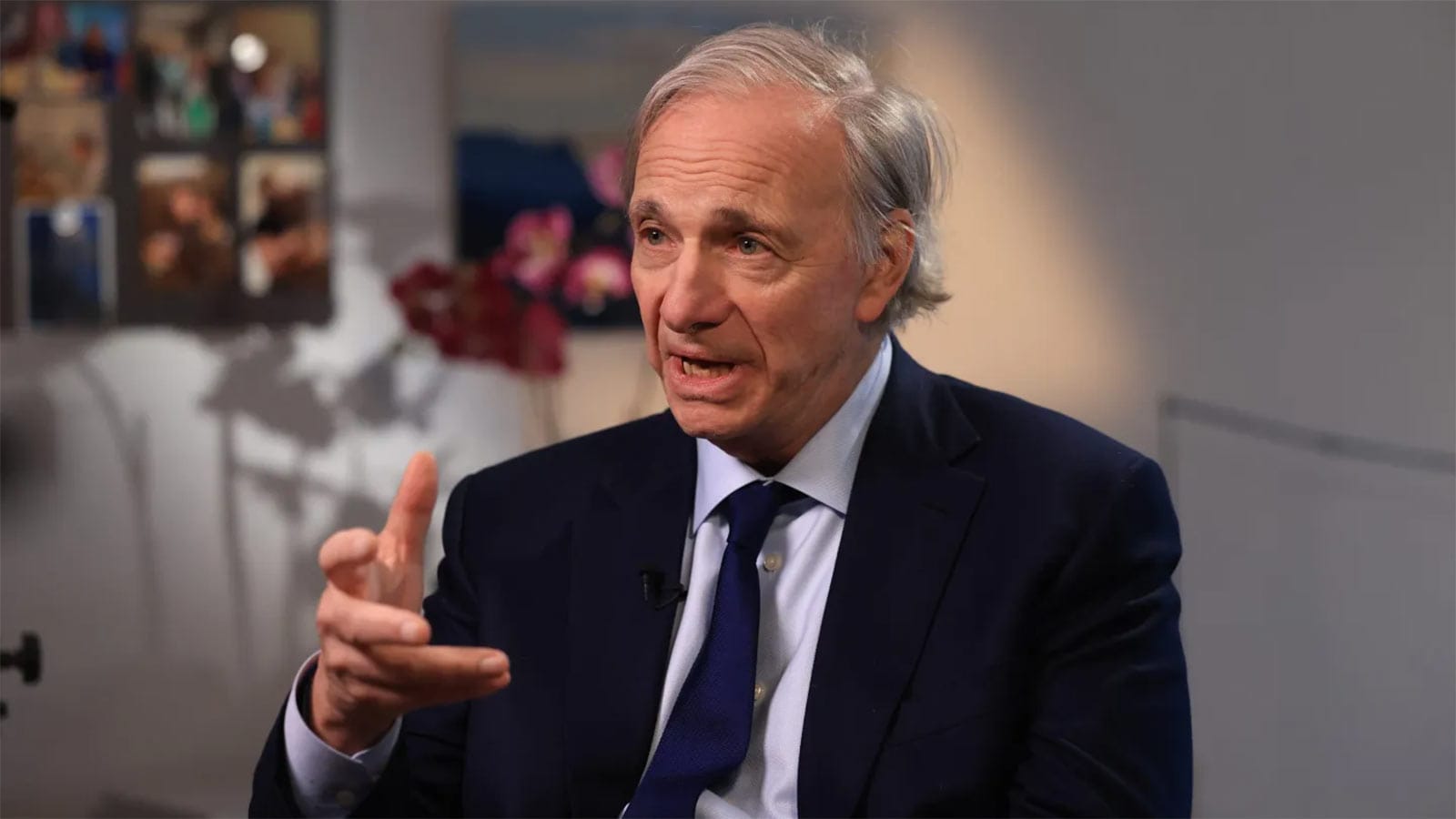
Renowned investor and founder of Bridgewater Associates, Ray Dalio, has sparked significant conversation with his recent warnings about the state of the U.S. economy and political climate. Drawing parallels to the 1930s, Dalio expressed concerns about rising autocratic tendencies and economic stagnation, themes that resonate with ongoing debates in both economic and political spheres.
Dalio’s Warning of Rising Autocracy
In an interview with the Financial Times published on September 2, 2025, Dalio highlighted similarities between the current U.S. political landscape and the autocratic tendencies of the 1930s. He criticized recent state interventions in the private sector, including the Trump administration’s 10% stake in Intel, as a sign of “strong autocratic leadership.” According to Dalio, such interventions often emerge during periods of economic and social instability, when governments aim to take control of financial systems.
Dalio further warned that widening wealth and value gaps, coupled with diminishing trust in democratic institutions, are creating fertile ground for extreme policies. “Increased populism on both the right and left leads to irreconcilable differences, weakening democracies and paving the way for autocratic leadership,” he explained. This statement aligns with broader concerns voiced by other economists and political analysts about the fragility of democratic processes in times of crisis.
The Economic Context: Stagnation or Recession?
Dalio’s warnings come amid broader economic concerns highlighted by a recent UBS report, which placed the probability of a U.S. recession at 93% based on “hard data” from May through July 2025. As reported by Fortune, key indicators such as personal income, consumption, and industrial production have shown persistent weakness. While UBS does not forecast an outright recession, it describes the current economic phase as “soggy growth”—a period of stagnation rather than collapse.
Other economists, including Mark Zandi of Moody’s Analytics, have echoed similar concerns. Zandi pointed to declining labor demand and revised job growth data as potential harbingers of a recession. The inverted yield curve, a classic recession indicator, remains a worrying signal, standing 23% inverted as of mid-2025. Despite these red flags, UBS analysts suggest that the downturn lacks the sharp declines typically seen before past recessions.
Federal Reserve Independence Under Threat
Adding to the economic uncertainty, Dalio expressed concern about the Federal Reserve’s independence. He warned that political interference, particularly from President Trump, could destabilize the U.S. economy. Trump’s attempts to dismiss Fed governors and his persistent calls for lower interest rates have raised alarms among financial experts. Christine Lagarde, President of the European Central Bank, echoed Dalio’s concerns, stating that undermining the Fed’s autonomy would have “very serious dangers” for both the U.S. and global economies, as reported by China Daily.
Dalio argued that if the Fed becomes politically compromised, it could erode investor confidence in the U.S. dollar and Treasury bonds. “A politically dependent central bank would weaken the monetary order as we know it,” he stated, emphasizing the global ramifications of such a shift.
Historical Parallels and Broader Implications
Dalio’s comparison to the 1930s is not merely rhetorical. The period was marked by economic depression, rising authoritarian regimes, and significant shifts in global power dynamics. By drawing these parallels, Dalio underscores the importance of addressing systemic issues such as income inequality, political polarization, and institutional trust. His warnings serve as a call to action for policymakers and citizens alike to safeguard democratic principles and economic stability.
While Dalio’s views have sparked debate, they also highlight the interconnectedness of economic and political systems. As the U.S. navigates its current challenges, his insights provide a sobering reminder of the stakes involved.
Ray Dalio’s warnings about the parallels between today’s challenges and historical crises serve as a crucial wake-up call. As economic and political tensions rise, the importance of maintaining democratic institutions and economic stability cannot be overstated.