
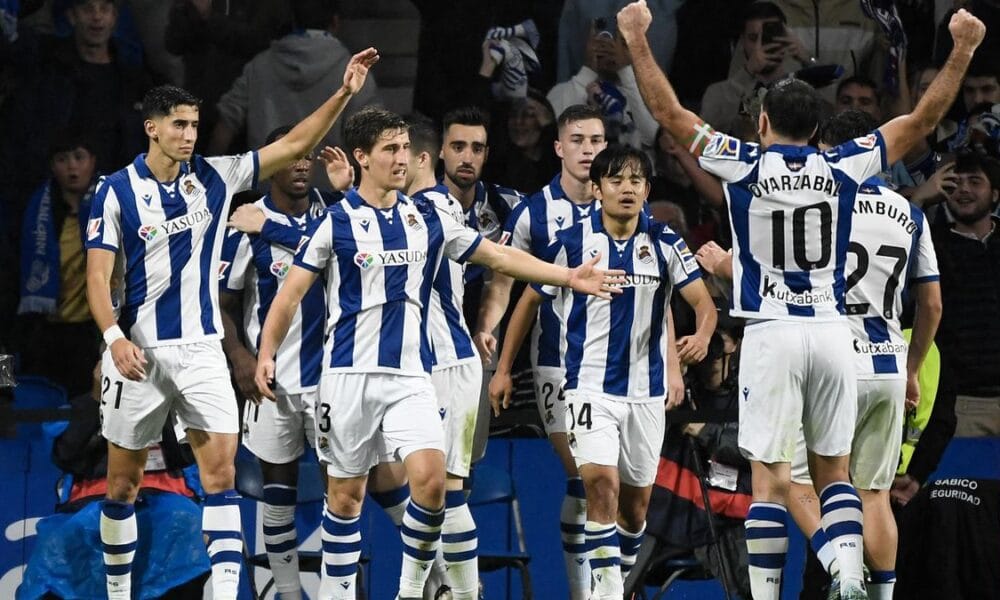
Real Sociedad’s 1-0 victory over Barcelona at the Reale Arena marks a critical point in the La Liga season, delivering Barcelona its second consecutive league loss. This defeat not only intensifies the competition at the top of the table, where Real Madrid is closing in, but also reveals key weaknesses in Barcelona’s tactical response to high-intensity play, particularly against mid-level La Liga teams with strong home support.
Under coach Imanol Alguacil, Real Sociedad demonstrated the effectiveness of a high-pressing, intense style, especially at home. Take Kubo’s exceptional performance on the right flank continuously destabilized Barcelona’s defense, exposing gaps and forcing them into reactive positioning. Real’s pressure in the final third, particularly from Kubo and Sheraldo Becker, kept Barcelona on the defensive, hindering their ability to establish controlled possession and attack from the back.
Barcelona’s inability to match Sociedad’s energy and defensive intensity underscores their challenge in away games, especially in high-pressure environments like the Reale Arena. The combination of crowd influence and Real Sociedad’s pressing approach made it difficult for Barcelona to settle, resulting in costly defensive lapses and missed scoring opportunities.
Barcelona’s line defense, especially after the goal by Sheraldo Becker, appeared vulnerable to quick transitions and struggled to close down spaces effectively. The absence of key players like Lamine Yamal left the team without some of its usual dynamism, further exposing their defensive line.
The tactical adjustments brought by Dani Olmo in the second half had minimal impact as Real Sociedad maintained their pressure. Despite Barcelona’s efforts to press forward, the midfield struggled to create cohesion, especially in the absence of Frenkie de Jong, which disrupted the flow and left the defensive line exposed.
Barcelona’s disallowed goal due to a marginal offside by Robert Lewandowski highlights the ongoing influence of VAR in close games. This decision affected the game’s momentum and the scoreline, denying Barcelona a chance to break Sociedad’s control early on. This disallowed goal added psychological pressure on Barcelona, as their few scoring opportunities dwindled, allowing Sociedad to capitalize further and maintain control.
Kubo was the standout player, dominating the right side with skill, speed, and vision. His ability to dribble past defenders and create scoring opportunities was instrumental, setting up several near-goals and leading to the decisive first-half goal. Despite several opportunities, Sociedad missed chances to extend their lead, with Oyarzabal and Becker coming close but failing to convert. This left the score at a modest 1-0, though the match could have easily ended with a larger margin given Sociedad’s dominance.
Barcelona’s consecutive losses shift the dynamic of the La Liga title race, allowing Real Madrid to close the gap and increase pressure on the defending champions. This defeat exposes Barcelona’s struggles with depth and intensity, issues they’ll need to address if they hope to maintain their lead. Real Sociedad, with this win, inches closer to European qualification spots, boosting their season trajectory and demonstrating their ability to challenge top-tier teams. Their tactical approach against Barcelona may set a precedent for how other teams might aim to exploit Barcelona’s vulnerabilities.
In conclusion, Real Sociedad’s victory was a fair outcome reflecting their superior intensity, tactical discipline, and effective use of Kubo’s playmaking abilities. Barcelona’s defensive lapses and inability to counter Sociedad’s high-pressure game indicate areas of improvement, especially in preparing for high-stakes matches away from home. The result highlights the increasingly competitive landscape of La Liga as Real Madrid narrows the points gap, promising a closely contested race for the title.