
Quick Read
- Renee Nicole Good, 37, was shot and killed by an ICE agent in Minneapolis on January 7, 2026.
- Her mother, Donna Ganger, identified her and described her as ‘one of the kindest people I’ve ever known,’ denying her involvement in protests.
- The Department of Homeland Security claims an ICE agent fired ‘defensive shots’ as Good attempted ‘to run over’ agents.
- Eyewitnesses and social media video accounts contradict the official narrative, suggesting agents were around the vehicle as it moved.
- Minneapolis Mayor Jacob Frey strongly condemned ICE, calling for them to ‘get the f*** out’ and disputing the DHS’s version of events.
In the heart of Minneapolis, a city often at the nexus of national discourse, a life was abruptly extinguished on a Wednesday in January 2026, leaving behind a grieving family, a community in shock, and a tangle of conflicting narratives. Renee Nicole Good, a 37-year-old woman described by her mother as an ‘amazing human being,’ was shot and killed by an Immigration and Customs Enforcement (ICE) agent during what federal authorities termed a ‘targeted operation’ that escalated into a confrontation with local residents.
The incident, which unfolded in south Minneapolis, quickly ignited a firestorm of controversy, drawing sharp rebukes from local leaders and intense scrutiny from the public. At its core lies the tragic loss of Good, a poet, writer, wife, and mother whose life, by all accounts from those who knew her, was dedicated to compassion and care, not conflict.
A Mother’s Grief and a Daughter’s Legacy
For Donna Ganger, the news arrived late Wednesday morning, a devastating blow that shattered her world. Her daughter, Renee Nicole Good, was gone. Speaking to the Minnesota Star Tribune, Ganger painted a vivid portrait of her daughter: a woman of profound kindness, compassion, and an unwavering capacity for love. “Renee was one of the kindest people I’ve ever known,” Ganger shared, her voice heavy with sorrow. “She was extremely compassionate. She’s taken care of people all her life. She was loving, forgiving and affectionate. She was an amazing human being.”
Good, who lived in the Twin Cities with her partner, was remembered for her gentle spirit. An Instagram account believed to be hers described her as a “poet and writer and wife and mom and shitty guitar strummer from Colorado; experiencing Minneapolis, MN.” This image stands in stark contrast to the violent circumstances of her death. Ganger vehemently denied any suggestion that her daughter was involved in the protests challenging ICE agents, stating, “She’s not part of anything like that at all.” The notion that Good might have been “terrified” in her final moments haunted her mother, who, after learning some of the details from a reporter, could only utter, “That’s so stupid” that she was killed.
The grief extends beyond her immediate family. Good had previously been married to Timmy Ray Macklin Jr., who passed away in 2023. Macklin’s father, Timmy Ray Macklin Sr., expressed his shock and sorrow upon hearing the news of Good’s death, underscoring the ripple effect of this tragedy through multiple lives and families.
The Incident: Conflicting Accounts Emerge
The sequence of events leading to Renee Nicole Good’s death remains hotly contested. According to the Department of Homeland Security (DHS), through spokeswoman Tricia McLaughlin, ICE officers were conducting “targeted operations” when community members began attempting to block ICE vehicles. McLaughlin stated that an ICE agent “fired defensive shots” as Good allegedly attempted “to run over” agents. This account positions the agent’s actions as a response to a direct threat.
However, this official narrative is sharply challenged by local residents who witnessed the scene and by video footage circulating on social media. Several residents reported that agents were ordering Good out of her vehicle. A video, widely shared, reportedly showed agents surrounding the vehicle as the driver first reversed and then pulled forward. Crucially, one agent appeared to fire multiple rounds into the car. These eyewitness accounts and visual evidence raise serious questions about the DHS’s description of events, suggesting a potentially different dynamic at play.
The discrepancy between the federal agency’s statement and witness testimonies is a critical point of contention. Was Good actively attempting to harm agents, or was she, as her mother suggested, simply terrified and trying to navigate a chaotic situation? The answers to these questions are crucial for understanding the legality and justification of the force used and are currently the subject of an ongoing investigation, with authorities reviewing video footage, witness statements, and other evidence.
Local Outcry and Calls for Accountability
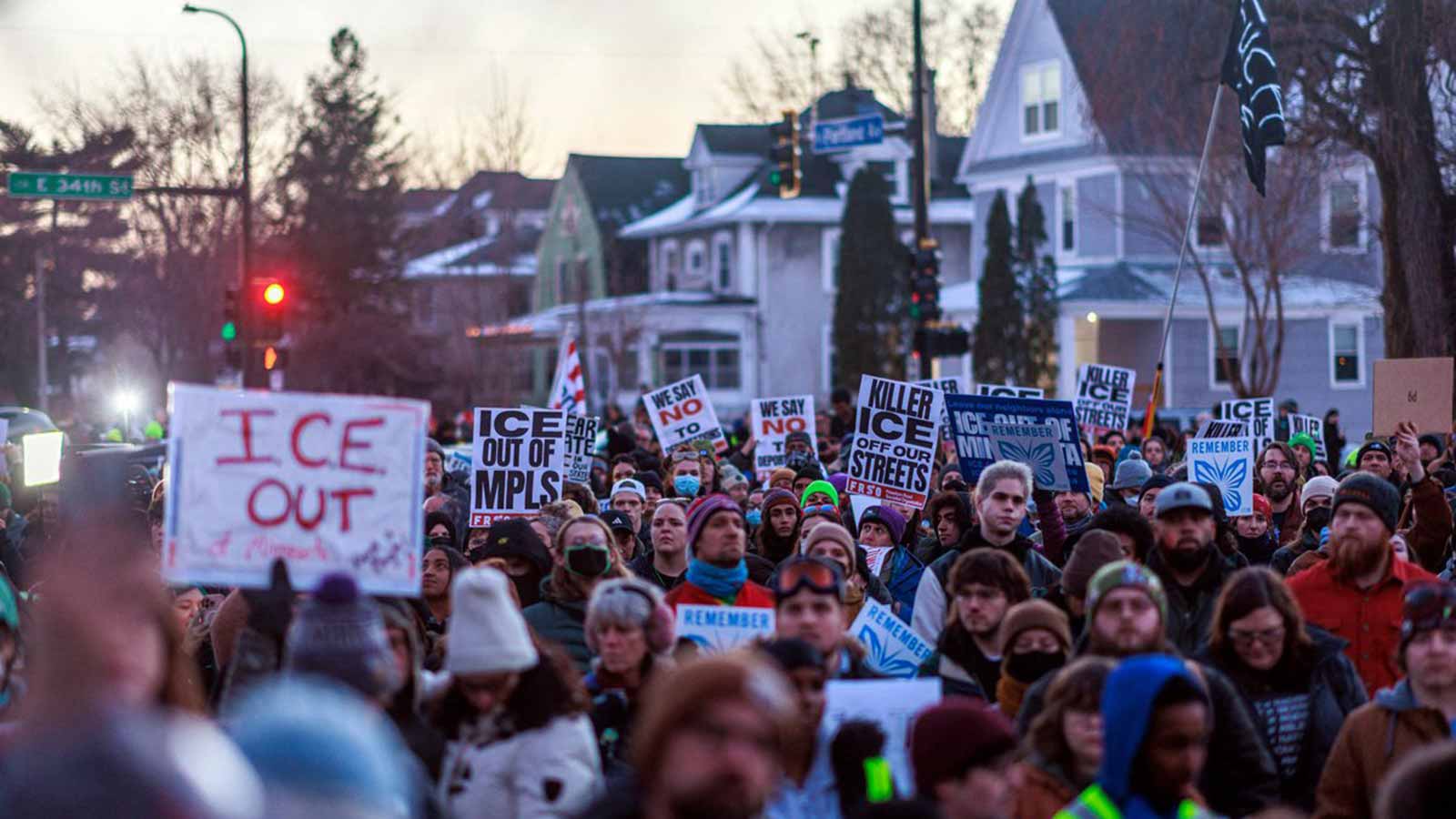
The shooting immediately triggered a strong condemnation from Minneapolis city officials. Mayor Jacob Frey, a Democrat, held a fiery news conference at City Hall, where he publicly called on ICE to “get the f*** out.” Frey not only expressed his profound sorrow to Good’s family, stating, “To the family, I’m so deeply sorry,” but also openly disputed Homeland Security’s version of what transpired. His strong language reflects the deep-seated tension between federal immigration enforcement and local sanctuary policies in many cities across the United States.
Governor Tim Walz also weighed in, albeit with a call for calm, acknowledging the highly charged atmosphere. The incident highlights the volatile nature of encounters between federal agents and local communities, especially in contexts where federal actions are perceived as overreaching or insensitive to local values. The involvement of a federal agency in a fatal shooting within city limits invariably raises questions about jurisdiction, accountability, and the appropriate use of force.
The tragic death of Renee Nicole Good serves as a stark reminder of the human cost when these tensions boil over. It underscores the challenges of truth-finding in high-stakes situations, where official statements can clash dramatically with eyewitness accounts and community perceptions. As the investigation continues, the focus will undoubtedly remain on piecing together a comprehensive and unbiased understanding of the events of that fateful Wednesday, and on ensuring that justice is served for Renee Nicole Good and her grieving family.
The tragic death of Renee Nicole Good is not merely an isolated incident; it’s a stark illustration of the profound human toll exacted when federal enforcement actions collide with deeply rooted community tensions and conflicting narratives. The chasm between the official account of ‘defensive shots’ and the heartfelt testimony of her mother, describing a compassionate soul, underscores a systemic challenge in reconciling the often-impersonal machinery of government with the irreplaceable value of an individual human life. This incident demands not just an investigation into the facts, but a broader societal reflection on accountability, transparency, and the imperative to protect vulnerable lives caught in the crossfire of contentious policy.