
Quick Read
- Rhian Mannings lost her one-year-old son and husband within five days in 2012.
- She founded 2Wish, a charity supporting families affected by sudden child and youth deaths.
- Prince William joined Rhian for an emotional conversation to mark World Mental Health Day.
- The Royal Foundation launched a £1m National Suicide Prevention Network, including 2Wish.
- The network aims to break stigma and improve support for those at risk or affected by suicide.
Rhian Mannings’ Journey from Tragedy to Activism
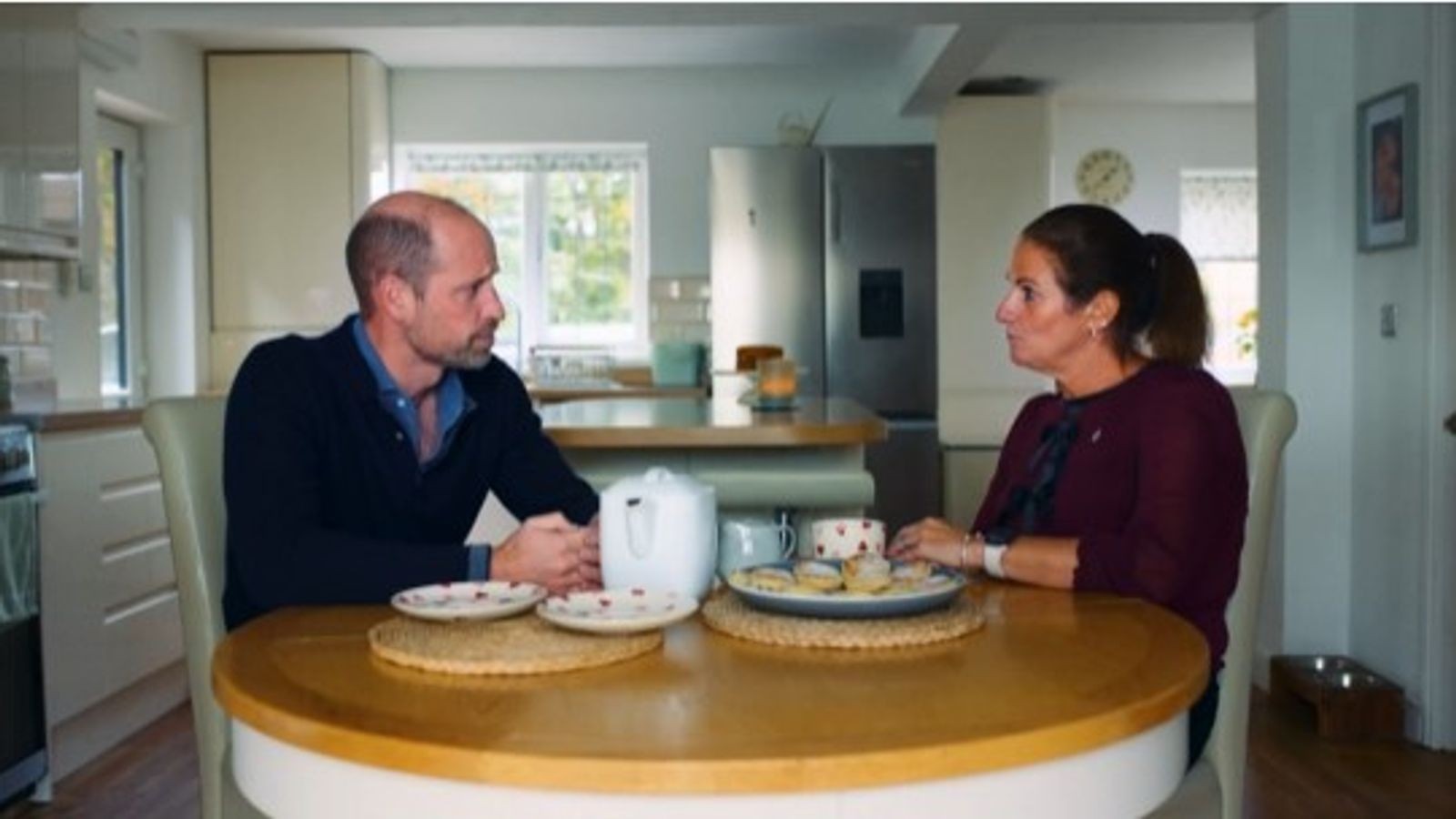
On World Mental Health Day, the walls of Rhian Mannings’ Cardiff home bore witness to an intimate conversation that would ripple far beyond its kitchen table. Seated across from Prince William, Rhian shared the unimaginable: the loss of her one-year-old son George to a sudden, undisclosed illness in 2012, followed only five days later by her husband Paul’s suicide. It’s a story that leaves most listeners searching for words, but for Rhian, it became a call to action.
“I look back and I still don’t know how we survived it,” Rhian told the Prince, reflecting on the years since that devastating week. The pain, she explained, was compounded by a silence—societal and personal—that surrounds suicide. “I was quite surprised by it. I’d never been touched by suicide. No one would talk about it, and I found that really confusing at the time,” she said, her voice steady but raw. (BBC)
Prince William, visibly moved and fighting back tears, asked gentle but pointed questions: How did she raise her older children, Holly and Isaac, in the aftermath? What would she say to Paul now, if given the chance? Rhian’s response was candid and heartbreaking: “Why didn’t you speak to me? I ask myself that every single day.” The Prince paused, overcome by emotion, and Rhian reassured him, “You’ve experienced loss yourself.”
The Silence and Stigma of Suicide
Suicide often leaves families in a fog of unanswered questions and self-blame. Rhian described Paul’s devastation after George’s death: “He did keep blaming himself that weekend… But I would just like to sit him down and say, ‘Why didn’t you come to me?’ Because he’s missed out on just so much joy, and we would have been okay.”
It’s a sentiment echoed by countless bereaved families, yet the taboo around suicide remains stubbornly persistent. Prince William acknowledged, “Unfortunately, there’s still a lot of stigma around suicide. Did you feel that at the time?” Rhian nodded, noting how isolating the experience was: “It was something that happened in the news. Nobody would talk about it or actually say what happened.” (Sky News)
In that kitchen, the conversation turned to the power of speaking openly. “Life can throw you these awful curve balls,” Rhian said, “but by talking about it, by having hope, you can continue.” William agreed, concluding, “The best way to prevent suicide is to talk about it. Talk about it early, talk about it with your loved ones, with those you trust.”
From Loss to Legacy: Founding the 2Wish Charity
Rhian’s pain did not remain private. Instead, it became the foundation for change. She established 2Wish, a bereavement charity dedicated to supporting families affected by the sudden and unexpected death of a child or young adult under 25. Her efforts earned her the Mirror Pride of Britain award and recognition across the UK.
2Wish provides immediate support in the wake of tragedy—a lifeline for families who, like Rhian, find themselves grappling with grief in a world that often looks away. The charity offers counseling, practical assistance, and a sense of community, helping people navigate the complex emotions and challenges that follow loss.
The impact is tangible, as noted by Elizabeth Thomas-Evans, CEO of the Jac Lewis Foundation, another partner in suicide prevention: “From the valleys to the cities, suicide has scarred communities across Wales. But now, people in need can walk in and get help.” (BBC)
The Royal Foundation’s Suicide Prevention Network: Building a Unified Response
Rhian’s story is now woven into a broader tapestry of change. The Royal Foundation of the Prince and Princess of Wales has launched the National Suicide Prevention Network, an ambitious project backed by over £1 million in funding and more than 20 partner organizations, including 2Wish. The network, chaired by Professor Ann John, a public health expert, aims to revolutionize how suicide is understood and prevented across the UK.
The initiative is built on three pillars: understanding root causes, providing accessible support, and fostering collaboration between charities and agencies. It recognizes that preventing suicide is a “complex challenge” with no single solution, but insists that a unified, community-based approach can make a difference.
Among the network’s partners is James’ Place, which offers free support to men in suicidal crisis in Liverpool, London, and Newcastle. Chief executive Ellen O’Donoghue highlighted the importance of removing barriers for men seeking help: “We want to remove some of the barriers men face in accessing support at the point of crisis.”
Prince William, reflecting on his meetings with founding partners, praised their “inspirational work” and emphasized the urgent mission: “Their efforts reaffirm the urgent mission of the National Suicide Prevention Network: to build a bold, unified national response to the heartbreaking—and preventable—tragedy of suicide.” (The Express)
Breaking the Taboo and Moving Forward
The video of Rhian and William’s conversation has resonated deeply with viewers across the UK. It’s a rare glimpse of vulnerability from a royal figure, but it’s also a testament to the power of ordinary people to drive change. By sharing her story, Rhian has helped to strip away the layers of shame and secrecy that so often surround suicide, and she’s given hope to families who might otherwise feel alone.
The new National Suicide Prevention Network is more than a set of policies—it’s a promise to listen, to support, and to act. Over the next three years, the Royal Foundation and its partners will work to ensure that anyone affected by suicide can access the help they need, when they need it.
For those struggling, resources like Samaritans (116 123 in the UK) remain available for confidential support. As the conversation around mental health continues to evolve, stories like Rhian’s remind us that grief, while deeply personal, can be a catalyst for hope and collective action.
Rhian Mannings’ journey reveals that even in the darkest moments, the courage to speak out and the willingness to support one another can transform personal tragedy into a movement for lasting societal change. Her partnership with Prince William underscores the urgency of open dialogue and robust community support in preventing suicide—a challenge that demands both empathy and action.