
Quick Read
- MLB has lifted lifetime bans on Pete Rose and Shoeless Joe Jackson.
- Both players are now eligible for the Baseball Hall of Fame.
- Pete Rose’s ban stemmed from gambling on baseball as a player-manager.
- Shoeless Joe Jackson was banned for the 1919 Black Sox scandal.
- The decision was announced by Commissioner Rob Manfred.
MLB Lifts Lifetime Bans on Pete Rose and Shoeless Joe Jackson
In a historic decision, Major League Baseball (MLB) has lifted the lifetime bans on Pete Rose and Shoeless Joe Jackson, making both players eligible for induction into the Baseball Hall of Fame. The announcement, made by Commissioner Rob Manfred, marks a significant shift in MLB’s policy on permanent ineligibility, which now ends upon the individual’s death.
The Legacy of Pete Rose
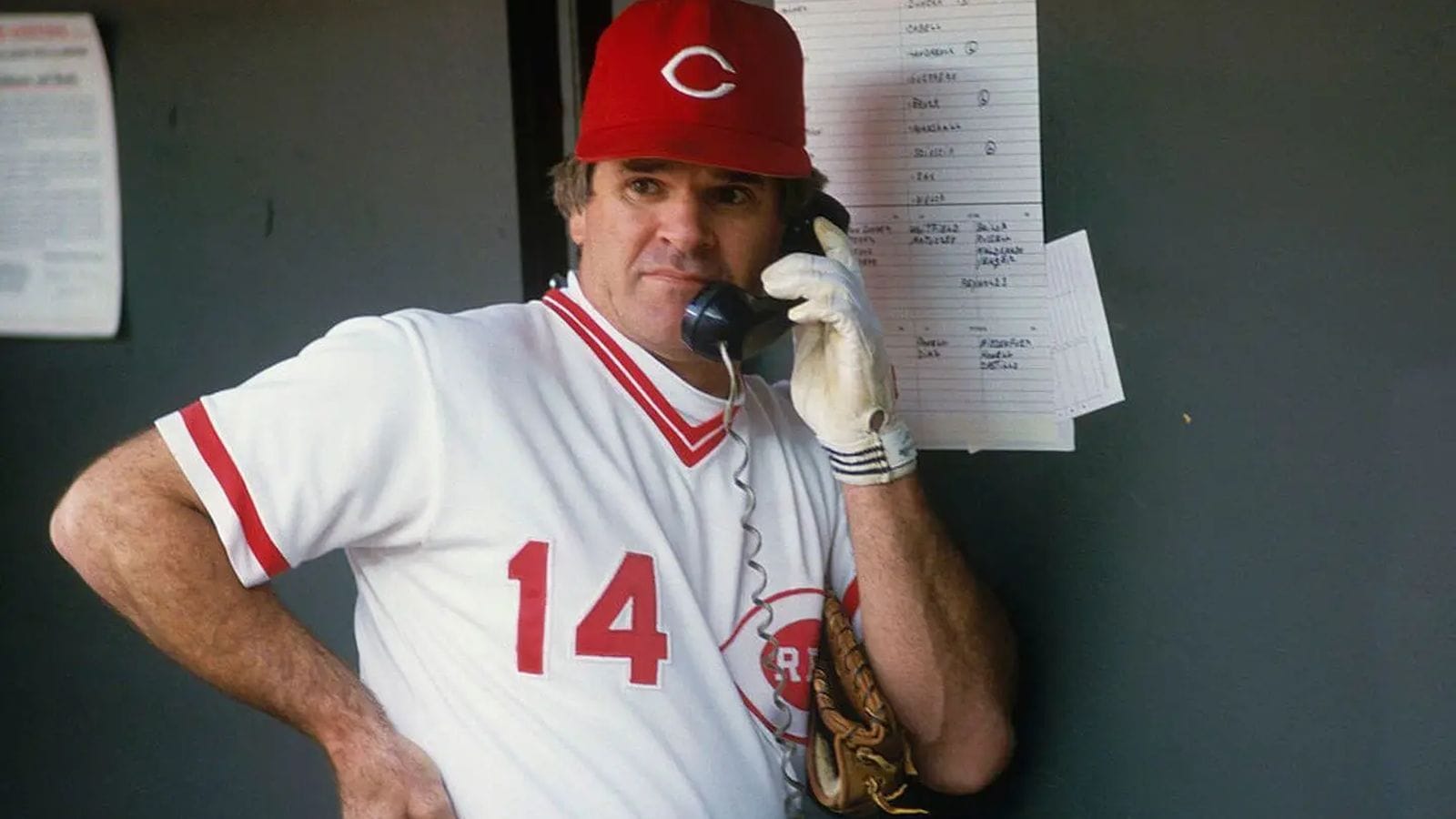
Pete Rose, baseball’s all-time hits leader with 4,256 hits, was banned from the sport in 1989 after an investigation revealed that he bet on games, including those involving his own team, the Cincinnati Reds. Rose served as the Reds’ player-manager during the late stages of his career, a role that made his actions particularly controversial. Despite his achievements, including 17 All-Star appearances and three World Series titles, Rose’s gambling scandal overshadowed his storied career.
After years of denial, Rose admitted in his 2004 autobiography, My Prison Without Bars, that he had bet on baseball. This admission reignited debates about his potential reinstatement and Hall of Fame eligibility. However, his appeals for reinstatement were consistently denied by previous commissioners, including Bud Selig and Manfred himself in 2015.
Shoeless Joe Jackson and the 1919 Black Sox Scandal
Shoeless Joe Jackson, a key figure in the infamous 1919 Black Sox scandal, was banned from baseball along with seven other Chicago White Sox players for allegedly conspiring to throw the World Series. Jackson’s lifetime batting average of .356 remains one of the highest in MLB history, and his involvement in the scandal has been a topic of debate for over a century. While some argue that Jackson was a willing participant, others point to his stellar performance during the series as evidence of his innocence.
Jackson appeared on the Baseball Writers’ Association of America (BBWAA) Hall of Fame ballot twice before the Hall’s 1991 rule change, which barred anyone on MLB’s permanently ineligible list from being considered for induction. He received minimal support in both instances, garnering less than 1% of the vote.
Manfred’s Justification for the Policy Change
In a letter to Jeffrey Lenkov, the attorney representing the Rose family, Manfred explained the rationale behind the policy change. “Once an individual has passed away, the purposes of Rule 21 have been served,” Manfred wrote. “A person no longer with us cannot represent a threat to the integrity of the game. Moreover, it is hard to conceive of a penalty that has more deterrent effect than one that lasts a lifetime with no reprieve.”
This new interpretation effectively ends the “permanent” aspect of ineligibility upon the death of the individual, paving the way for posthumous recognition of players like Rose and Jackson.
The Path to Hall of Fame Induction
Despite their reinstatement, Rose and Jackson will not appear on the BBWAA ballot, as their eligibility expired years ago. Instead, their cases will be reviewed by the Hall of Fame’s Era Committee, which considers players whose greatest contributions occurred before 1980. The committee, comprising Hall of Fame members, team executives, and historians, requires a 75% vote for induction.
The next meeting of the Classic Baseball Era Committee is scheduled for December 2027, making 2028 the earliest possible year for Rose or Jackson to be inducted. This timeline aligns with the Hall’s strict voting rules, which aim to maintain the integrity of the selection process.
Reactions from the Baseball Community
The decision has sparked mixed reactions among fans, players, and analysts. Supporters argue that Rose and Jackson’s contributions to the game warrant recognition, while critics contend that their actions violated the sport’s core principles. “This is a step toward healing old wounds,” said baseball historian John Thorn. “But it also raises questions about how we balance morality and performance in evaluating players.”
Former MLB commissioner Fay Vincent, who upheld Rose’s ban during his tenure, expressed reservations about the decision. “The integrity of the game is paramount,” Vincent said in an interview with ESPN. “While I understand the reasoning, I worry about the message this sends to future generations.”
As MLB ushers in a new era of policy interpretation, the reinstatement of Pete Rose and Shoeless Joe Jackson opens the door for a reevaluation of their legacies. Whether this leads to Hall of Fame induction remains to be seen, but the decision undeniably marks a pivotal moment in baseball history.
Source: Nytimes, Wbaltv, Wdsu, Gulfcoastnewsnow, Espn, Chicagotribune