
Quick Read
- Kamchatka Peninsula experiences record snowfall, the heaviest in 50-60 years.
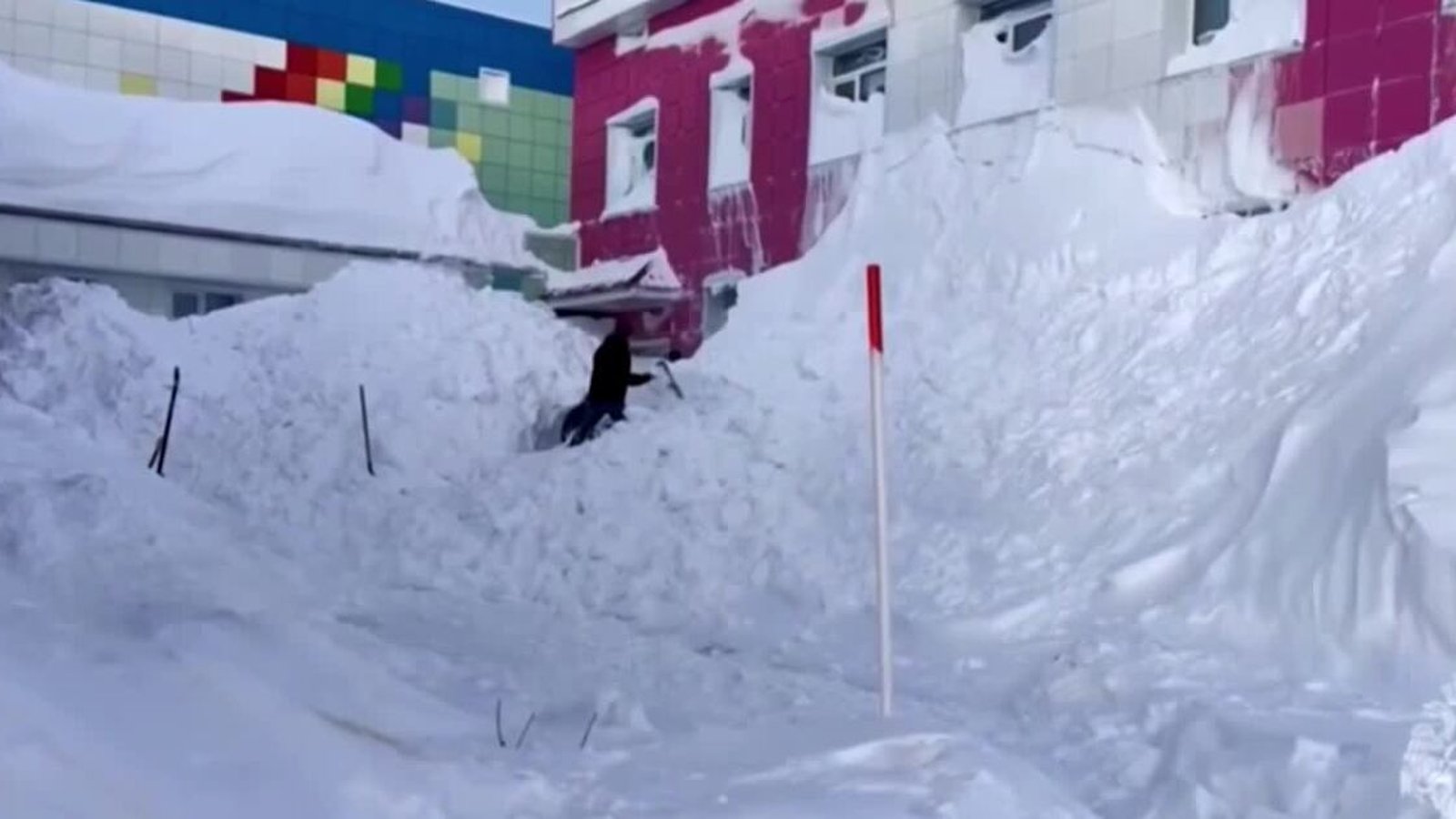
- Snow drifts reach up to 5 meters (16 feet) in some areas, burying cars and blocking entrances.
- Two elderly men died from snow falling from rooftops.
- Authorities declared a state of emergency in Petropavlovsk-Kamchatsky.
- Transport disrupted, schools closed, and avalanche concerns raised.
Russia’s Far Eastern Kamchatka Peninsula is currently experiencing an unprecedented winter, with record-breaking snowfall bringing daily life to a near standstill and prompting authorities to declare a state of emergency. The capital of Kamchatka Krai, Petropavlovsk-Kamchatsky, has been particularly affected, grappling with snow depths not seen in over half a century. This extreme weather event has caused severe disruptions, blocked essential infrastructure, and tragically led to the deaths of two elderly residents, underscoring the urgent challenges faced by local communities.
Unprecedented Accumulation and Daily Life Halted
The Kamchatka Peninsula has been battered by powerful winter storms that have dumped several meters of snow, with uninterrupted snowfall lasting for four days in some areas. Meteorologists have confirmed that the level of snowfall recorded since early January is the heaviest in more than 50 years, and Reuters notes it’s the most significant in around 60 years. In Petropavlovsk-Kamchatsky, the average snow height has reached approximately 170 cm (5.5 feet), with drifts exceeding 2.5 meters (8.2 feet) in many neighborhoods. Some areas have reported drifts towering up to five meters (16 feet), completely burying cars and blocking building entrances, as reported by The Moscow Times.
The sheer volume of snow has rendered road conditions ‘critical’ across the region, severely disrupting transport and forcing the suspension of public transit. Schools have been closed, and residents have been left to contend with the monumental task of digging out their homes and vehicles. Visuals from the region show locals carving narrow paths through towering snowbanks, a testament to the extraordinary conditions they face. The daily routines of thousands have been upended, with residents like photographer Lydmila Moskvicheva in Petropavlovsk-Kamchatsky noting that her car had been ‘parked in a snowdrift for a month,’ highlighting the prolonged nature of the severe conditions.
Fatalities and Ongoing Hazards
The record snowfall has not only caused widespread disruption but has also led to tragic consequences. City authorities declared a state of emergency after at least two elderly men were killed by snow falling from rooftops last week, according to The Moscow Times. This grim development underscores the severe risks posed by the heavy accumulation. Officials have issued stark warnings about the continued danger of icicles and massive snow loads on roofs, which can collapse without warning or shed deadly masses of snow. Furthermore, the prolonged and intense snowfall has raised significant avalanche concerns, particularly in residential areas situated near slopes.
These hazards necessitate continuous vigilance and extensive efforts by emergency services and local authorities. Crews are racing against time and the elements to clear roads, remove dangerous accumulations from public buildings, and restore essential services. The state of emergency declaration provides authorities with additional resources and powers to manage the crisis, but the scale of the challenge remains immense, requiring sustained coordination and community cooperation to mitigate further risks and ensure public safety.
Community Resilience Amidst Winter’s Grip
Despite the severe challenges and inherent dangers, a remarkable sense of resilience and adaptation has emerged within the affected communities. Residents have been seen undertaking arduous tasks to clear their surroundings, demonstrating a collective spirit in the face of adversity. Footage and reports highlight locals engaging in the painstaking process of digging out their buried cars, often with shovels and sheer determination. They have also been observed creating intricate networks of paths through the massive snowdrifts, allowing for some limited movement between homes and essential facilities.
Amidst the frustration and hardship, there have also been moments of unexpected joy and adaptation. Children in Kamchatka have been seen embracing the unusual conditions, sliding on snow piled up near multi-story buildings, turning the colossal drifts into impromptu playgrounds. Some residents have found unique ways to enjoy the winter wonderland, engaging in snow-gliding and diving into massive drifts, turning a challenging situation into an opportunity for recreation. It is important to note, however, that while the snow is undeniably deep and the situation severe, online content has sometimes been exaggerated; as KTVH reminds, many AI-generated images circulating on social media do not accurately reflect the true, albeit extreme, depth of the snow.
Broader Implications and Adaptation Challenges
The unprecedented snowfall in Kamchatka highlights a broader pattern of extreme weather events that are becoming more frequent and intense globally. While this region is naturally accustomed to heavy winters, the current scale of accumulation and disruption signals a significant deviation from historical norms, prompting questions about long-term adaptation strategies. The sheer volume of snow, coupled with strong winds that create immense drifting, places extraordinary stress on urban infrastructure, emergency services, and community resources. The logistical challenge of clearing such vast quantities of snow, maintaining transport links, and ensuring the safety of residents requires substantial investment in equipment, personnel, and robust preparedness plans.
The experiences in Kamchatka serve as a stark reminder of the critical need for proactive measures to enhance resilience in the face of a changing climate. Urban planning must consider increased loads on roofs, potential for prolonged isolation, and efficient snow removal systems. Furthermore, public awareness campaigns about safety during extreme weather, including the dangers of falling snow and avalanches, become paramount. As communities worldwide grapple with the impacts of increasingly volatile weather patterns, the ability to adapt, recover, and minimize human and economic costs will be a defining challenge of the coming decades.
The record-breaking snowfall in Russia’s Kamchatka Peninsula underscores the growing global challenge posed by extreme weather phenomena, demonstrating how even regions accustomed to harsh winters can be overwhelmed by unprecedented intensity, necessitating robust infrastructure, effective emergency response, and a resilient community spirit to navigate such severe natural events.