
Quick Read
- Russian satellites are jamming UK military satellites weekly, targeting communications and surveillance.
- The UK and US have conducted joint satellite maneuvers to boost space defense capabilities.
- Britain spends only 1% of its defense budget on space, lagging behind France and the US.
- Russia and China have increased their satellite fleets by 70% in the last decade.
- The Ukraine war has intensified Russian space-based aggression toward Western allies.
Russian Satellite Interference: Weekly Threats Target UK Military Assets
In the shadow of the ongoing war in Ukraine, a new battleground has emerged far above the earth’s surface. British defense officials have confirmed that Russian satellites are not only shadowing but actively jamming UK military satellites on a weekly basis—a relentless campaign that underscores the shifting dynamics of modern conflict. According to Major General Paul Tedman, head of the UK Space Command, Moscow’s satellites have been flying dangerously close to British assets, equipped with sophisticated payloads designed to observe, collect data, and disrupt communications.
The campaign is not isolated. Germany’s defense minister recently reported similar harassment of military satellites used by Berlin. The escalation reflects Russia’s growing willingness to weaponize space, a theater once governed by mutual restraint but now exposed to direct and persistent threats.
How Russia Targets British Space Infrastructure
“They’re interested in what we’re doing and flying relatively close,” General Tedman explained in an interview with BBC. “They’ve got payloads on board that can see our satellites and are trying to collect information from them.” He revealed that Russian ground-based systems attempt to jam UK satellites every week, a tactic that has intensified since Russia’s full-scale invasion of Ukraine. British military satellites, numbering about half a dozen, are equipped with advanced counter-jamming technology, but the persistent interference remains a concern.
This is not simply a technical annoyance. The UK’s military satellites are the backbone of its defense operations, providing critical communications, surveillance, and navigation capabilities. As the world’s armed forces grow more reliant on satellite data for everything from precision strikes to logistics, the threat of interference becomes existential. In Tedman’s words, “Space is the nervous system on which the UK’s armed forces increasingly depend.”
The UK is not alone in facing this threat. Russia and China have both tested anti-satellite weapons, and Western intelligence agencies have warned of the possibility that Moscow could place nuclear weapons in orbit. The combined Russian and Chinese satellite fleets have grown by 70% in the past decade, rapidly altering the balance of power in space.
Allied Responses and New Strategies in Space Defense
Responding to this persistent harassment, the UK and the US have deepened their cooperation in space. Last month, the two allies conducted their first coordinated satellite maneuver—a test of resilience and serviceability under Operation Olympic Defender, a joint program aimed at enhancing satellite defense and allied interoperability. This exercise, though technical, marks a critical step in building an effective response to the growing threat from Russia.
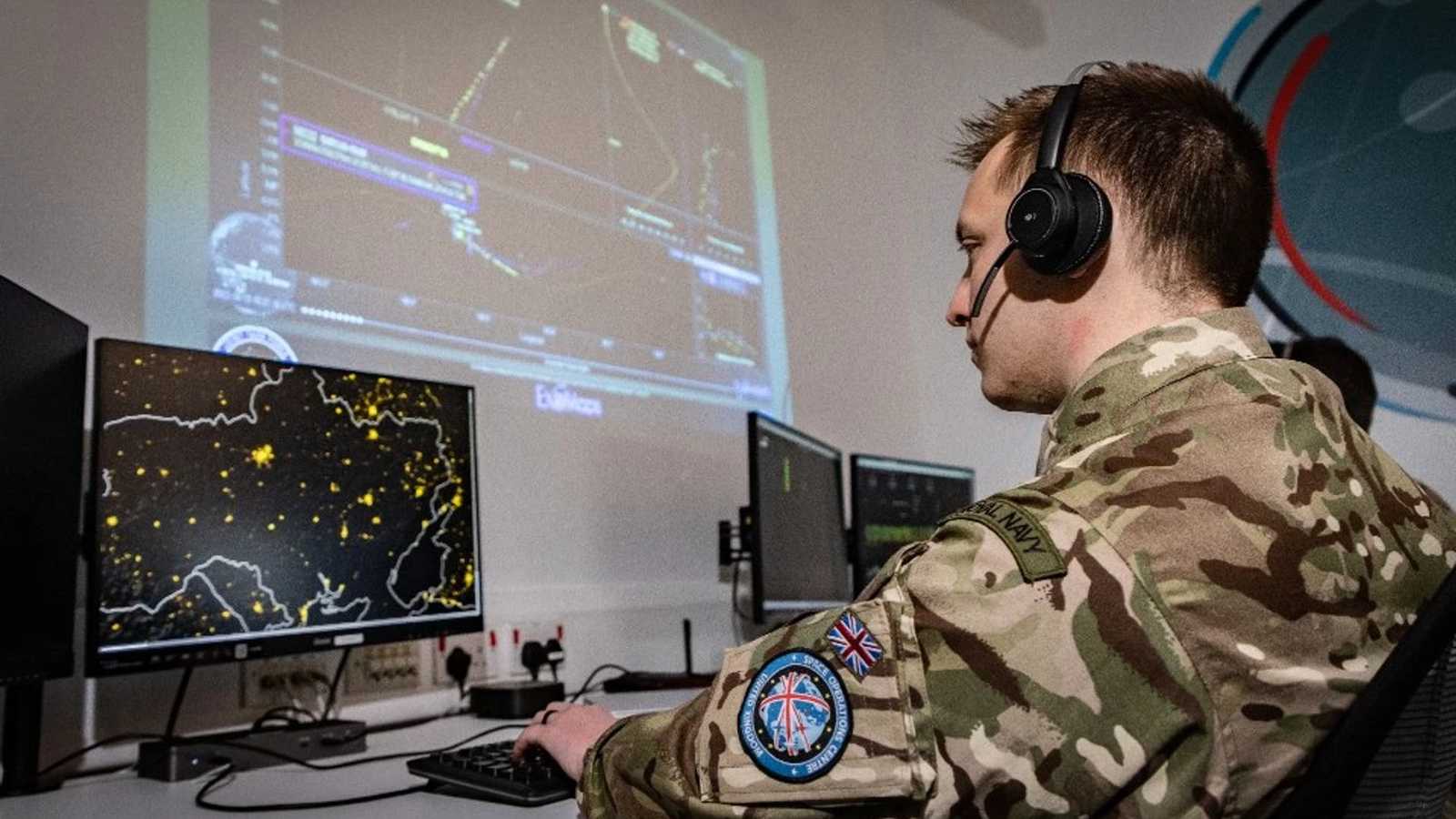
Inside the operations room at RAF Fylingdales, Britain’s Ballistic Missile Early Warning System, the reality of space conflict is ever-present. The base, with its iconic pyramid housing thousands of antennas, monitors the skies round the clock. Personnel are plugged into a global network of satellites and sensors, ready to detect missile launches or other hostile acts within minutes. Yet, as General Tedman candidly admits, the UK remains heavily dependent on American technology and expertise.
The UK government is promising significant investments in space and missile defense, including the development of sensors to detect laser threats and the allocation of a billion pounds to integrated air and missile defense. But with only 1% of the defense budget currently devoted to space—compared to France’s 3% and America’s 5%—there is growing concern that Britain may be falling behind in the race to secure its interests in orbit.
The Broader Context: Russia’s Escalation Beyond Space
This surge in space-based aggression is inseparable from the wider context of the Ukraine war. Russian President Vladimir Putin has repeatedly warned that Western military support for Ukraine—including the potential provision of Tomahawk missiles—would mark a “new stage of escalation.” He insists that while such actions would harm relations with Washington and European capitals, they would not change the outcome on the battlefield, where Russian forces continue to make incremental gains.
The conflict’s impact is felt in Ukraine’s energy infrastructure as well. Russian attacks have knocked out power to critical sites, including the Chernobyl nuclear facility, raising fears of a potential radiation incident. Ukrainian President Volodymyr Zelensky has condemned these actions as deliberate attempts to create global threats, urging international organizations to respond with strong measures rather than half-measures.
Meanwhile, the rhetoric from Moscow is increasingly defiant. Russian officials dismiss comparisons to the Cold War, claiming the current confrontation with the West is “fiery” and not merely “cold.” Accusations of sabotage, drone incursions, and airspace violations abound, with both sides blaming each other for provocative acts and rising defense budgets.
Strategic Implications: The New Space Race
What does this mean for the future of conflict and cooperation? The persistent interference with UK satellites is not simply a technical skirmish; it is a signal that space is now a fully contested domain. As General Tedman puts it, “Space is a team sport”—but the rules are changing fast, and the consequences are global. Britain’s economic and military dependence on space is enormous, with an estimated £450 billion of the economy tied to orbital assets.
As new missile launches are tracked almost daily, and the risk of a real-life incident hovers in the background, the urgency for investment and innovation in space defense grows. The UK’s move to test laser sensors and increase budget allocations is a start, but experts warn that more must be done to keep pace with adversaries who are increasingly bold in their actions.
For now, the “unblinking eye” at RAF Fylingdales and similar installations serve as sentinels against a threat that is invisible to most—yet central to the future security of Europe and the world. The jamming, stalking, and shadowing of satellites are not isolated provocations; they are harbingers of a new era, one where the boundaries between earth and orbit blur, and the race for supremacy moves ever higher.
While the UK has taken important first steps in responding to Russia’s aggressive moves in space, the facts point to a stark reality: the contest for control in orbit is accelerating, and the stakes—both strategic and economic—have never been higher. Adaptation and investment will be vital if Western alliances are to maintain resilience in the face of persistent and evolving threats.