
Quick Read
- Russian LNG carriers are avoiding the Mediterranean Sea after the Arctic Metagaz tanker explosion.
- The rerouting strategy adds 10-15 days to voyages and significantly increases costs.
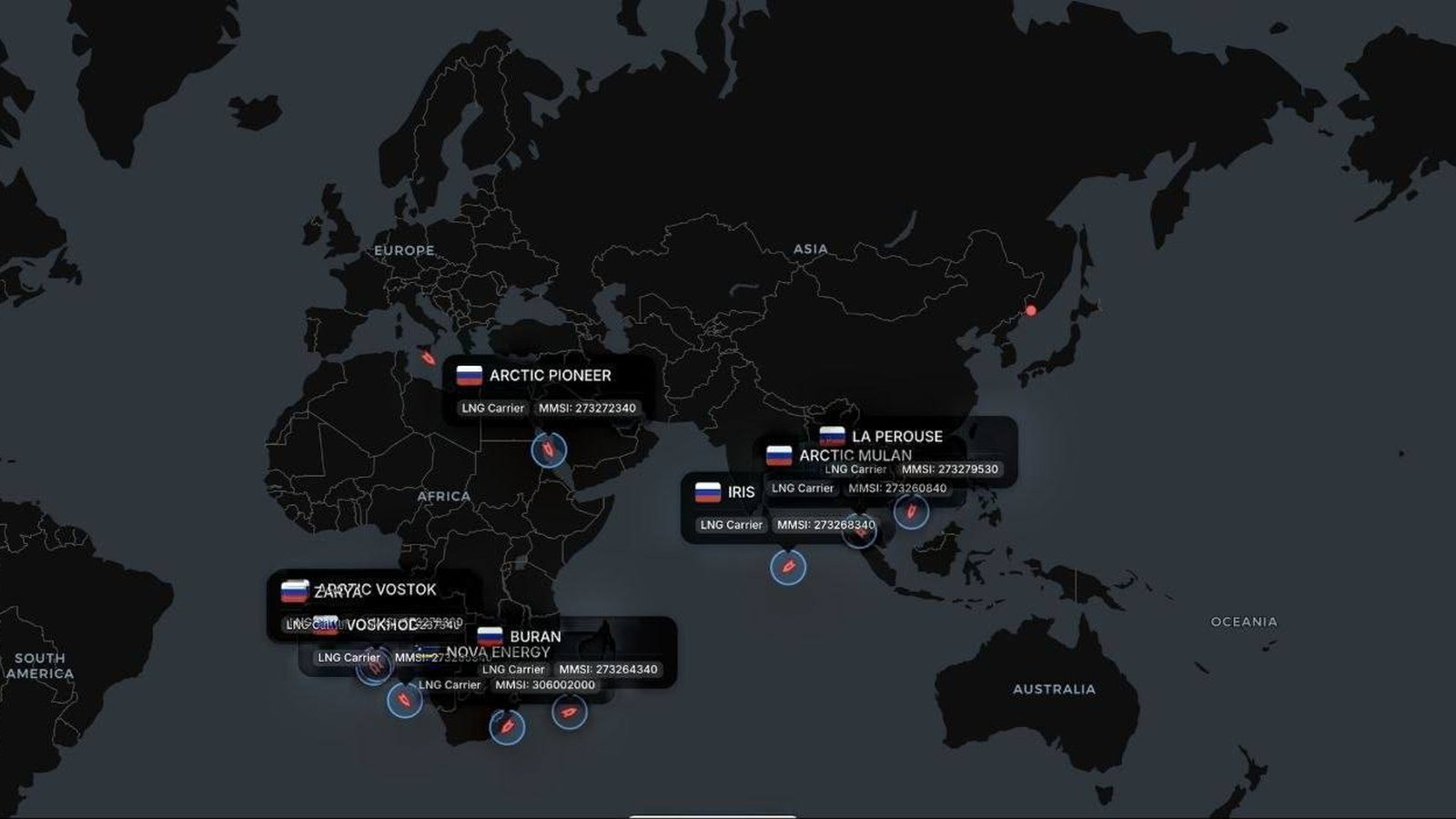
- Several LNG carriers, including ARCTIC PIONEER and ZARYAC VOSTOK, have altered their routes.
MOSCOW (Azat TV) – Russian liquefied natural gas (LNG) carriers have begun altering their routes, deliberately avoiding the Mediterranean Sea due to heightened risks of Ukrainian drone attacks. This strategic shift follows the explosion of the Arctic Metagaz tanker, prompting a significant change in maritime logistics for Russian energy exports. Vessels are now being rerouted to sail between Europe and Asia by bypassing the African continent.
Increased Voyage Times and Costs
The rerouting strategy is expected to add between 10 to 15 days to voyages, resulting in a substantial increase in operational costs for Russian gas carriers. This extended journey time is a direct consequence of navigating around the southern tip of Africa, a considerably longer route compared to traversing the Mediterranean Sea and the Suez Canal. The increased duration and distance translate to higher fuel consumption, crew expenses, and overall shipping rates.
Specific LNG Carriers Affected
Several LNG carriers have been identified as operating on these altered routes. Among them are the ARCTIC PIONEER, ZARYAC VOSTOK, BURAN, IRIS, and LA PEROUSE. These vessels are crucial for transporting Russian LNG to international markets. The need to reroute these ships underscores the perceived threat level in the Mediterranean region, a vital artery for global trade and energy transportation.
Geopolitical Implications of Maritime Rerouting
The decision by Russian LNG carriers to avoid the Mediterranean Sea highlights the growing impact of geopolitical tensions on global energy supply chains. The increased transit times and costs associated with bypassing the region could eventually influence global LNG prices, as companies factor in the heightened risks and logistical challenges. This development also signals a potential escalation in maritime security concerns, as the threat of drone attacks on commercial shipping becomes a significant factor in route planning.
The rerouting of Russian LNG carriers around Africa signifies a tangible consequence of ongoing security concerns, forcing a costly adaptation in energy logistics and potentially impacting global supply dynamics.