


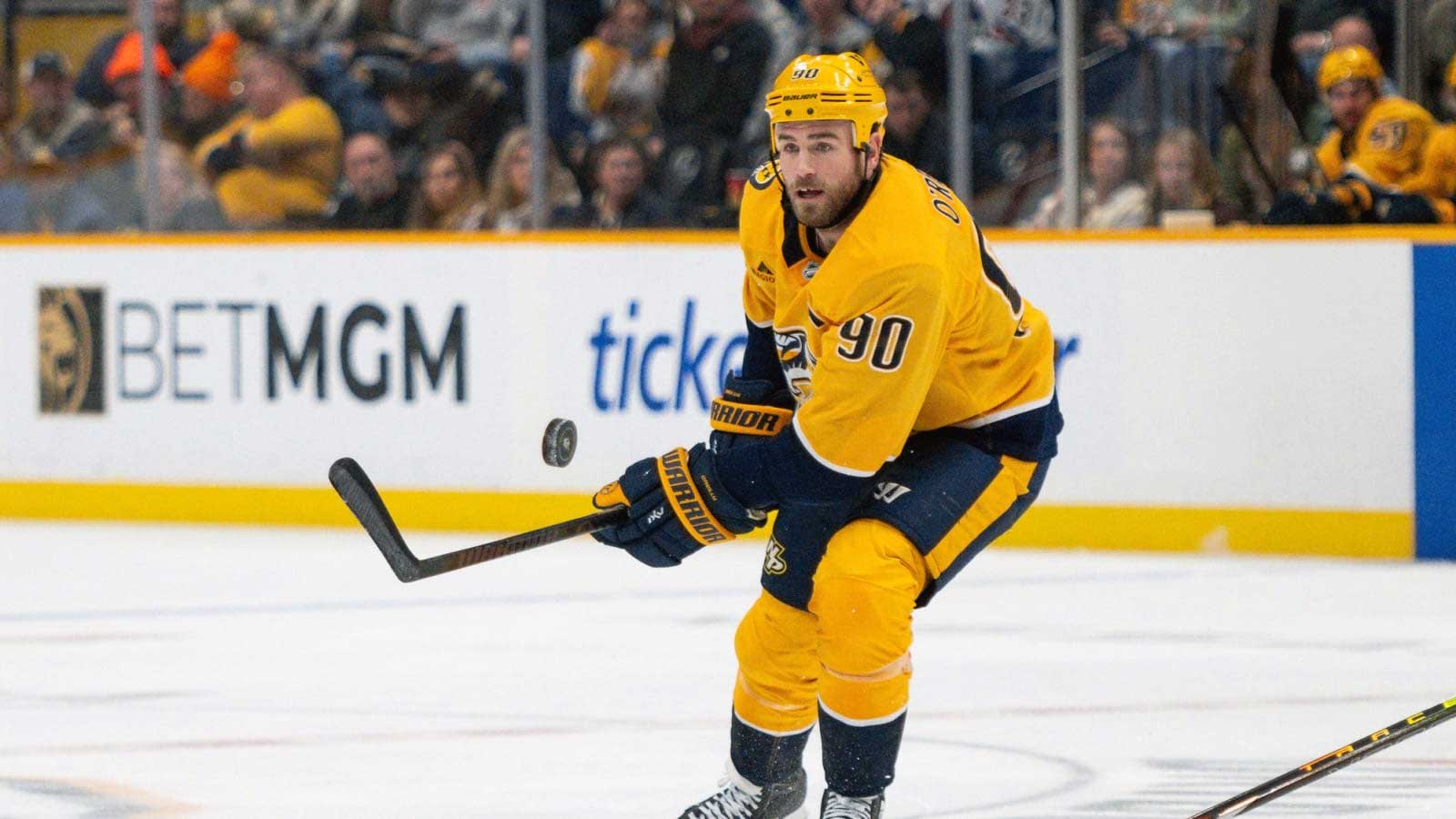
Ryan O’Reilly’s Harsh Words: Leadership Under Fire
Sometimes, the most revealing moments in sports aren’t found in the highlight reels or the box scores. They happen in the quiet aftermath—when the cameras fade and a player stands in front of reporters, stripping away the bravado. On Thursday night, after the Nashville Predators dropped their third straight game and their tenth in the last thirteen, Ryan O’Reilly offered exactly that kind of moment.
“I can’t make a six-foot pass to save my life,” O’Reilly confessed, visibly frustrated after Nashville’s 3-1 loss to the Philadelphia Flyers. His words cut through the usual sports talk, laying bare a sense of personal disappointment and responsibility. For a player widely respected for his two-way game and leadership, this was more than just postgame reflection—it was a window into a locker room grappling with underperformance and expectation.
Numbers Tell a Different Story
Yet, for all the self-blame, the stats paint a more nuanced picture. According to The Hockey News, O’Reilly didn’t record a single giveaway during the game, despite his own harsh assessment. He registered four shots on goal, made a block, had a takeaway, and won 56.3% of his faceoffs. Over the season’s first 16 games, O’Reilly has not only appeared in every contest, he’s tied for the team lead in goals (six, alongside Filip Forsberg) and stands second in points with ten. His faceoff win rate—an elite 58.2%—places him sixth in the entire league among high-volume faceoff takers, trailing only Tomas Hertl, Auston Matthews, Bo Horvat, Jordan Staal, and J.T. Miller.
Clearly, the numbers don’t quite match the mood. But O’Reilly’s comments weren’t just about numbers. They were about standards—his own, and those of a team that expected much more from this campaign.
Predators’ High Hopes and Harsh Reality
The Predators entered the season with renewed ambition. The front office assembled a roster designed to compete, bringing in big names like Steven Stamkos, Jonathan Marchessault, and Brady Skjei. The message was clear: Nashville was done rebuilding. It was time to contend.
But as autumn deepened, the on-ice results didn’t match those aspirations. The defeat to Philadelphia was the latest in a string of losses that have left Nashville at 4-4-2 at home and searching for answers. Even the presence of veteran stars hasn’t insulated the team from doubt. Stamkos, signed in hopes of injecting offense and experience, has managed just one goal in his last eleven games—a slow start that’s begun to spark trade rumors, as noted by Yahoo Sports.
And in the midst of this, the leadership group, with O’Reilly at its core, faces a test not just of skill, but of resilience.
The Weight of Expectation: O’Reilly’s Burden
For O’Reilly, the pressure is personal. “You’re not going to have much success if I’m playing pathetic like that. I’ve had one good year in my career,” he told reporters, referencing the standards he holds himself to as the team’s No. 1 center. It’s a striking admission—one that hints at the mental toll of leading a team through tough times.
His frustration is familiar to anyone who’s shouldered responsibility in a group setting. When the collective effort falters, leaders often internalize the blame, even when the objective data suggests otherwise. O’Reilly’s comments suggest a man wrestling with not just his own performance, but the need to set an example for younger teammates—one that demands accountability, even if it means being hard on himself.
In the last few games, O’Reilly admits to making mistakes “left and right” that he doesn’t normally make. At 34, he knows the value of every shift, every pass, every moment. This is the voice of experience—a leader who’s seen both the highs and lows of professional hockey.
Numbers, Nuance, and the Human Side of Hockey
Still, the discrepancy between O’Reilly’s words and his box score is a reminder that sports are about more than numbers. Hockey, perhaps more than any other major sport, demands a blend of physicality and psychological fortitude. For every stat line, there’s an untold story—of missed opportunities, split-second decisions, and the emotional toll that losing takes on a team’s core.
On Thursday, O’Reilly scored Nashville’s lone goal against Philadelphia, fighting through a defensive structure that’s stymied better teams. But the Flyers’ second-period surge—goals from Matvei Michkov and Noah Cates—put Nashville on the back foot, and an empty-netter from Travis Konecny sealed the result. Juuse Saros, the Predators’ trusted goaltender, stopped 23 shots but couldn’t change the outcome.
Now, with three losses in a row and six in their last seven, the Predators find themselves in a precarious spot. The home crowd at Bridgestone Arena is restless. The season is still young, but the margin for error is shrinking.
What Comes Next for Nashville—and for O’Reilly?
As the team looks to regroup, the focus turns not just to tactics and line combinations, but to mindset. Head coach Andrew Brunette, himself no stranger to the pressures of leadership, will be challenged to rally a group that’s searching for answers. For O’Reilly, the task is twofold: to rediscover his confidence and to help his teammates do the same.
In the world of professional sports, adversity is inevitable. How a team responds—how its leaders respond—often makes the difference between a lost season and a turnaround. O’Reilly’s self-critique might seem excessive to some, but it’s also a signal: the Predators’ leadership isn’t willing to accept mediocrity. Sometimes, the harshest criticism is the first step toward meaningful change.
As the schedule grinds on, Nashville will have opportunities to right the ship. The next games will test not only their skill but their resilience. The story of the Predators’ season isn’t written yet. But it’s clear that, for Ryan O’Reilly, the stakes couldn’t be higher—and the standards couldn’t be tougher.
Ryan O’Reilly’s open self-critique, while harsher than his performance suggests, highlights the unique burden leaders carry when a team falters. His willingness to confront his own play—publicly and honestly—may be the spark Nashville needs to find its footing and restore belief, both on the ice and in the locker room.