
Quick Read
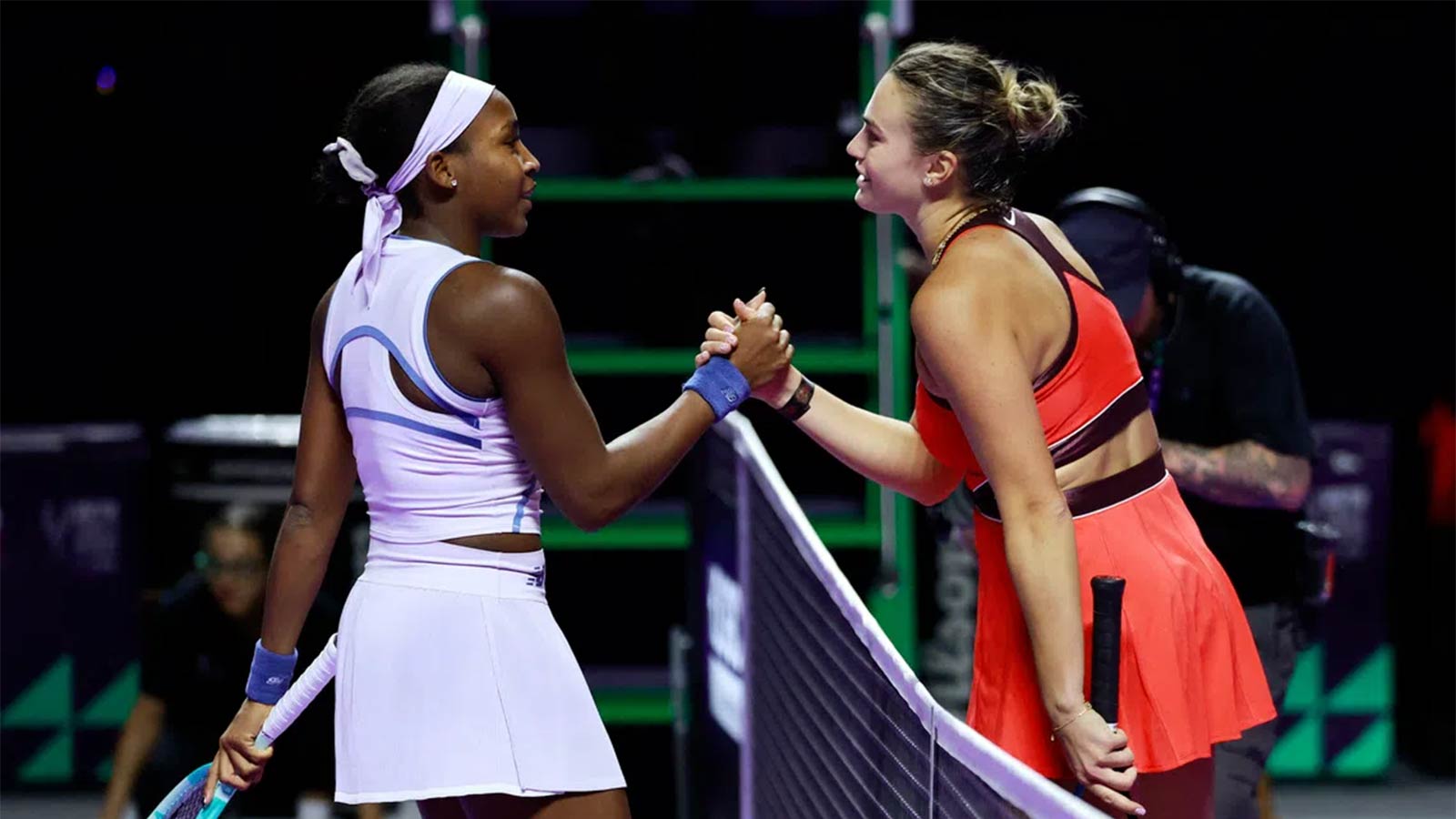
- Aryna Sabalenka defeated Coco Gauff 7-6(5) in the first set of their WTA Finals group stage match.
- Sabalenka’s aggressive play and powerful serves were key in overcoming Gauff’s defensive strategy.
- Victory secures Sabalenka the group lead and strengthens her world No. 1 position.
- Gauff, the defending champion, now faces a challenging path to the semifinals.
Sparks Fly at WTA Finals: Sabalenka vs Gauff
The anticipation in the arena was palpable as Aryna Sabalenka and Coco Gauff stepped onto the court for their crucial WTA Finals encounter. Both athletes, fierce competitors with contrasting styles, were vying not just for a win but for a statement—a moment to define their seasons and perhaps set the tone for the year ahead.
The match opened with Gauff, the defending champion, drawing first blood. Her strategy was clear: keep Sabalenka moving, test her patience, and exploit any lapse in concentration. Gauff’s defensive prowess was on full display as she chased down every ball, forcing Sabalenka to dig deep for answers. Yet, as the set unfolded, it was Sabalenka’s unwavering aggression and her ability to convert frustration into brilliance that began to tilt the balance.
A First Set of Twists and Turns
The opening games saw both players trading breaks in a compelling battle of wills. Gauff’s composure and tactical discipline kept her ahead for most of the set, but Sabalenka’s serve—violent and unpredictable—became her lifeline. Three aces in a row helped her out of a precarious situation, a vivid reminder of how quickly momentum can shift at this level.
With the crowd echoing their support, the set reached its climax in a tense tiebreak. Gauff’s new serve held up admirably under pressure, but Sabalenka’s determination refused to wane. The Belarusian unleashed a monstrous serve at 4-4, followed by a service winner that edged her closer to the set. As the pressure mounted, Gauff faltered with a fault, and Sabalenka pounced, converting her second set point with clinical precision. The scoreboard read 7-6(5) to Sabalenka—an indicator of just how fine the margins were.
The Battle of Styles: Gauff’s Defense vs Sabalenka’s Offense
What makes this rivalry compelling is the stark contrast in their approaches. Gauff, methodical and focused, relies on anticipation and counter-punching, drawing Sabalenka to the net and daring her to finish points under duress. Sabalenka, by contrast, channels her intensity into raw power, often turning anger and frustration into unreturnable shots.
Throughout the match, the emotional cadence was evident. Gauff, calm and locked in, built points with patience, while Sabalenka oscillated between fury and focus. The American’s plan to target Sabalenka’s movement paid dividends early, yet as the match wore on, Sabalenka found her rhythm, responding to adversity with a series of aggressive forehands and clutch serves.
Sabalenka’s Resilience and the Road Ahead
This contest wasn’t just about athleticism—it was a masterclass in mental resilience. Sabalenka’s ability to elevate her game when the stakes are highest has become her signature. As she grows older, her capacity to harness her emotions and deliver under pressure has turned her into a formidable champion. The victory over Gauff, especially in such a tight contest, is further proof of her evolution as a player who thrives in the crucible of elite competition.
With this win, Sabalenka not only secured the group lead at the WTA Finals but also reinforced her status as world No. 1. Her journey through the tournament—marked by powerful wins and tense battles—has set her up as the player to beat, while Gauff’s performance, though ultimately falling short, signals that she remains one of the sport’s brightest prospects.
What This Means for the WTA Landscape
The permutations for the semifinals were dizzyingly complex, but Sabalenka’s victory simplified matters. If she wins the group 3-0, she advances with authority; Gauff, despite her valiant effort, must now rely on other results for a chance to progress. The tournament’s format and the quality of play have underscored the depth and unpredictability of women’s tennis today.
Beyond the numbers, though, this match offered a window into the future of the sport. Gauff’s ongoing serve remodel and Sabalenka’s relentless drive suggest that the coming seasons will be shaped by continual adaptation and fierce competition. Fans and analysts alike will be watching closely as these two stars push each other—and the game—to new heights.
In her post-match comments, Sabalenka reflected on her ability to convert frustration into focus, a trait that served her well against Gauff’s defensive wall. The Belarusian’s growth is apparent—not just in her results, but in her approach to the biggest moments. Gauff, meanwhile, left the court with the quiet confidence of a player who knows her time will come again.
As the WTA Finals continue, the spotlight remains on Sabalenka. She’s not just playing to win—she’s playing to define an era.
Sabalenka’s victory over Gauff was more than a testament to physical strength; it was a display of mental fortitude and strategic maturity. In a sport where the line between triumph and defeat is razor-thin, her ability to rise to the occasion signals the arrival of a champion who can shape the narrative of women’s tennis for years to come.