
Quick Read
- Satellite images show widespread fires and destruction in el-Fashir after RSF takeover.
- Over 82,000 people have fled el-Fashir; many more remain trapped without aid.
- ICC is gathering evidence for war crimes investigation in Darfur.
- Aid groups report severe malnutrition and overcrowded camps for displaced.
- International calls for humanitarian truce and protection of civilians are ongoing.
Satellite Evidence Captures the Scale of Sudan’s Humanitarian Disaster
In late October, an image taken by Vantor satellites showed thick smoke rising from fires around el-Fashir Airport. The stark visual, released days after the city fell to Sudan’s Rapid Support Forces (RSF), offers a chilling glimpse into the devastation unfolding in Darfur. As the world grapples with the aftermath, the International Criminal Court (ICC) announced it is collecting and preserving evidence of alleged war crimes, determined to hold perpetrators to account.
The RSF, a paramilitary group with roots in the infamous Janjaweed militias, seized el-Fashir after a relentless 18-month siege. For local residents, the takeover marked the beginning of a new nightmare. Witnesses described fighters going house to house, separating men from women and children before gunshots rang out. Satellite images corroborated survivor reports: entire neighborhoods engulfed in flames, hospitals attacked, and a city transformed into a landscape of fear.
Mass Displacement and Overcrowded Camps: Sudan’s Crisis in Numbers
According to the International Organization for Migration, more than 82,000 people have fled el-Fashir and its surroundings since the RSF offensive intensified. The exodus continued as the paramilitary rampaged through the Saudi Hospital, reportedly killing over 450 people. The World Health Organization estimates that at least 40,000 have died since the start of the conflict in April 2023, though actual numbers may be far higher.
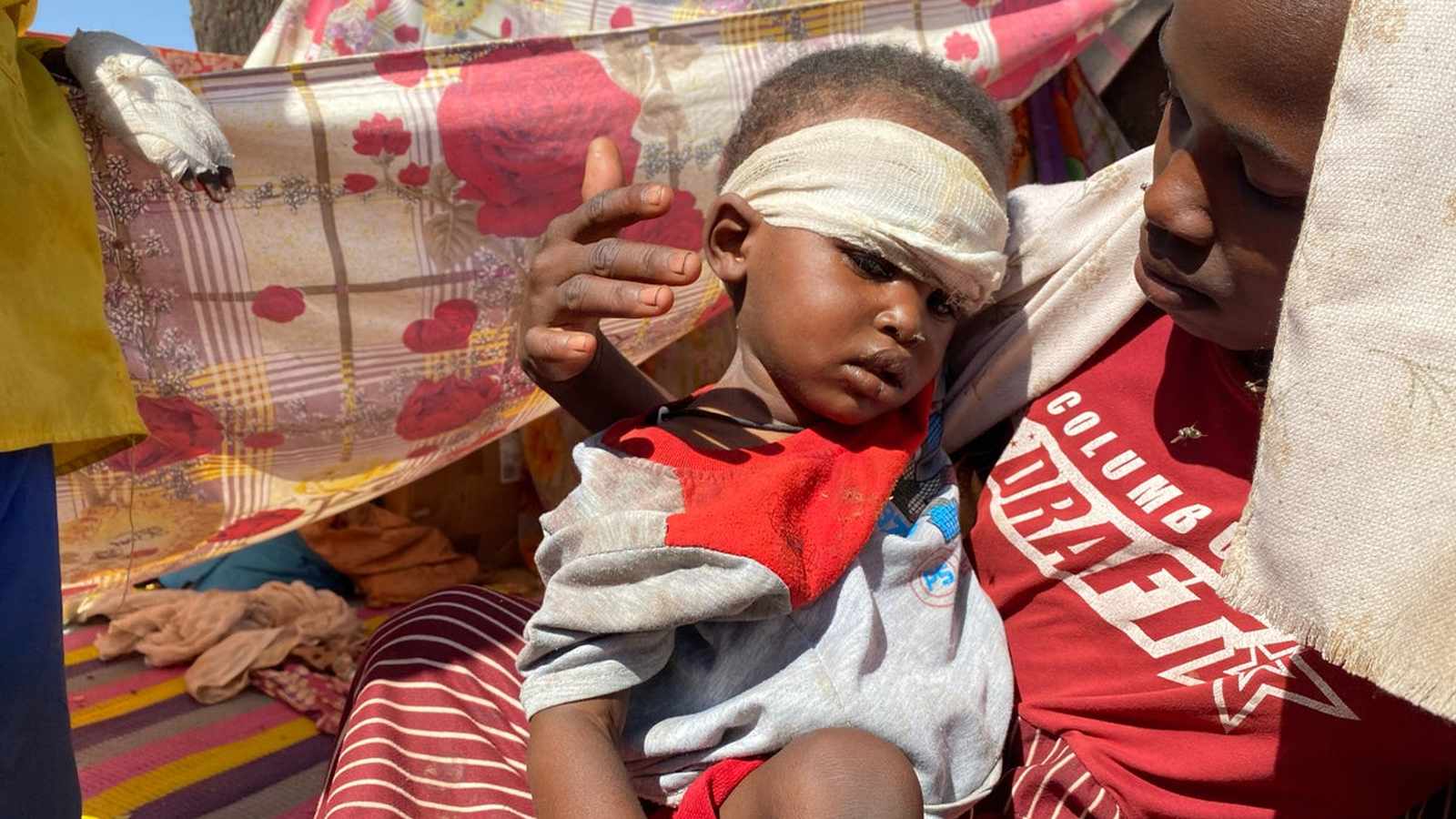
Most escapees end up in Tawila, some 70 kilometers away, where makeshift camps sprawl across barren land. Aid organizations, including Doctors Without Borders, say arrivals often survive on one or two meals a day, if that. Children dart between patched tarps and plastic sheets, while adults queue for what little food is available. Adam Rojal, spokesperson for Sudan’s IDPs and Refugee Camps, told AP that the overcrowding in Tawila is growing worse by the day, with over 16,200 new arrivals in the past week alone.
For those left behind, the situation is dire. U.N. Human Rights Chief Volker Türk warns that many civilians are trapped, denied access to food, water, and medical care. Reports of summary executions, rape, and ethnically motivated violence persist. “Today, traumatized civilians are still trapped inside el-Fashir and are being prevented from leaving,” Türk said in Geneva. “The exit routes themselves have been the scenes of unimaginable cruelty.”
International Response: Calls for Accountability and Protection
The ICC’s intervention represents a significant step in seeking justice for Darfur. Prosecutors stress that the crimes in el-Fashir are “part of a broader pattern of violence” afflicting the entire region. The Red Cross’s Mirjana Spoljaric, visiting Riyadh, voiced deep concern: “It’s history repeating, and it becomes worse every time a place is taken over by the other party.” She described people fleeing the city, collapsing from exhaustion or untreated wounds, and called the situation “absolutely beyond what we can consider acceptable.”
International actors have been urged to restrain parties to the conflict and protect civilians. The United Arab Emirates has been accused of supporting the RSF, a claim it denies, while the Sudanese army—backed by Egypt and reportedly using Iranian-made drones—struggles to regain lost ground. The proliferation of drones and advanced weaponry has, as Spoljaric notes, “created an environment where nowhere is safe anymore.”
Meanwhile, diplomatic efforts continue. The RSF claims to have agreed to a U.S.-led humanitarian truce, but the army insists any ceasefire must involve RSF withdrawal from civilian areas. Jalale Getachew Birru, an analyst for East Africa with Armed Conflict Location and Event Data, says the fall of el-Fashir is both a strategic victory for the RSF and a deepening of Sudan’s humanitarian crisis. “These events not only deepen Sudan’s humanitarian crisis but also signal the RSF’s growing capacity to expand toward central Sudan, threatening to reverse the success of the Sudanese armed forces,” Birru explained to Reuters.
The Human Toll: Stories from the Camps and the City
In Tawila, the struggle is relentless. Aid workers recount families surviving on scant meals, children suffering extreme malnutrition, and psychological trauma running high. MSF teams report hundreds arriving daily, many bearing wounds from the fighting or the journey itself. Video footage shows children running across dust-swept camps, adults sharing pots of food, and improvised shelters springing up faster than aid can keep pace.
The fate of nearly 200,000 people still in el-Fashir remains unknown. With both exit routes and the city itself dangerous, families are often forced to make impossible choices. The fear of summary execution, sexual violence, or starvation looms over those who stay—and those who attempt to leave.
Across Darfur and into neighboring Kordofan, fighting continues to displace millions. The humanitarian crisis is compounded by acute food insecurity—nearly half the population struggles to survive. Early November saw a drone attack in el-Obeid, North Kordofan’s capital, killing at least 40 and wounding dozens more. The army intercepted Chinese-made drones targeting the city, further highlighting the technological escalation of the conflict.
What Satellite Images Show—and What They Mean for Justice
Satellite imagery, once a tool for remote observation, now plays a central role in documenting war crimes. The images of burning neighborhoods and destroyed infrastructure are not just evidence—they are testimony to suffering, and a potential lever for justice. As ICC investigators compile their case, these visuals join survivor accounts, NGO reports, and media documentation to build a record that cannot be ignored.
For Sudan’s people, the challenge is survival. For the world, the question remains: will the evidence translate into action and accountability, or will history repeat once more?
The satellite images of el-Fashir, paired with on-the-ground testimony, reveal not only the scale of destruction but also the urgency for international justice and humanitarian relief. As the ICC steps in and camps overflow, the fate of hundreds of thousands hangs in the balance—underscoring that, in Sudan, the cost of war is measured in lives, and the world’s response will determine whether this tragedy is remembered for its suffering or for the resolve to end it.