
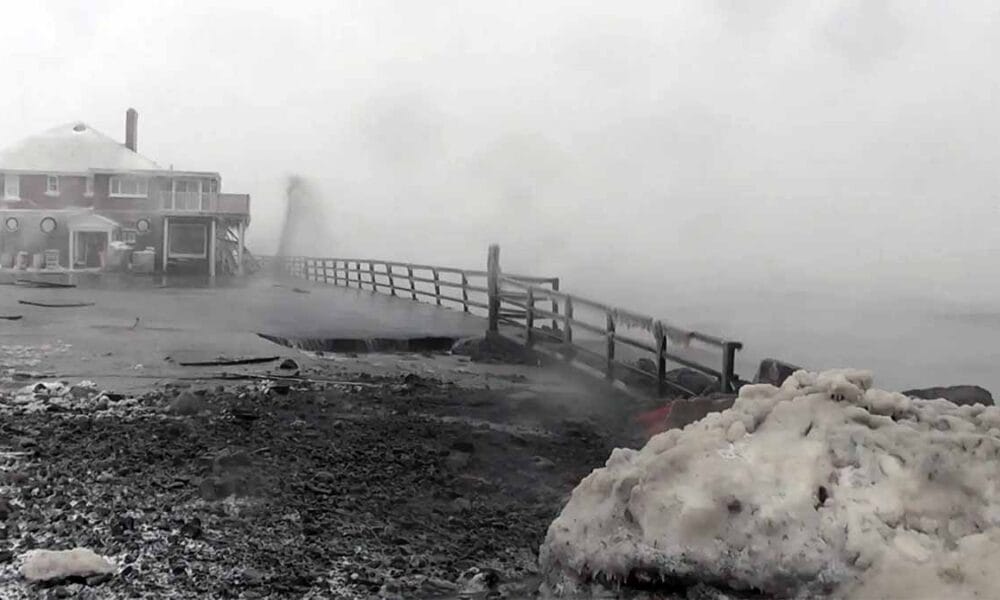
A severe lakeshore flood warning has been issued for Erie and Chautauqua counties in New York, with conditions expected to persist until Monday afternoon. This advisory comes in response to the rapid rise in water levels at the eastern end of Lake Erie, driven by strong southwest winds and potentially compounded by a seiche event, which causes significant water level fluctuations. The warning highlights the possibility of substantial flooding and shoreline erosion in the affected areas.
Flooding is anticipated along key locations such as Route 5 in Hamburg, Buffalo Harbor, Canalside, and Dunkirk Harbor. These areas, already prone to flooding due to their proximity to the lake, are at heightened risk as wave action intensifies. High waves not only threaten infrastructure but also contribute to severe shoreline erosion, potentially damaging beaches, cliffs, and nearby structures.
Residents and visitors in the area are strongly advised to avoid breakwaters, piers, rock outcroppings, and beaches, as deceptively large waves pose a significant threat to safety. Boaters are also cautioned to stay off the water due to hazardous conditions and the potential for floating debris. Additionally, local roads near the lakefront may become inaccessible due to flooding or debris, necessitating potential closures.
Low-lying properties, including parking lots, homes, and businesses close to the shore, are at risk of inundation. Property owners in vulnerable areas are encouraged to take immediate protective measures, such as elevating valuable items, securing outdoor furniture, or deploying flood barriers to mitigate damage. It is also essential to remain informed by monitoring updates from reliable sources like NOAA Weather Radio or local news outlets.
Strong winds from the southwest are driving water levels higher along the lake’s eastern edge. This wind direction, combined with atmospheric pressure changes, could be triggering a seiche, further elevating the risk of flooding. As water continues to rise, local authorities may issue evacuation orders for particularly hazardous zones. Residents in low-lying areas are advised to move to higher ground and avoid walking or driving through floodwaters, which can be deceptively dangerous.
Once the floodwaters recede, cleanup efforts are likely to involve removing debris, addressing water damage, and assessing the extent of shoreline erosion. Residents should report significant damage to local emergency services and take precautions to prevent additional hazards during the recovery process.
This flood warning underscores the importance of staying vigilant and prepared during severe weather events. By following official guidance and acting swiftly, residents can minimize risks and safeguard their properties against the impact of rising waters.