
Quick Read
- A 164ft sinkhole opened beneath the canal in Whitchurch, Shropshire, swallowing boats.
- Ten people were rescued in a multi-agency emergency response; no injuries reported.
- Canal section closed for repairs; embankment failure blamed for the incident.
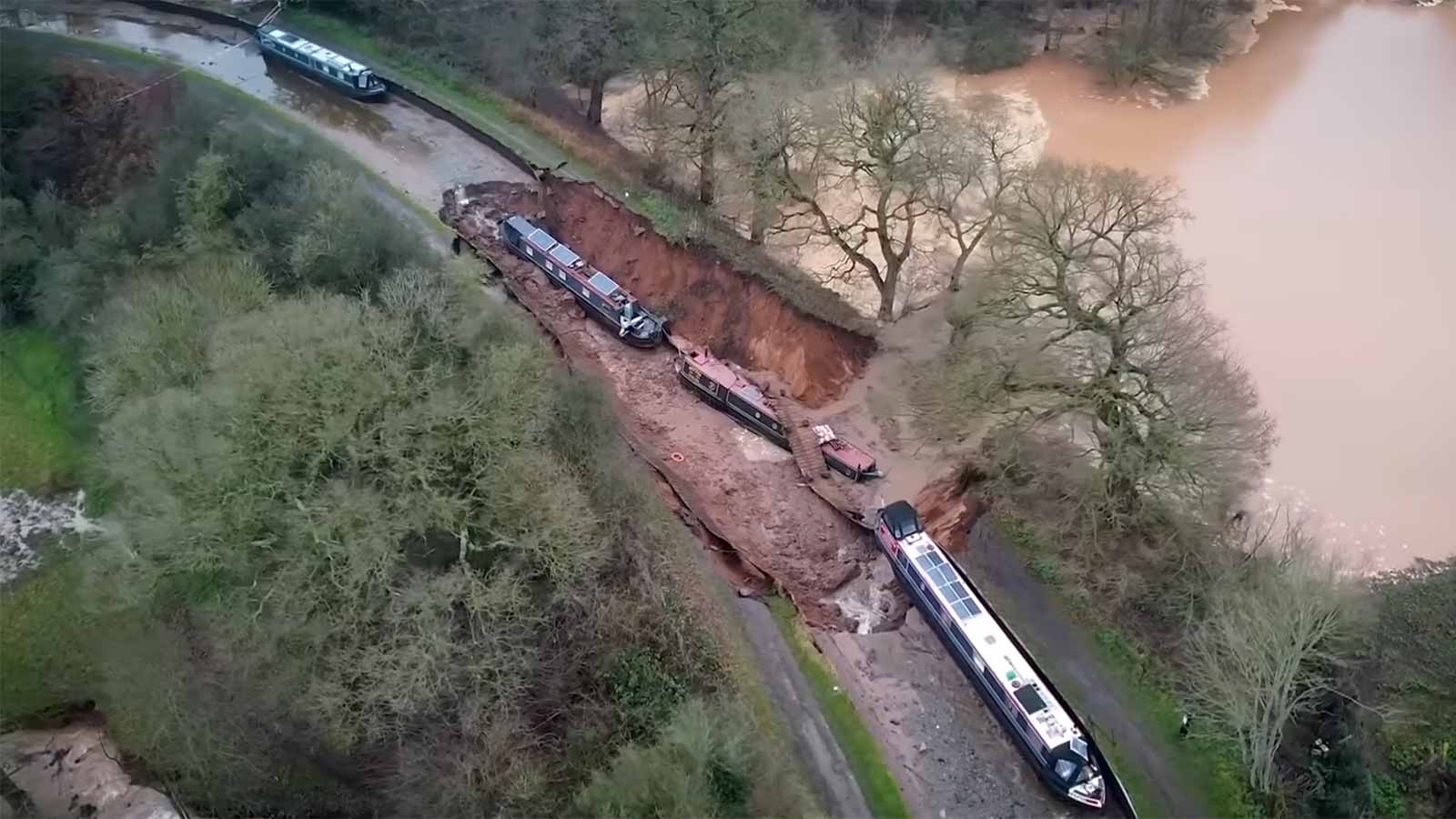
In the predawn hours of December 23, 2025, Whitchurch, Shropshire awoke to chaos on its historic canal. A gaping 164-foot sinkhole opened beneath the waterway, swallowing canal boats and draining a stretch of the canal, leaving stunned locals and emergency crews scrambling to respond.
Major Incident Declared as Sinkhole Engulfs Boats
The drama unfolded in the Chemistry area of Whitchurch, where three narrowboats were drawn into the cavernous hole. Footage captured the harrowing moment: one boat teetered on the brink, the rear rising, wood groaning under stress, before it slipped meters down into the abyss. Amid the confusion, ten people were rescued from the affected boats and nearby moorings.
One eyewitness, Bob Wood, 75, described the surreal experience. “I was asleep in my boat, then woke to use the toilet and noticed we were leaning. Opening the back door, I saw water rushing away under the boat. I stepped out just as the rear lifted eight feet into the air.” His account, shared with MailOnline, reflects the panic and quick thinking that marked the morning.
Emergency Response: Multi-Agency Effort Contains Disaster
Emergency services declared a major incident at 5am, mobilizing six fire crews from Whitchurch, Prees, Shrewsbury, Newport, Albrighton, and Telford, alongside West Mercia Police and paramedics. The Shropshire Tactical Co-ordination Group led the response, with approximately twelve residents from nearby boats relocated to a welfare center at the former Whitchurch Police Station. The Canal and River Trust (CRT) immediately closed the canal between Lock 6 Grindley Locks and Bridge 31A, Whitchurch By-Pass bridge, damming off the affected section to prevent further flooding.
Scott Hurford, Area Manager at Shropshire Fire and Rescue Service, told WION that the situation was stabilized after the initial rescue operations, and thankfully, no injuries were reported. “Our teams are on site and have dammed off the affected section of the canal,” he said, emphasizing the swift action taken to contain the disaster.
Structural Damage and Flooding Fears
Aerial footage, shared by BBC News, revealed the extent of the damage: the canal’s structural integrity had failed, causing large volumes of water to escape into the surrounding land. The Canal and River Trust attributed the event to an “embankment failure,” raising concerns about the vulnerability of Britain’s aging canal infrastructure. Fifty firefighters were deployed at the height of the incident to manage the risks of flooding and further collapse.
Canal boats, once vital for carrying cargo through Britain’s narrow waterways, now serve as floating homes and leisure vessels. The sudden collapse not only disrupted holidaymakers and residents but also highlighted the importance of regular maintenance and monitoring of such heritage structures.
Community Impact and Ongoing Recovery
Residents were urged to avoid the area as crews worked through the chaotic cleanup. The CRT issued repeated warnings: “Please do not approach from either direction and we will provide an update in due course.” The closure of the canal, a lifeline for local tourism and recreation, left boats beached on the dry bed, their owners uncertain about when they could return.
Local businesses and homeowners near the canal are now grappling with the aftermath. With gallons of water having poured into surrounding land, questions loom about the environmental impact and the timeline for repairs. For many, the image of a canal boat vanishing into the earth is a stark reminder of nature’s unpredictability.
As of now, the emergency response has shifted to recovery and assessment. Authorities are working to restore the canal’s integrity, support displaced residents, and investigate the causes of the embankment failure. The incident remains a sobering episode in the region’s history, its repercussions felt beyond the immediate scene.
This sinkhole incident exposes both the fragility and the resilience within communities tied to Britain’s waterways. While no lives were lost, the scale of disruption and the rapid, coordinated response underscore the importance of infrastructure vigilance and emergency preparedness in safeguarding public safety and heritage assets.