
Quick Read
- Liberia’s cocoa boom has caused over 250,000 hectares of rainforest loss between 2021–2024.
- The Upper Guinean Rainforest, spanning Liberia and Sierra Leone, is threatened by deforestation linked to major chocolate brands.
- Opaque certification systems allow mixing of deforestation-linked cocoa with ‘sustainable’ beans.
- EU’s new anti-deforestation law, set for 2025, could help protect the region’s forests if enforced.
West Africa’s Last Rainforest Under Siege: The Sierra Leone Connection
Deep in the heart of West Africa, the Upper Guinean Rainforest once stretched unbroken from Ghana through Liberia and into Sierra Leone. Today, these forests—carbon-rich, biodiversity hotspots—are facing unprecedented threats. The recent surge in cocoa farming in Liberia, revealed by a Global Witness investigation, is fueling a deforestation crisis that could reshape the entire region, including neighboring Sierra Leone.
Chocolate’s Hidden Footprint: From Liberian Farms to Global Shelves
Major chocolate brands—Mars, KitKat, Cadbury Dairy Milk, and others—are in the spotlight for sourcing cocoa from areas of Liberia recently stripped of rainforest. The investigation, employing satellite imagery, trade data, and field interviews, exposes how beans grown on newly deforested land are being mixed with certified ‘deforestation-free’ cocoa. This blending, facilitated by opaque certification systems like the Rainforest Alliance’s ‘mass balance’ model, means that consumers worldwide may unknowingly be supporting rainforest destruction with every sweet bite.
Between 2021 and 2024, Liberia’s key cocoa-growing counties lost over 250,000 hectares of forest—an area larger than Luxembourg. This rampant forest loss is not contained by borders; the Upper Guinean Rainforest, crucial for carbon storage and home to endangered species such as chimpanzees and forest elephants, crosses into Sierra Leone. What happens in Liberia’s cocoa belt reverberates in Sierra Leone, threatening shared ecosystems and species.
Sierra Leone: The Unseen Stakeholder
While the investigation centers on Liberia, Sierra Leone stands as a silent stakeholder. The forests that straddle the border are a buffer against climate collapse, storing carbon equivalent to Japan’s annual emissions. For Sierra Leone, the risk is more than environmental—it’s existential. Any loss on the Liberian side undermines the integrity of the entire transboundary rainforest, making Sierra Leone vulnerable to ecosystem collapse, species loss, and climate instability.
Local communities in Sierra Leone, much like their Liberian counterparts, depend on the forest for livelihoods, food, and cultural identity. The erosion of the rainforest disrupts not only biodiversity but also the social fabric of the region. As cocoa-driven clearing advances, Sierra Leone’s farmers and rural populations could face similar pressures to expand cash crop production, risking a domino effect of deforestation.
The Supply Chain Maze: Who’s Responsible?
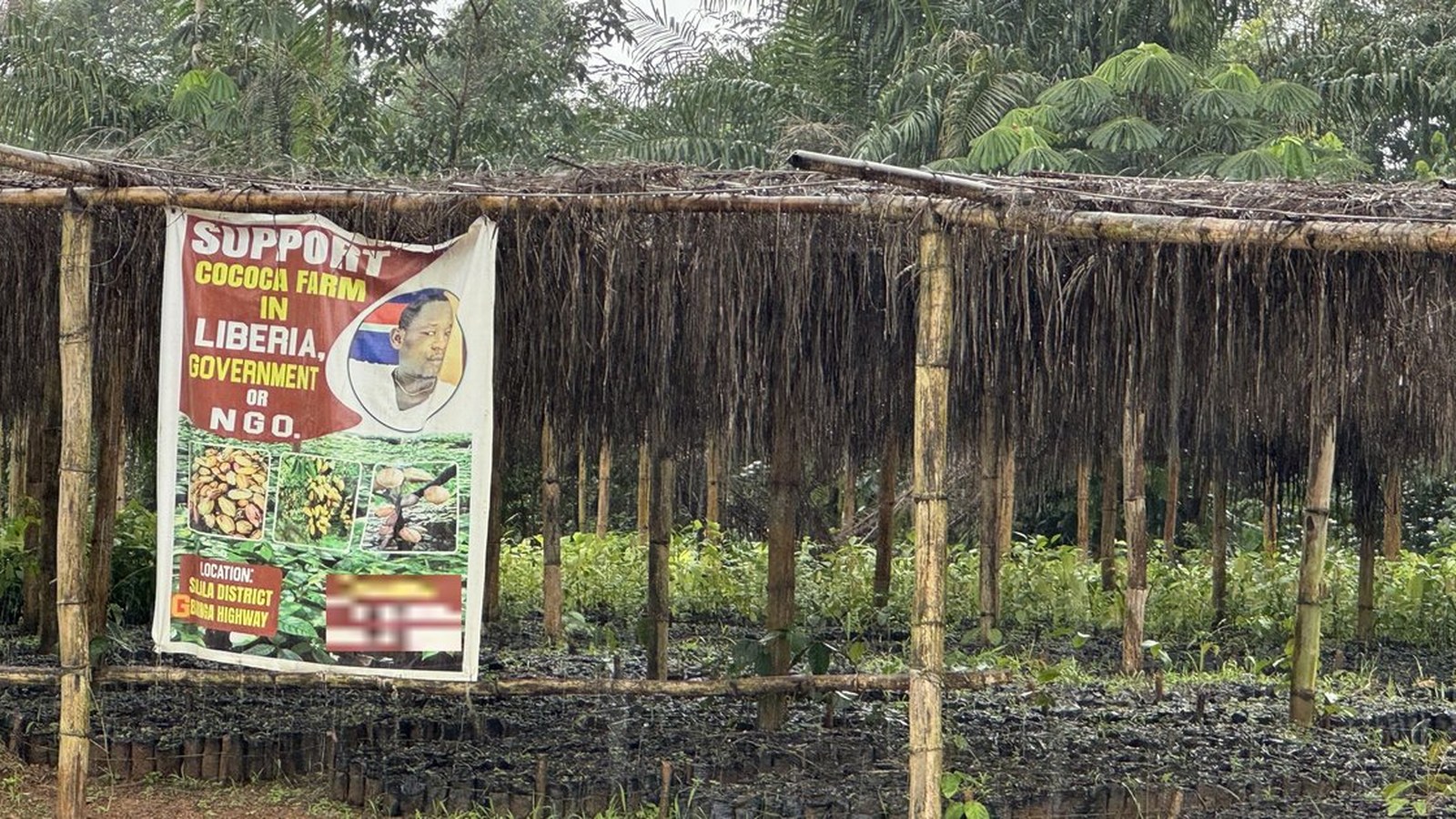
The investigation reveals a tangled supply chain. Smallholder farmers in Liberia, often struggling to escape poverty, rely on slash-and-burn methods to expand cocoa plots. Rural traders buy beans indiscriminately, creating a high-risk environment where deforestation-linked cocoa easily enters the supply chain. Large European distributors and brands, marketing their products as ‘sustainable’, cannot guarantee that the cocoa isn’t sourced from recently cleared rainforest.
Interviewed exporters admit that access to the EU market drives efforts to trace and map supply chains. However, support from EU traders and confectioners has been minimal. The lack of robust traceability systems perpetuates the crisis, leaving Sierra Leone’s connected forests exposed.
EU Deforestation Law: A Fork in the Road
At the heart of the debate is the European Union’s new anti-deforestation law, set to take effect in 2025. The regulation would force companies to prove their cocoa is deforestation-free before entering EU supermarkets. Some chocolate giants, like Mondelēz (owner of Cadbury Dairy Milk, Milka, Toblerone), have lobbied to delay the law, while others—Nestlé, Mars, Ferrero, Barry Callebaut—urge swift implementation, warning that delays could undo years of progress.
For Sierra Leone, the law’s passage could be a lifeline. Global Witness estimates that timely enforcement could protect up to eight million hectares of forest in the next decade. This would help preserve the remaining stretches of the Upper Guinean Rainforest, buffering Sierra Leone against the spillover of Liberia’s cocoa boom.
Balancing Livelihoods and Conservation
There’s no denying the complexity of the issue. Liberia is among the world’s poorest countries; cocoa offers a crucial pathway out of poverty for many farmers. But the current model is unsustainable. Deforestation not only threatens local wildlife but also undermines the long-term viability of agriculture. Crop failures in Côte d’Ivoire and Ghana—previous epicenters of cocoa-driven forest loss—loom as cautionary tales.
For Sierra Leone, watching Liberia’s experience is a warning and an opportunity. Supporting sustainable farming practices, investing in traceability, and enforcing cross-border conservation policies are essential steps. International buyers, governments, and certification bodies must work together to ensure that economic development does not come at the cost of irreplaceable natural heritage.
The Road Ahead: Will Sierra Leone’s Forests Survive?
The fate of Sierra Leone’s rainforests is intricately tied to decisions made far beyond its borders—in corporate boardrooms, EU regulatory offices, and the fields of rural Liberia. If unchecked, the cocoa-driven deforestation could sweep across the Upper Guinean Rainforest, erasing centuries-old habitats and destabilizing regional climate. But with robust law enforcement, transparent supply chains, and genuine international cooperation, there is hope for both people and nature.
Assessment: Sierra Leone finds itself at a crossroads, not as a direct actor but as a crucial stakeholder in the unfolding cocoa-driven deforestation crisis. The evidence underscores the urgent need for regional collaboration and stronger international safeguards. The upcoming EU law and increased supply chain transparency could tip the balance toward conservation—but only if all parties recognize the shared risks and act decisively. The story of Sierra Leone’s rainforest is a stark reminder that ecological boundaries don’t align with national borders, and solutions must be as interconnected as the forests themselves.