
Quick Read
- Gold surged above $5,000/ounce and silver surpassed $110/ounce in late January 2026.
- iShares Silver Trust (SLV) climbed 250% in 12 months, hitting an all-time high of $106.
- VanEck Gold Miners ETF (GDX) outperformed S&P 500 by over 10x, with a 187% gain in 12 months.
- Robust fundamentals, including 91% earnings growth for miners, underpin the rally.
- Geopolitical tensions (Middle East, US government shutdown risks) are key drivers.
- Technical indicators suggest overbought conditions and potential for a near-term pullback.
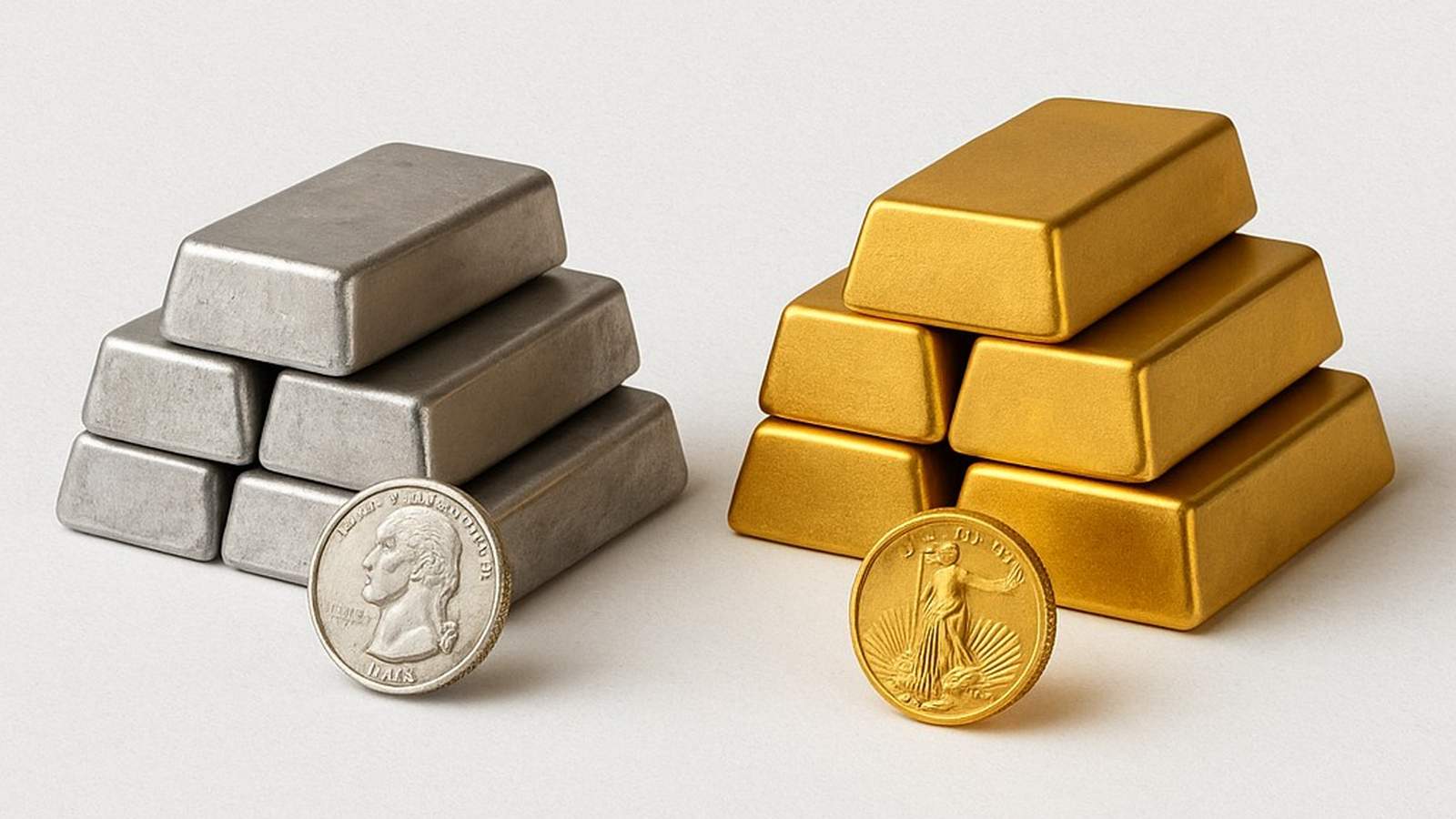
YEREVAN (Azat TV) – Gold and silver prices have surged to unprecedented highs in late January 2026, propelling precious metals mining stocks to significantly outperform the broader market. Gold has climbed above $5,000 per ounce, while silver has pushed past $110, with futures markets briefly nearing $118. This explosive rally, which began accelerating in mid-2025, has left investors questioning whether the sector still offers substantial upside or if current valuations have already priced in optimal conditions.
Precious Metals Rally to Historic Highs
The iShares Silver Trust (SLV), an exchange-traded fund tracking physical silver, has experienced a remarkable surge, climbing nearly 50% in under a month and an astonishing 250% over the last 12 months, hitting an all-time high of $106. Similarly, the VanEck Gold Miners ETF (GDX), which tracks 55 primarily North American producers, has climbed 187% over the past year. This performance starkly contrasts with the SPDR S&P 500 ETF Trust (SPY), which returned approximately 16% over the same period, putting gold miners on pace to outperform the broader market by more than tenfold, according to analysis by Finviz.com.
Precious metals concluded 2025 in robust fashion, with gold recording its strongest year since 1978 and silver its best since 1979. This momentum has powerfully carried into 2026, a shift that Thomas Shipp, head of equity research at LPL Financial, noted has materially reshaped earnings power and investor expectations across the mining sector.
Underlying Fundamentals and Geopolitical Drivers
The sustained bull run in precious metals is underpinned by strong fundamentals. Rising metal prices continue to expand margins and unlock operating leverage across the sector. LPL Financial reports that the trailing 12-month revenue growth for major precious metals miners reached approximately 26%, with operating margins climbing to roughly 37% from 16% a year earlier. Returns on equity rose to about 13.5%, compared with 2.5% last year, and earnings growth jumped to nearly 91%.
Analyst expectations remain aggressive, with consensus forecasts calling for revenue growth of approximately 30% in fiscal 2025, followed by another strong year in 2026. Despite the parabolic price action, mining stocks are not trading at ‘bubble-like’ multiples. The GDX ETF trades at an average 16.5 times its 2027 earnings, about four multiple points below the S&P 500’s 20x, indicating a meaningful discount even after recent gains.
Geopolitical tensions are a significant catalyst for the safe-haven appeal of gold and silver. Bankless Times highlighted that the silver price continued its bull run as it mirrored gold’s performance amid rising geopolitical jitters. Concerns include former President Donald Trump’s consideration of military action against Iran, which has warned of major retaliation impacting the energy market. Additionally, rising odds of another prolonged U.S. government shutdown, potentially triggered by disputes over immigration policies, have further fueled investor demand for precious metals.
Investor Caution Amid Technical Signals
Despite the strong fundamental backdrop, technical indicators are flashing caution. The iShares Silver Trust (SLV) has formed a ‘shooting star’ candlestick pattern on its daily chart, which is often considered a bearish reversal signal in technical analysis, according to Bankless Times. Furthermore, its Relative Strength Index (RSI) and Percentage Price Oscillator (PPO) have moved to extreme ‘overbought’ levels, suggesting a potential near-term reversal.
In the broader gold miners sector, nearly half of the index constituents within the GDX ETF show an RSI above 70, a common overbought threshold. The index also trades roughly 57% above its 200-day moving average, nearing levels that preceded sharp pullbacks in late 2025. Thomas Shipp of LPL Financial advises a tactical approach, favoring ‘using pullbacks within the channel as buying opportunities rather than chasing the current rally.’
Intriguingly, data from Bankless Times also shows that ‘smart money’ investors have begun rotating out of the SLV ETF, with outflows exceeding $952 million this year despite the ongoing price rally. This contrasts with expectations for inflows during a price surge, suggesting institutional caution. A contributor to Seeking Alpha indicated having sold all silver miners, reduced physical holdings, and initiated short positions in SLV and select miners, expecting a significant near-term pullback, while remaining bullish long-term.
Silver’s Dual Nature: Commodity and Industrial Metal
Silver’s unique position as both a precious metal and a critical industrial commodity adds complexity to its market dynamics. Fool.com notes that over 70% of silver is mined indirectly as a byproduct of other metals, making dedicated silver mining challenging. However, industrial demand for silver is surging due to its increasing reliance in products such as electric vehicles, solar panels, and medical applications. This demand is currently outpacing production, which could force companies to shift towards mining other metals, potentially diluting silver concentration for funds like the iShares MSCI Global Silver ETF (SLVP), which holds shares of mining companies.
While SLV tracks physical silver, SLVP invests in silver mining companies. Over the last year, SLVP delivered a 265.8% return compared to SLV’s 231.23%, though SLV is considered slightly less volatile. Silver itself is estimated to be three times more volatile than gold, making both types of investments susceptible to significant price swings.
The current market dynamic for precious metals reflects a compelling tension: robust fundamental drivers and sustained investor demand, fueled by geopolitical uncertainty and strong corporate earnings, are clashing with technical indicators that signal potential near-term overextension. While the long-term outlook for silver and gold appears supported by industrial demand and safe-haven flows, the immediate future may see increased volatility as the market digests these unprecedented gains.