
Quick Read
- Smriti Mandhana scored 80 off 66 balls, reviving India’s top order.
- She became the fastest and youngest to reach 5000 runs in women’s ODIs.
- India posted 330 runs against Australia with a 155-run opening stand.
- Mandhana’s fluency returned after three low scores in earlier matches.
Mandhana’s Masterclass: India’s Batting Awakens at the World Cup
On a sun-drenched afternoon in Visakhapatnam, Smriti Mandhana strode out with a singular mission: to remind everyone why she’s the world’s top-ranked ODI batter. The stakes were high—India had stumbled through their first three matches, and the semi-final hopes rested on a revival. The crowd, thousands strong, greeted her like a returning hero. But until this match against Australia, Mandhana’s bat had been quiet, her fluency absent, her aura somewhat dimmed.
All that changed in the eighth over. Sophie Molineux, a familiar adversary and teammate at Royal Challengers Bengaluru, delivered what was supposed to be a testing spell. Mandhana, having personally advocated for Molineux’s recruitment in the Women’s Premier League, knew her strengths and weaknesses inside out. With calculated aggression, Mandhana dismantled the spinner—lofting the first ball over midwicket for four, sending the third soaring for six, and dispatching the last over square leg for another boundary. In just six deliveries, she announced not only her own resurgence but India’s intent. The scoring rate rocketed, and the mood in the stadium shifted palpably.
Breaking Records: A Partnership Built on Precision
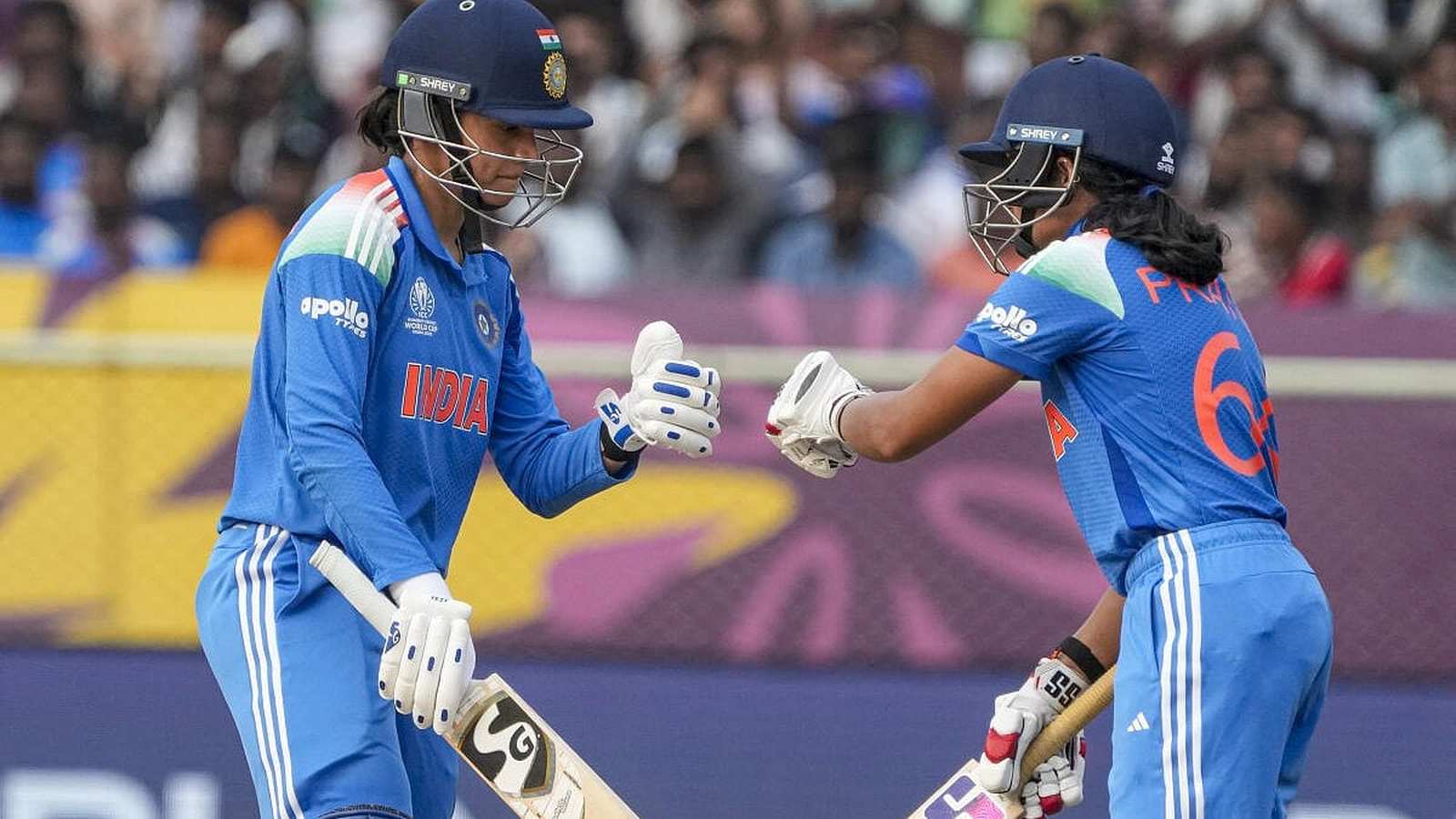
Partnered by Pratika Rawal, who contributed a steady 75 off 96 balls, Mandhana led India to a formidable 155-run opening stand in just 24.3 overs. It was a partnership marked not by brute force, but by the kind of elegant timing and placement that defines world-class cricket. As Deccan Herald reported, this opening salvo atoned for previous failures against Sri Lanka, Pakistan, and South Africa—failures that had left fans and experts alike questioning India’s top-order resilience.
Mandhana didn’t rush. She assessed the pitch, played out the first few overs against pacers Kim Garth and Megan Schutt, and waited for the right moment to accelerate. Australia’s fielding, especially at deep point, tried to stifle her favorite boundary options early on. It was a tactic Sri Lanka had used to trap her in the tournament opener, but Mandhana refused to be baited twice. Once the pacers’ spells ended, she shifted gears, taking command and dictating terms.
The real turning point came with Molineux’s introduction. Eighteen runs in a single over, including a six and two fours, shifted the momentum irreversibly. Rawal, meanwhile, played the perfect foil—occasionally showcasing her own flair, but mostly anchoring the partnership and letting Mandhana shine.
Milestones and Mastery: Mandhana Fastest to 5000 ODI Runs
This wasn’t just a return to form. During her innings, Mandhana crossed the coveted 5000-run mark in women’s ODIs—becoming both the fastest and youngest to reach the milestone, doing so in just 112 matches. It’s a feat that places her among the pantheon of cricketing greats, and one that electrified the crowd when she brought up the milestone with a six over extra cover.
The partnership with Rawal was their sixth century stand in just 21 innings, inching them closer to India’s record of seven set by Purnima Raut and Mithali Raj over 34 innings. Mandhana’s fifty came in just 46 balls, and her ultimate tally—80 off 66, laced with nine fours and three sixes—was a masterclass in controlled aggression.
Australia’s Response and India’s Resilience
Mandhana’s dismissal—caught at deep midwicket by Phoebe Litchfield off Molineux—briefly opened the door for Australia. Rawal followed soon after, and both Harmanpreet Kaur and Harleen Deol fell to casual shots, threatening to squander India’s momentum at 240 for four in the 38th over. But the lower order, as head coach Amol Muzumdar had predicted to JioHotstar, stepped up. Richa Ghosh and Jemimah Rodrigues stitched together a vital 54-run partnership for the fifth wicket, pushing India closer to the 300-run mark. In the final ten overs, India added 90 runs—demonstrating a newfound focus and urgency under the lights, even as wickets tumbled.
Annabel Sutherland was Australia’s standout bowler, claiming five wickets for 40 runs, but neither pace nor spin could contain India’s charge once Mandhana and Rawal had set the platform. The pitch, described as playing much more smoothly than in previous matches, allowed India to maximize their batting depth.
The Broader Impact: Mandhana’s Influence On and Off the Field
Mandhana’s resurgence isn’t just about runs or records. Her presence has dominated broadcaster promos, brand endorsements, and the tournament’s narrative. One official from another team remarked to Indian Express, “When you switch on your television, all you see is Mandhana.” She’s become the face of the Women’s World Cup, and her fluency on the field mirrors her growing stature off it.
Her leadership at RCB, her strategic recruitment choices, and her ability to bounce back under pressure have set new benchmarks for professionalism in women’s cricket. The cheers that greeted her at the stadium weren’t just for a batter—they were for an icon who inspires both teammates and fans.
Looking Ahead: India’s Semi-Final Push
With Mandhana rediscovering her best just as the knockout stages loom, India’s prospects have brightened considerably. The top order, previously a concern, now looks settled and dangerous. The blend of experience, resilience, and tactical acumen on display against Australia offers hope for the matches to come.
For Mandhana, this innings was a statement: of intent, of capability, and of the kind of mental toughness that defines champions. As India gears up for the semi-finals, her timing could not have been better.
Mandhana’s innings against Australia wasn’t just about personal redemption—it was a strategic turning point for India’s World Cup campaign. Her ability to adapt, accelerate, and anchor under pressure showcased why she remains a linchpin in India’s batting order. With her form returning at the critical juncture, India’s hopes of lifting the trophy now rest on a foundation stronger than ever.