
Quick Read
- JWST detected a thick atmosphere on TOI 561 b, a super-heated rocky exoplanet.
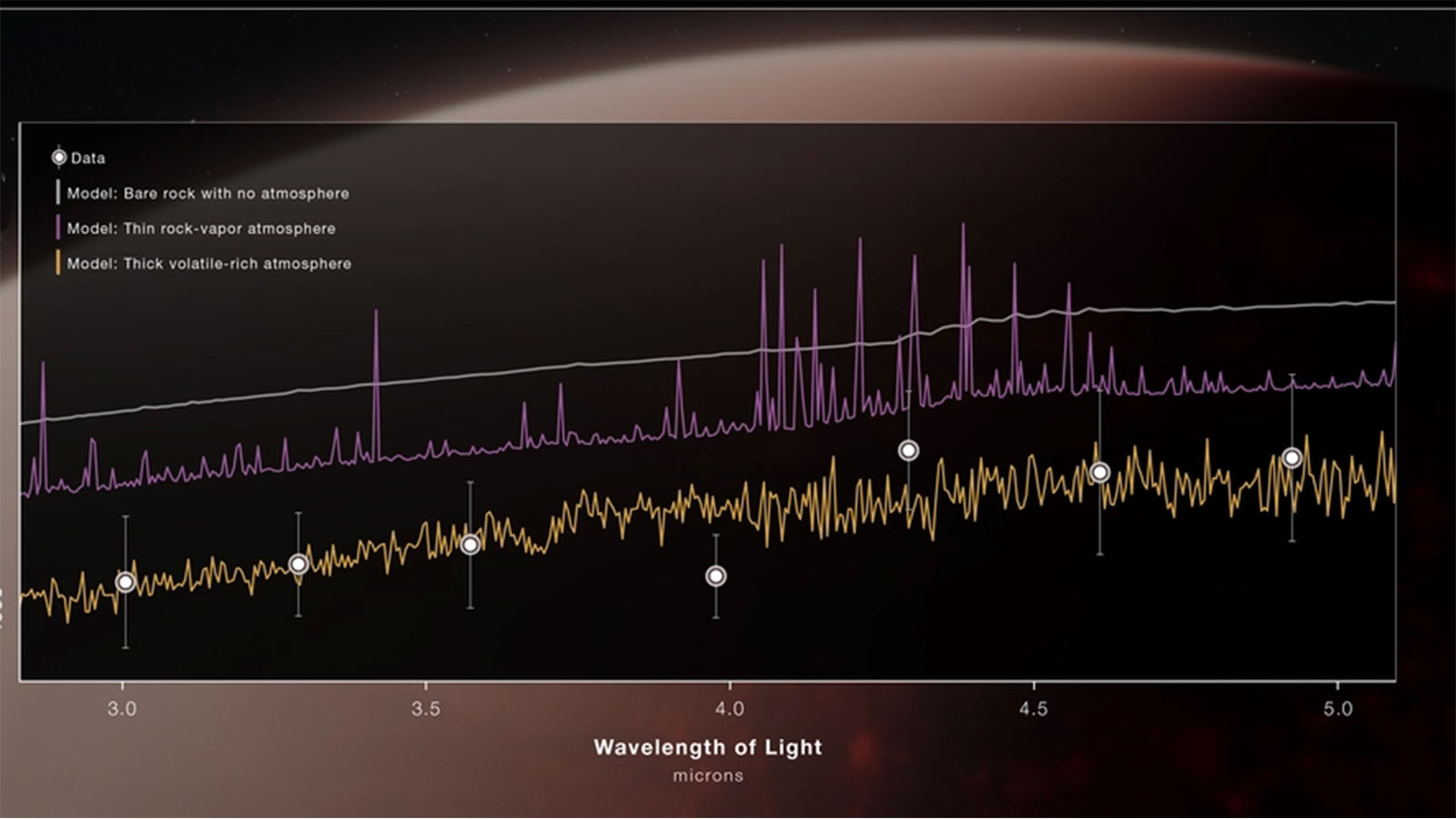
- Secondary eclipse observations revealed infrared emission much lower than expected for a bare surface.
- Models suggest a volatile-rich atmosphere with water and oxygen is present.
- The discovery challenges established theories about atmospheric survival in extreme conditions.
- Findings published in The Astrophysical Journal Letters.
How Solar Eclipses Help Uncover Alien Atmospheres
Every so often, the universe offers a rare peek behind its curtain. For astronomers, one of the most powerful tools for studying distant worlds isn’t found in the planets themselves, but in the fleeting shadows they cast. Secondary eclipses—when a planet slips behind its star—have become a window into the secrets of exoplanet atmospheres. The recent findings from the James Webb Space Telescope (JWST) not only deepen our understanding of these cosmic events but rewrite what we thought we knew about how rocky planets survive in extreme conditions.
JWST’s Surprising Discovery: A Thick Atmosphere Around a Molten World
TOI 561 b is not your average planet. Imagine a world that circles its star in less than half a day, locked in perpetual sunlight on one side, with surface temperatures so high they’d melt rock. For years, scientists assumed such small, super-heated rocky planets couldn’t keep hold of any atmosphere. The logic was simple: intense radiation and heat would strip away any gases, leaving behind a bare, molten surface.
But new observations, published in The Astrophysical Journal Letters and reported by The Brighter Side of News, have shattered that notion. Using JWST’s NIRSpec instrument, astronomers captured four secondary eclipses of TOI 561 b over just two days in May 2024. These eclipses allowed them to isolate the faint infrared glow of the planet’s dayside, revealing clues about its atmospheric composition and temperature.
Peering Through the Faintest Shadows
The process was painstaking. JWST gathered more than 20,000 six-second exposures, meticulously processed by two independent pipelines—Eureka and ExoTiC JEDI—to correct for detector quirks and background noise. The signal they chased was minuscule: the dip in brightness as the planet disappeared behind its star measured just a few dozen parts per million. Yet, the results from both methods were nearly identical, strengthening confidence in the findings.
What they found was unexpected. The planet’s density—about 4.3 grams per cubic centimeter—was far lower than a simple rock-and-metal world would suggest. More telling, the emission spectrum pointed to a dayside temperature between 1800 and 2150 kelvins, hundreds of degrees cooler than the 2950 kelvins expected for a bare, atmosphere-less surface. The planet emits too little infrared light for its extreme environment, implying something is absorbing or reflecting a significant portion of the heat.
The Atmosphere That Shouldn’t Exist
Scientists searched for signs of molecules like water vapor, carbon monoxide, and silicon monoxide. The spectral data wasn’t detailed enough to pin down exact compositions, but the overall brightness temperature offered strong clues. Models that assumed a thin rock vapor layer couldn’t explain the observations. Instead, thicker atmospheres rich in water or oxygen matched the data, suggesting that TOI 561 b is wrapped in a dense, volatile-rich envelope.
This goes against the so-called ‘cosmic shoreline’—an empirical rule linking a planet’s ability to keep an atmosphere to its gravity and the radiation it receives. According to conventional wisdom, TOI 561 b should be a naked, molten world, stripped bare by its ancient, iron-poor star. Yet here it is, defying expectations, with a heavy blanket of gas that’s endured for billions of years.
Solar Eclipses as a Key to Exoplanet Mysteries
Secondary eclipses are more than just celestial events—they’re scientific goldmines. By catching the planet as it slips behind its star, astronomers can measure the drop in infrared light and tease out the planet’s own thermal signature. This method, refined by JWST’s sensitive instruments, has proven crucial in detecting atmospheres around worlds once thought inhospitable.
For TOI 561 b, the eclipse data suggests that its thick atmosphere moves heat from its sunlit side to its perpetual night, likely creating powerful winds and complex weather. Molecules like water vapor absorb infrared light, making the planet appear cooler than it actually is. Silicate clouds may further reflect radiation, protecting the surface from the star’s relentless glare.
Rethinking Planetary Evolution
The implications stretch far beyond this one exoplanet. If magma oceans can act as reservoirs and sources of atmospheric gases, as suggested by Carnegie Science’s Nicole Wallack, then the story of rocky planet evolution is more complex than previously thought. Planets in harsh environments may lose and regain their atmospheres over time, rebuilding what radiation tries to strip away.
Tim Lichtenberg of the University of Groningen adds another layer: the exchange between a planet’s magma ocean and its atmosphere could stabilize the gas envelope, allowing it to persist against all odds. This challenges the idea that small, hot planets are doomed to be barren. Instead, it hints at a universe where atmospheric survival is shaped by dynamic, ongoing processes.
What’s Next for JWST and Exoplanet Science?
The team behind the TOI 561 b study isn’t finished. They’re now analyzing the full data set to map temperatures across the planet’s surface and dig deeper into its atmospheric makeup. Each eclipse observed adds another piece to the puzzle, revealing how planets evolve under extreme conditions.
As JWST continues its mission, more discoveries like this are likely to come. Solar eclipses—once the domain of Earth-bound observers—have become a crucial technique for peering into the atmospheres of distant worlds. The findings from TOI 561 b are a reminder that even in the harshest environments, nature finds a way to surprise us.
For now, the story of TOI 561 b stands as a testament to scientific curiosity and the power of new technology. It challenges us to rethink the boundaries of planetary survival and underscores the importance of eclipses—both solar and secondary—in unlocking the secrets of the cosmos. (Based on research published in The Astrophysical Journal Letters and reported by The Brighter Side of News, these results highlight the evolving nature of exoplanet science and the critical role of eclipse observations in reshaping our understanding of planetary atmospheres. As technology advances, our view of the universe grows richer, and the lines between what is possible and impossible continue to blur.)