


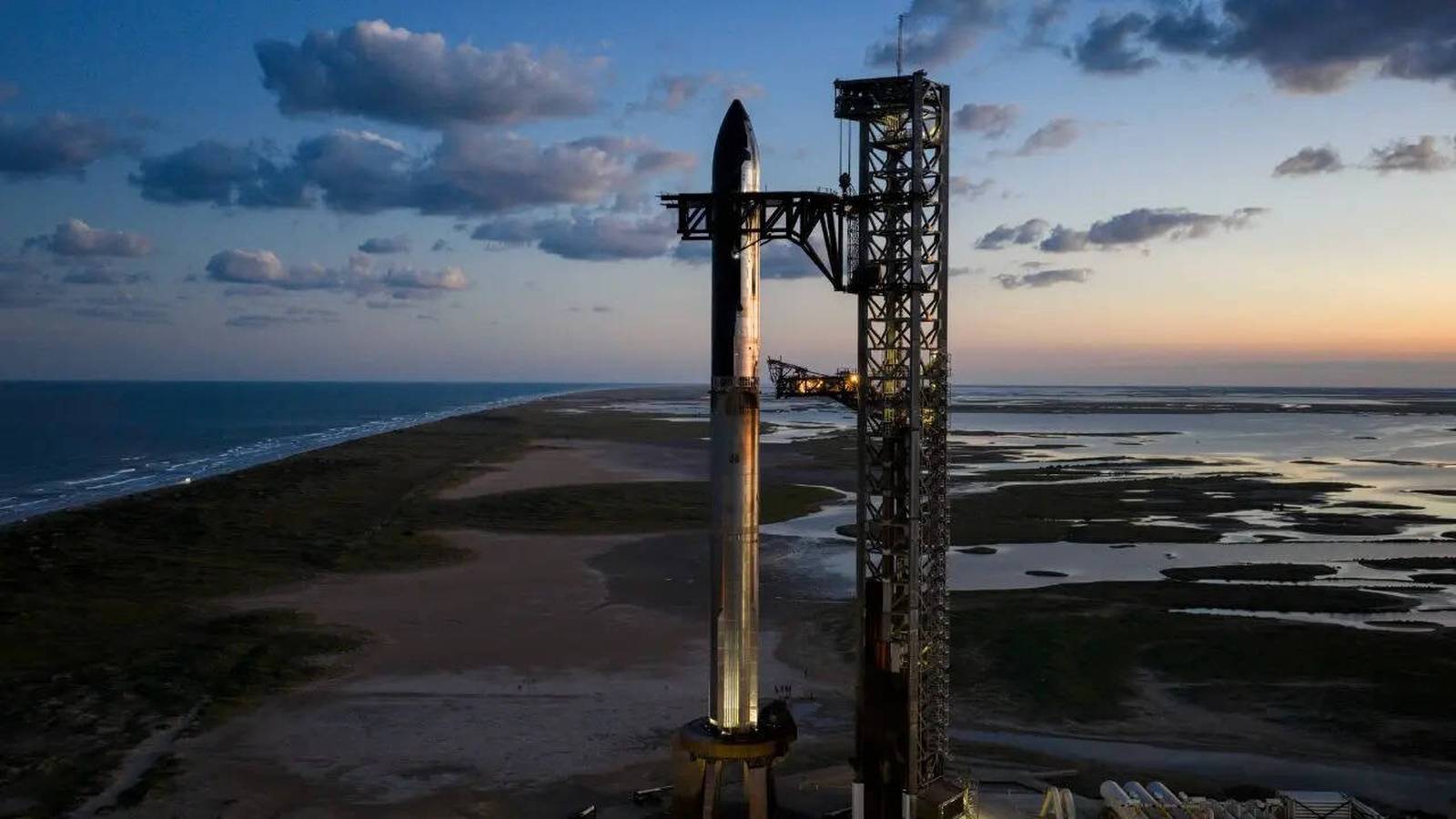
Starship Flight 11: Culmination of a Turbulent Year
As twilight falls over South Texas, SpaceX stands on the brink of its most consequential Starship test yet. Flight 11, scheduled for liftoff at 7:15 p.m. ET, isn’t just another rocket launch—it’s a turning point for the world’s most ambitious reusable spacecraft program. The towering 400-foot Starship, paired with its Super Heavy booster, is primed to close out a year defined by spectacular failures, hard-won lessons, and the relentless pursuit of progress.
The journey to Flight 11 has been anything but smooth. Earlier in 2025, a string of explosions and debris incidents forced federal investigations and intense scrutiny. Yet, August’s successful hour-long flight marked a turning point: both the booster and spacecraft splashed down under control, offering a rare moment of redemption. With today’s test, SpaceX hopes to build on that success, pushing the boundaries of rapid reuse and reliability—two pillars that could redefine humanity’s access to space.
Critical Upgrades: New Engine Sequence and Heat Shield Stress Tests
This mission isn’t a simple repeat of past flights. SpaceX engineers have overhauled the Super Heavy booster’s landing sequence, introducing the “13-5-3” engine configuration. As the booster approaches splashdown in the Gulf of Mexico, it will throttle from thirteen Raptors, down to five, and finally three. The rationale? Improved resilience and redundancy if engines fail during descent. It’s an approach that could, if successful, set the blueprint for future landings and rapid turnaround launches.
Meanwhile, the Starship upper stage faces its own trial by fire—literally. For the first time, SpaceX has intentionally removed select ceramic heat shield tiles, exposing vulnerable sections to the searing 2,600°F heat of atmospheric re-entry. The goal: identify which tile configurations can survive without refurbishment, a crucial step toward making Starship fully and rapidly reusable. Earlier flights in March and June never made it past re-entry, but Flight 10’s controlled splashdown near Australia proved it was possible. Flight 11 aims to push even further, gathering “real-world vehicle dynamics” data that could inform next-generation designs.
NASA’s Lunar Ambitions and the Race Against China
While SpaceX’s sights are set on Mars, NASA is laser-focused on the Moon. The Artemis III mission, targeting a lunar landing in 2027, hinges on Starship’s readiness. NASA has invested over $4 billion into adapting Starship as a lunar lander, hoping to outpace China’s own moon ambitions. The stakes are high: in recent Senate hearings and advisory panels, officials have voiced fears that delays could cede lunar territory—despite longstanding international treaties.
To meet NASA’s aggressive timeline, SpaceX must demonstrate not just one-off success, but reliable, rapid reuse. That means launching, landing, and refueling multiple Starships within weeks—a logistical and engineering challenge that pushes the envelope of what’s possible. Industry analysts, quoted in Reuters, say orbital refueling remains the “single most crucial milestone” before any deep space mission. Flight 11, with its upgraded tests, is a litmus test for these capabilities.
Community Concerns and Environmental Impact
As SpaceX expands operations—building new pads at Starbase and NASA’s Kennedy Space Center—local communities are voicing concerns. Sonic booms from launches, beach closures, and ecological disruption have sparked opposition, with residents and advocacy groups like Conibio Global demanding greater accountability. During August’s flight, protestors encountered aggressive helicopter maneuvers, prompting formal complaints and renewed calls for oversight. SpaceX, for its part, emphasizes compliance and safety, but the tension between rapid innovation and local impact remains unresolved.
Looking Ahead: Version 3 and the Road to Mars
Flight 11 is the swan song for Starship Version 2. The next chapter—Version 3—promises larger fuel tanks, upgraded engines, and in-orbit refueling. Static fire tests begin later this year, with a new production facility rising in Cape Canaveral to support a higher launch cadence. Elon Musk’s vision of “launching once an hour,” of building Martian settlements, is closer to reality if Starship can prove its reliability and resilience in this flight.
For SpaceX, each test is more than a technical exercise—it’s a philosophy. The company’s rapid iterative development approach values learning from failure, launching early and often, and refining designs at speed. As astronaut Chris Hadfield told CNN, struggles are normal, even necessary, on the path to building something transformative. Success, in SpaceX’s terms, is measured not just by smooth launches, but by the data and lessons each flight brings.
In the final hour before liftoff, launch controllers will fuel up Starship with over 11 million pounds of super-cooled methane and oxygen. All 33 Raptor engines will roar to life, producing 16.7 million pounds of thrust—60% more than the Soviet-era N1 rocket. The flight plan calls for satellite simulator deployments, engine relights, and a controlled splashdown in the Indian Ocean. If all goes well, SpaceX will have taken another bold step toward transforming space travel—and perhaps, in the not-so-distant future, life beyond Earth.
Starship Flight 11 encapsulates SpaceX’s ethos: relentless iteration, bold risk-taking, and a willingness to learn from both triumph and failure. The stakes—technological, environmental, and geopolitical—are enormous. Whether Flight 11 marks a leap forward or another lesson in humility, it stands as a testament to the audacious spirit driving the new space age.
Image Credit: timesnownews.com