
Quick Read
- At least 39 people were killed and dozens injured in a train collision in Córdoba province, southern Spain, on Sunday evening.
- A high-speed Iryo train derailed and collided with an oncoming Alvia train near Adamuz.
- The Iryo train was ‘practically new,’ manufactured in 2022, and had its last inspection on January 15.
- 122 people were treated for injuries, with 48 remaining hospitalized; 12 are in intensive care, including one child.
- The cause of the derailment is under investigation, described as ‘extremely strange’ by Spain’s transport minister.
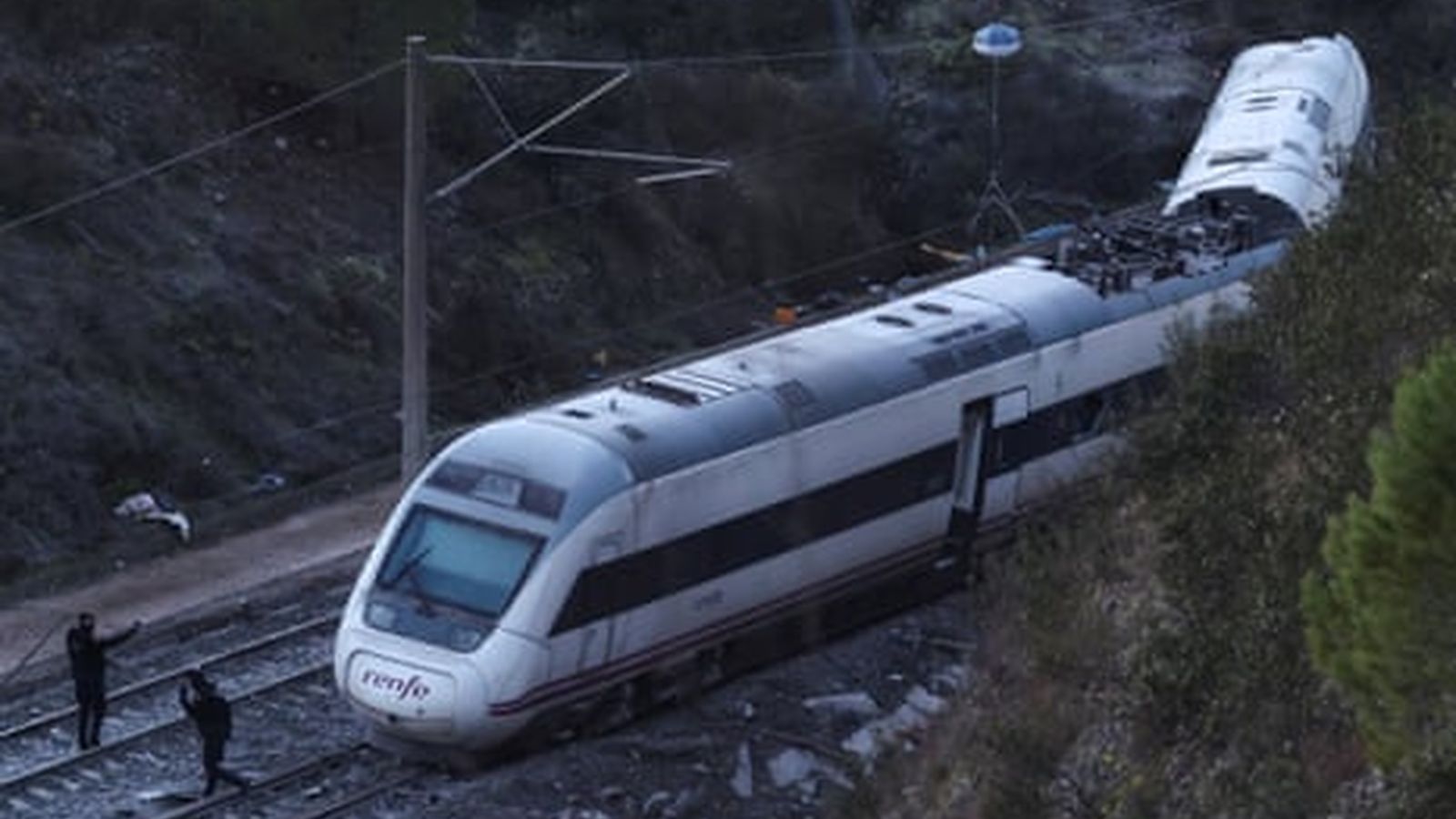
At least 39 people have been killed and dozens more injured after two trains collided in southern Spain’s Córdoba province on Sunday evening, marking the deadliest rail accident in the country since 2013. The catastrophic incident occurred when a high-speed Iryo train, traveling from Málaga to Madrid, derailed near the municipality of Adamuz at approximately 7:40 PM local time, subsequently crossing onto an adjacent track and striking an oncoming Alvia train bound from Madrid to Huelva. Rescue efforts are continuing into Monday morning, with Spanish officials indicating that the death toll is expected to rise as emergency teams work through the twisted wreckage, raising urgent questions about the cause of this ‘extremely strange’ and tragic event on Spain’s advanced rail network.
The collision unfolded with devastating speed and force. According to Spain’s transport minister, Oscar Puente, the impact pushed the carriages of the second train into an embankment, with most of the fatalities and serious injuries concentrated in its first two carriages. Eyewitness accounts from passengers describe the moment of impact as feeling like an “earthquake,” with some resorting to emergency hammers to break windows and escape the mangled train cars. The immediate aftermath saw local residents of Adamuz rushing to assist victims, a testament to community solidarity in the face of disaster.
Details of the Collision and Rescue Efforts
The Iryo train, described by Minister Puente as “practically new” and manufactured in 2022 with its last inspection on January 15, was carrying 289 passengers and 5 crew members. The number of passengers on the Alvia train, operated by state-owned Renfe, was not immediately clear, though overall, approximately 400 passengers and staff were on board both trains. Emergency services, including over 220 personnel from Spain’s Civil Guard and other agencies, quickly converged on the scene. Their efforts have been significantly hampered by the severity of the damage, with twisted metal and overturned carriages making it difficult to recover those trapped inside.
By Monday morning, emergency services in Andalucía reported that 122 people had been treated for injuries, with 48 individuals remaining hospitalized. Of those still in care, 12, including one child, were in intensive care units, highlighting the critical condition of many survivors. The municipal sports center of Adamuz has been converted into an improvised field hospital to triage and treat less severe injuries before transferring patients to larger medical facilities. All train services between Madrid and cities in Andalucía were cancelled on Monday as a direct consequence of the accident, disrupting travel for thousands.
Investigation Underway Amid Questions of Cause
The cause of the derailment remains undetermined, and Spain’s Railway Accident Investigation Commission has launched a full inquiry. Transport Minister Oscar Puente expressed profound bewilderment, stating it was “really strange” for a derailment to occur on a straight stretch of track, especially one that had been renewed as recently as May. The fact that the Iryo train was a modern Freccia 1000 model, capable of speeds up to 400 km/h (250 mph), and had undergone a recent inspection, adds to the mystery surrounding the incident. Investigators will be examining all available data, including black box recorders, track conditions, signaling systems, and human factors, to piece together the sequence of events that led to the catastrophe.
The Spanish high-speed rail network is the largest in Europe and the second-biggest globally after China, known for its modernity and safety record. The network opened to private competition in 2020, with Iryo, a joint venture involving Italian state railway operator Ferrovie dello Stato, beginning operations in November 2022. This incident marks the deadliest train accident in Spain since 2013, when a train traveling at 111 mph (179 km/h) derailed on a section of track with a 50 mph speed limit in Galicia, killing 80 people. The absence of an immediately apparent cause, such as excessive speed, in the current Adamuz crash distinguishes it from the previous major disaster and underscores the complexity of the ongoing investigation.
Widespread Condolences and National Response
Messages of profound condolences and solidarity have poured in from across Spain and Europe. King Felipe VI and Queen Letizia expressed their “great concern” about the “terrible accident” and have been in contact with Prime Minister Pedro Sánchez and Andalucía regional President Juanma Moreno, cutting short their activities to return to Spain. Prime Minister Sánchez conveyed his “most sincere condolences to the families and loved ones of the victims,” declaring a “night of deep pain for our country” and cancelling his scheduled attendance at the World Economic Forum in Davos, Switzerland, to visit the crash site.
Numerous European leaders also extended their sympathies. French President Emmanuel Macron stated, “France stands by your side,” while Italian Prime Minister Giorgia Meloni affirmed, “Italy stands close to Spain in its grief for this tragedy.” Dutch Prime Minister Dick Schoof and German Chancellor Friedrich Merz similarly offered their support and condolences. On the ground, Spain’s Civil Guard has established offices to assist affected families with reporting and DNA samples for victim identification, while the Spanish Red Cross has deployed emergency support services and is offering psychological counseling, recognizing the immense anxiety and distress faced by relatives awaiting news.
The profound shock gripping Spain stems not only from the tragic loss of life but also from the perplexing nature of an incident involving modern, well-maintained infrastructure, challenging assumptions about rail safety. The unexplained derailment of a new high-speed train on a recently renewed, straight track creates an urgent imperative for a transparent and thorough investigation, as the nation grapples with the unexpected vulnerability of its advanced transportation system.