
Quick Read
- Stephen Colbert criticized Donald Trump’s comments calling Chicago a ‘hellhole.’
- Colbert mocked a giant banner of Trump’s face displayed on a federal building.
- His comments sparked widespread reactions on social media.
- Colbert’s satire continues to play a vital role in political discourse.
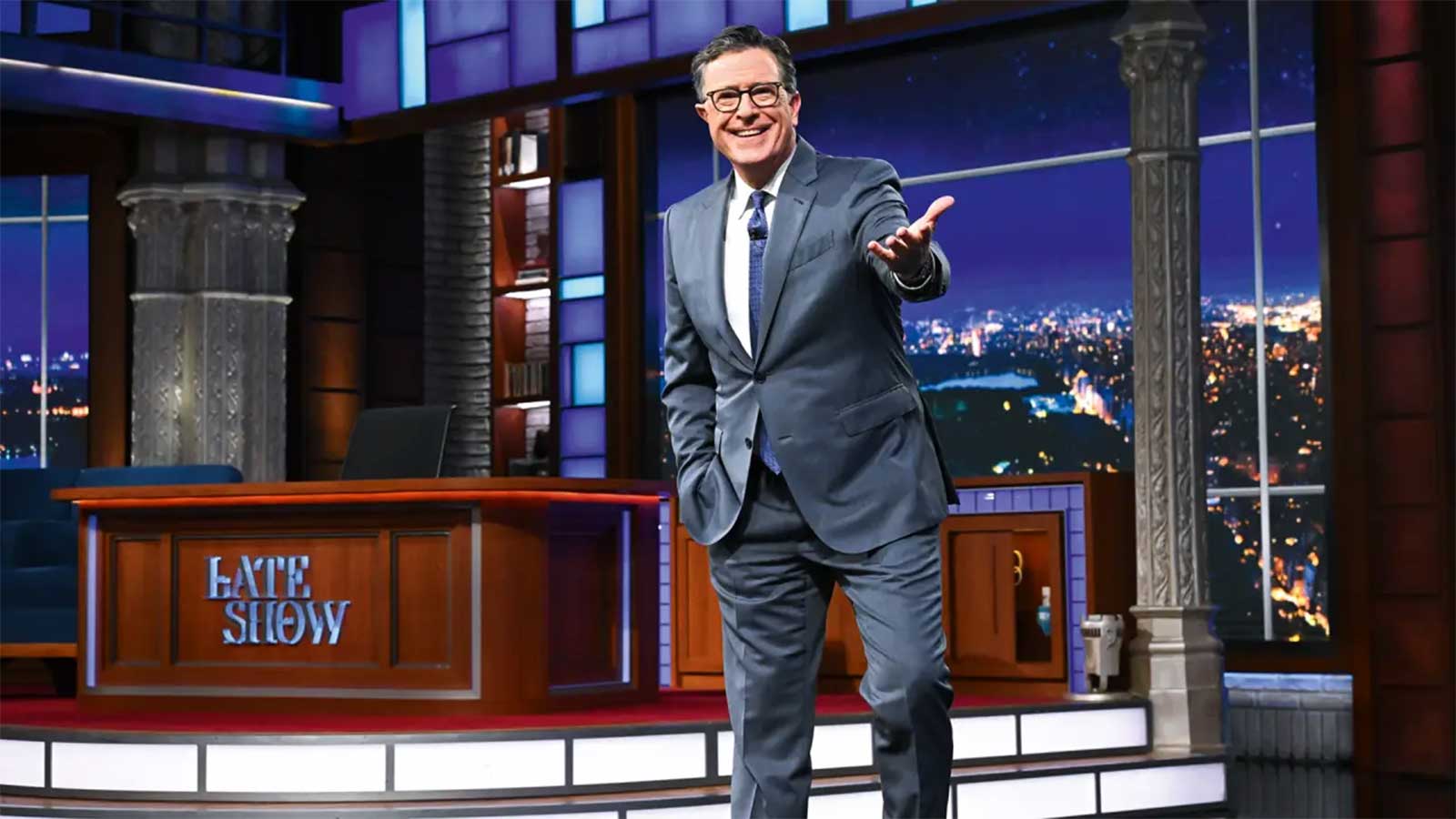
Stephen Colbert, host of CBS’s “The Late Show,” has once again captured public attention with his sharp-witted criticisms of President $1 Trump. On Wednesday, September 4, 2025, Colbert delivered two scathing monologues targeting Trump’s recent remarks about the city of Chicago and a controversial banner displayed on a federal building. The segments have since gone viral, sparking widespread discussion online and in the media.
Colbert Defends Chicago Against Trump’s ‘Hellhole’ Comments
In his latest monologue, Colbert took offense to Trump’s recent social media post labeling Chicago as the “worst and most dangerous city in the world.” Trump’s comments also included a threat to deploy the military to address crime in the city. However, Colbert, who once lived in Chicago, was quick to counter these claims. He pointed out that crime statistics show a significant drop in violence, with shootings and homicides down over 30% and total violent crime down 22% compared to the previous year, according to police data.
Colbert’s fiery response, which included the words “Two words: F*** you,” was partially censored on network television but still made waves online. “How dare you, sir?” Colbert exclaimed, defending Chicago by humorously noting, “Chicago is not a hellhole right now. Chicago is not a hellhole until February.” This segment aired as part of his Wednesday night show and was widely shared on social media platforms, amplifying the debate about Trump’s rhetoric. HuffPost highlighted the impact of Colbert’s remarks, noting their resonance with both Chicago residents and viewers nationwide.
The Controversial Banner at the Department of Labor
On the same night, Colbert also addressed a striking visual spectacle: a multi-story banner of Trump’s face displayed on the U.S. Department of Labor (DOL) building. The banner, unveiled on August 28, quickly drew comparisons to dystopian imagery from George Orwell’s “1984.” Federal employees reportedly shared the image with journalists, leading to widespread criticism on social media. One viral post described the banner as “ominous,” and another likened it to propaganda used by authoritarian regimes.
Colbert mocked the banner with his characteristic humor, stating, “Hanging giant banners of themselves isn’t something American presidents do. It’s something you see from dictators like Benito Mussolini, Mao Zedong, and Generalissimo Mamma Mia!” The satirical reference to the ABBA musical poster underscored Colbert’s critique of Trump’s perceived authoritarian tendencies. Mashable reported that Colbert’s commentary struck a chord with audiences, who saw the banner as a symbol of Trump’s controversial leadership style.
Public and Media Reactions
The dual monologues have reignited discussions about Trump’s influence on American politics and media. While Colbert’s humor often polarizes audiences, his latest remarks received overwhelming support from viewers who praised his boldness. Social media platforms were abuzz with clips from the show, with many users echoing Colbert’s sentiments about Chicago and the banner. Critics of Trump also seized the opportunity to highlight what they view as his divisive rhetoric and self-aggrandizing behavior.
On the other hand, Trump’s supporters dismissed Colbert’s comments as typical of Hollywood’s liberal bias. Some conservative commentators argued that the banner was a harmless gesture of patriotism, while others defended Trump’s criticisms of Chicago as grounded in concern for public safety. Despite the polarized opinions, Colbert’s segments have undeniably added fuel to the ongoing cultural and political discourse in the United States.
Colbert’s Legacy as a Political Satirist
Stephen Colbert has long been celebrated for his incisive political satire, which often targets prominent figures and policies. His ability to blend humor with sharp critiques has made him a household name and a powerful voice in American media. By addressing both the Chicago controversy and the DOL banner, Colbert continues to use his platform to challenge authority and provoke thought among his audience.
As the clips from his latest show continue to circulate, they serve as a reminder of the enduring power of satire in shaping public opinion. Colbert’s fearless approach to tackling contentious issues ensures that his voice remains influential in the ever-evolving landscape of political commentary.
Colbert’s remarks this week underline the critical role of satire in holding leaders accountable. Whether you agree with his views or not, his commentary sparks conversations that extend far beyond the late-night stage.