
Quick Read
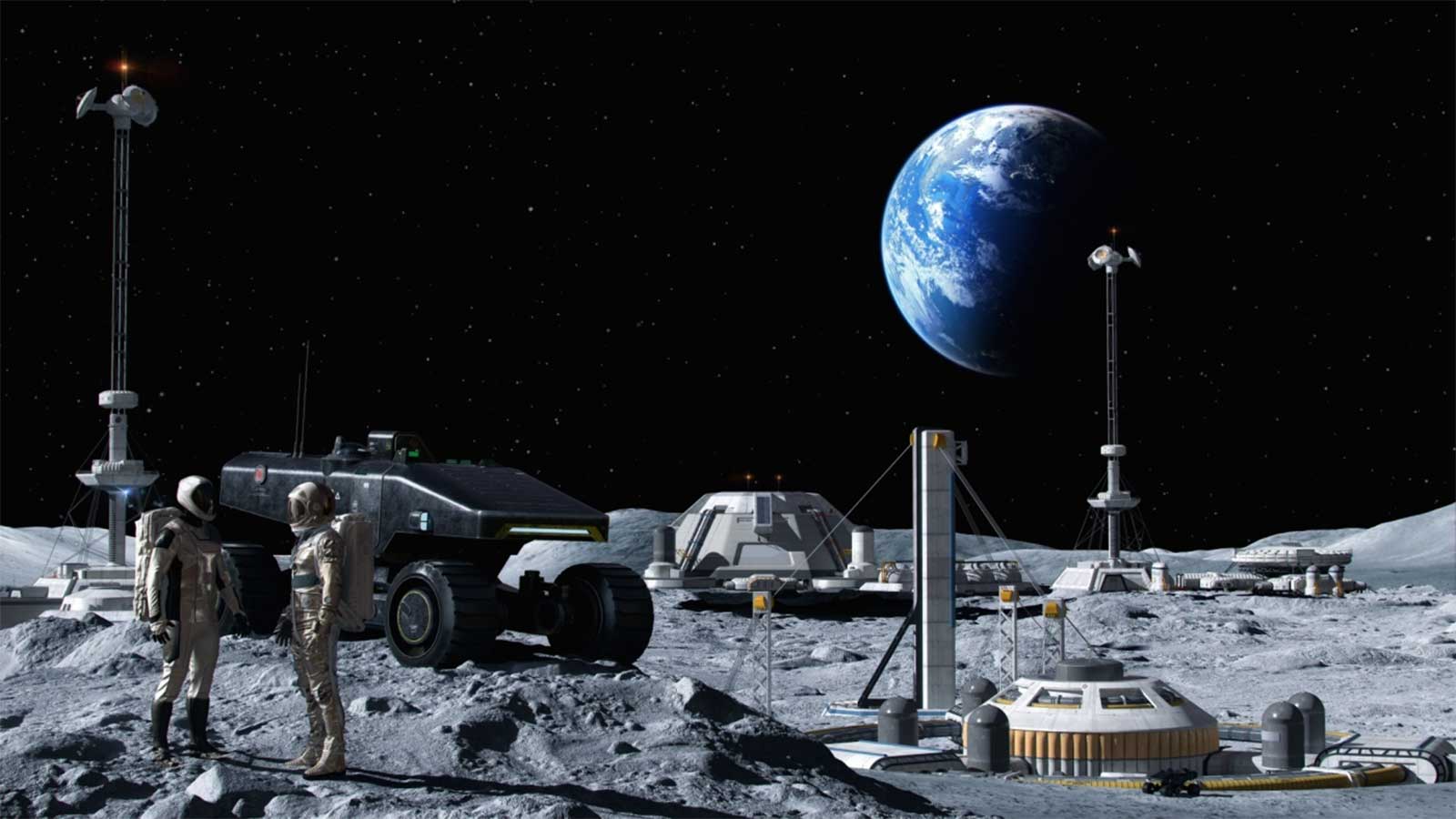
- NASA will invest $20 billion over seven years to establish a permanent lunar base, pausing its Gateway orbiting station project.
- CERN researchers successfully transported a cloud of 92 antiprotons using a portable cryogenic trap, a world-first experiment.
- U.S. military officials are deploying new counter-drone ‘flyaway kits’ to address persistent, unauthorized drone incursions at strategic bomber bases.
GENEVA/WASHINGTON/BARKSDALE (Azat TV) – Scientific and geopolitical control of the “base” concept reached a critical inflection point this week, as major powers and research institutions moved to secure strategic footholds in space, at the subatomic level, and on home soil. While NASA unveiled a multi-billion dollar plan to establish a permanent human outpost on the moon, physicists at CERN achieved a historic breakthrough in transporting antimatter. Simultaneously, the U.S. military is grappling with a persistent security challenge as unauthorized drone swarms continue to probe sensitive strategic installations.
NASA Shifts Strategy Toward Permanent Lunar Base
NASA Administrator Jared Isaacman announced a major pivot in American space policy on March 24, outlining a three-phase plan to construct a permanent base on the moon. The agency is committing approximately $20 billion over the next seven years to this effort, signaling a shift away from the previously planned Gateway lunar-orbiting station. According to Isaacman, the project aims to establish a continuous human foothold, with early phases focusing on robotic infrastructure deployment, followed by the delivery of pressurized rovers and habitation modules. This aggressive timeline is designed to ensure American leadership in lunar exploration amid intensifying global competition.
CERN Breakthrough in Antimatter Transport
In a separate but equally significant advancement, researchers at the BASE experiment at CERN successfully transported a cloud of 92 antiprotons via truck, marking the first time such delicate material has been moved outside its primary experimental facility. The achievement, utilizing a portable cryogenic Penning trap, is a critical step toward performing high-precision measurements at external laboratories. Scientists hope these measurements will eventually explain why matter predominates in the universe, addressing a fundamental mystery that has persisted since the Big Bang. The ability to move these particles without annihilation represents a major leap in experimental physics capabilities.
Security Threats to Strategic U.S. Bases
While space and science milestones dominate the headlines, the security of existing military infrastructure remains under duress. Barksdale Air Force Base in Louisiana has reported multiple unauthorized drone incursions throughout March, marking the first publicly acknowledged instances of such activity at a U.S. bomber base. Gen. Gregory M. Guillot of U.S. Northern Command confirmed that military personnel have deployed new counter-UAS “flyaway kits” to detect and neutralize these threats. Officials noted that while detection capabilities have improved, the persistent nature of these swarms—which have plagued installations from Ohio to the United Kingdom—highlights the vulnerability of strategic assets to small, commercial-grade technology.
The simultaneous expansion of physical bases in deep space and the hardening of terrestrial military perimeters against agile, low-cost drone threats underscore a broader shift in 2026: the value of a ‘base’ is no longer defined by permanence alone, but by the ability to maintain operational integrity in increasingly contested and complex environments.