
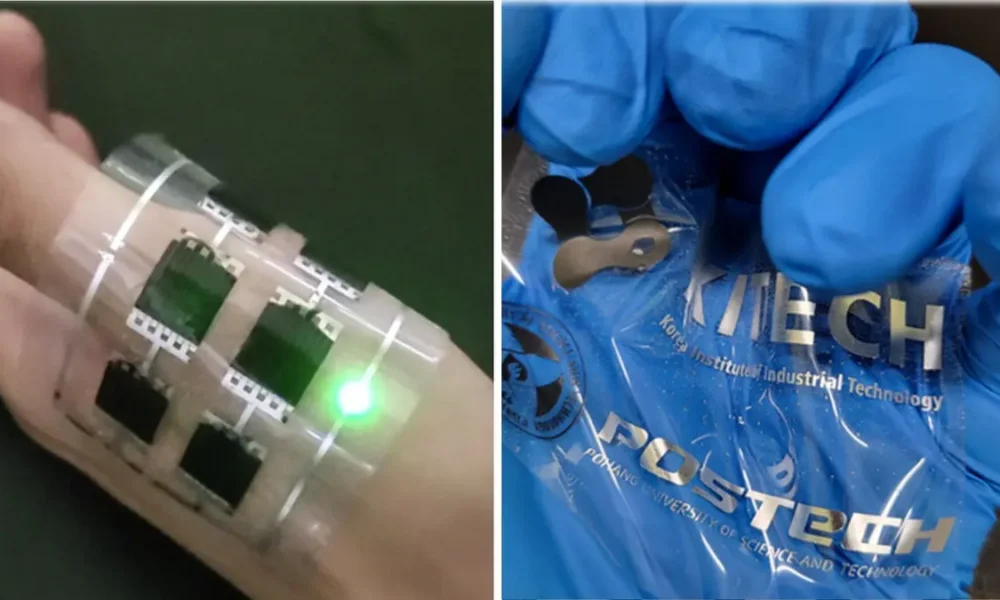
Scientists have developed a stretchy and flexible battery designed for wearable sports or fitness devices integrated directly into clothing. This innovative battery, filled with strategically placed holes, is more breathable than cotton, making it ideal for long-term use in smart clothing and health monitoring devices according to NewsScientist.
“This is especially useful for athletes or individuals who wear electronics for extended periods—smart clothing for fitness tracking, medical monitoring devices, and similar applications that demand both comfort and reliable performance,” says Lin Xu at Yale University.
To design the new battery, Xu and his colleagues created a pattern of long, rectangular holes in a pouch cell battery—a type of lithium battery that resembles a flat bundle with limited bendability. Simulations showed that the array of rectangular holes allows the battery to stretch or fold 180 degrees without tearing, outperforming designs with square or circular holes.
“One challenge was maintaining enough active material to keep the battery’s energy density high—too many or too large holes would reduce energy storage capacity,” explains Xu. “We had to balance mechanical stretchability with electrical performance.”
When stretched by 10% or even folded, the holey battery design resisted physical stress and continued to power LED light bulbs. The stretching and folding experiments were each performed 100 times, demonstrating the battery’s durability. Additionally, testing in a temperature and humidity chamber showed that the battery is twice as breathable as cotton, making it comfortable for prolonged wear.
As a practical demonstration, the researchers wove the battery into a lab coat and tested its performance while the wearer exercised. The holes allowed the battery to dissipate heat quickly, preventing discomfort or sweat buildup on the wearer’s skin.
While the battery still requires more wear-and-tear testing, the researchers plan to evaluate its performance in commercial health monitoring devices and sports gear. They are also exploring ways to scale up production, ensuring consistent hole placement and sealing to avoid leaks or short circuits in the battery pouch.
This breakthrough could revolutionize wearable electronics, particularly for devices integrated into clothing that require both comfort and reliability.