
Quick Read
- The Supreme Court heard arguments on President Trump’s executive order to restrict birthright citizenship to children of citizens or permanent residents.
- Justices questioned the administration’s reliance on the term ‘domicile’ and its attempt to reinterpret 14th Amendment protections established in the 1898 Wong Kim Ark case.
- A final ruling on the constitutionality of the executive order is expected from the Court by June.
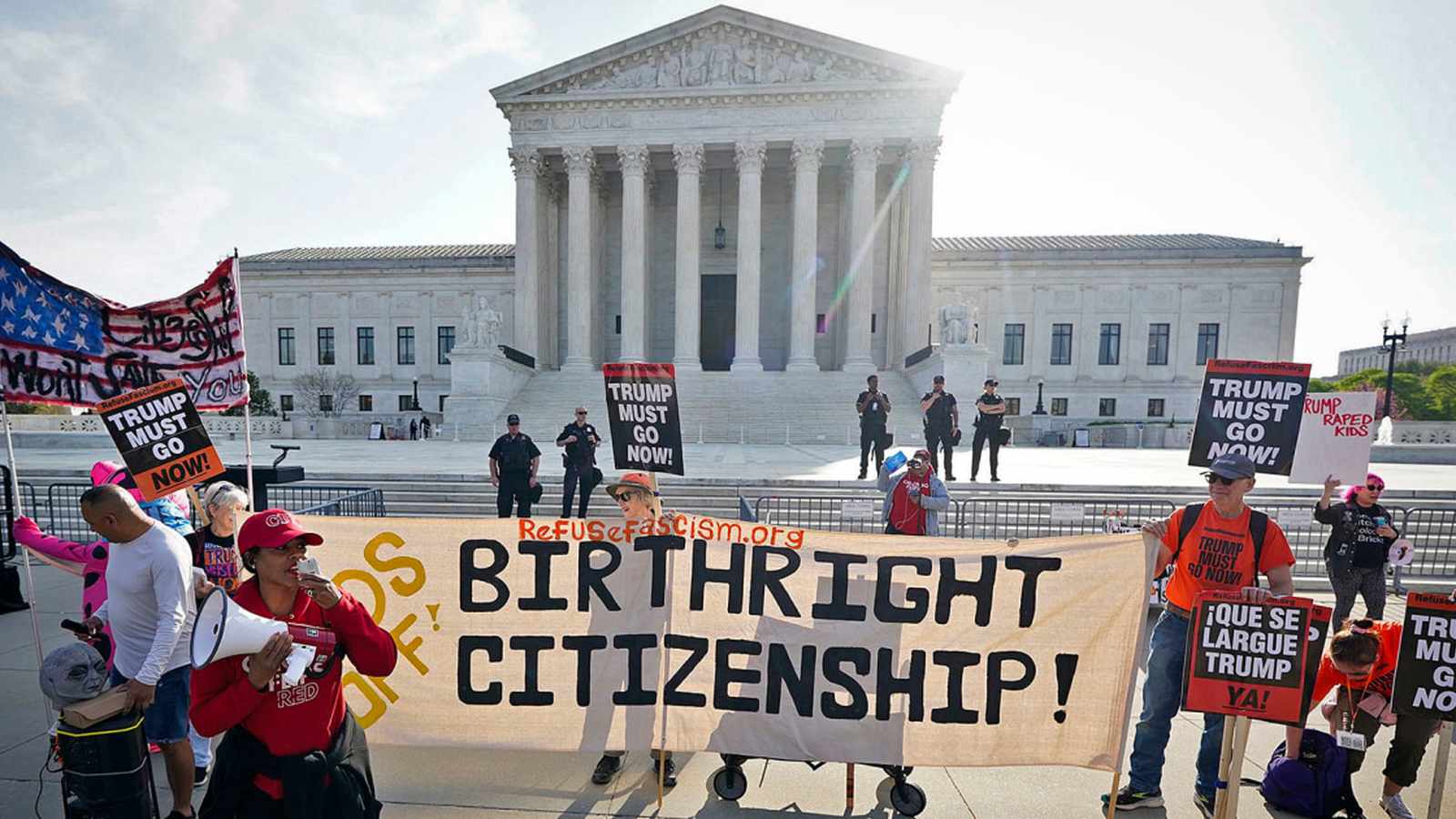
WASHINGTON (Azat TV) – The U.S. Supreme Court signaled significant legal resistance on Wednesday to President Donald Trump’s executive order seeking to limit birthright citizenship. During oral arguments, justices from across the ideological spectrum pressed the administration’s legal team on the constitutional viability of restricting citizenship to those with at least one parent who is a U.S. citizen or permanent resident.
Challenging the Constitutional Floor
The core of the dispute centers on the 14th Amendment’s citizenship clause. Solicitor General D. John Sauer argued that the administration’s interpretation rests on the concept of “domicile,” suggesting that birthright status should not extend to children of undocumented immigrants. However, several justices questioned how this new standard could be applied without creating massive administrative chaos. Justice Amy Coney Barrett specifically challenged Sauer on the practical application of such a rule, asking, “What if you don’t know who the parents are?” or if a parent’s intent to remain in the U.S. is ambiguous.
The Weight of Precedent
The case is fundamentally framed by the 1898 landmark decision in United States v. Wong Kim Ark, which established that anyone born on U.S. soil is automatically a citizen. Cecillia Wang, representing the ACLU, argued that the citizenship clause sets a definitive “floor” that Congress cannot lower. Justice Brett Kavanaugh noted that Congress has repeatedly used identical language to that found in the 14th Amendment in subsequent decades without attempting to override the Wong Kim Ark ruling, casting doubt on the administration’s claim that the precedent is merely a “drive-by jurisdictional ruling.”
Political and Legal Stakes
President Trump, who attended the hearing briefly, has framed the policy as a necessary correction to current immigration law, later posting on Truth Social that the U.S. is the only country “stupid enough” to maintain such broad birthright protections. The administration’s reliance on the 1884 case Elk v. Wilkins—which once denied citizenship to Native Americans—drew intense scrutiny from Justice Neil Gorsuch, who questioned whether the government truly intended to apply that archaic rationale to modern immigration policy. The court is expected to reach a final decision by the end of its term in June.
The skepticism displayed by the court suggests that the administration’s attempt to bypass congressional action through executive order faces an uphill battle, as the justices remain wary of overturning established constitutional interpretations that have defined American citizenship for over a century.